
Exhaust Leak Before Turbo — Effects on Aftertreatment and Regen
Exhaust leaks before the turbo reduce boost and exhaust energy reaching the aftertreatment. Inspect and repair them before condemning DOC, DPF, or turbo components.
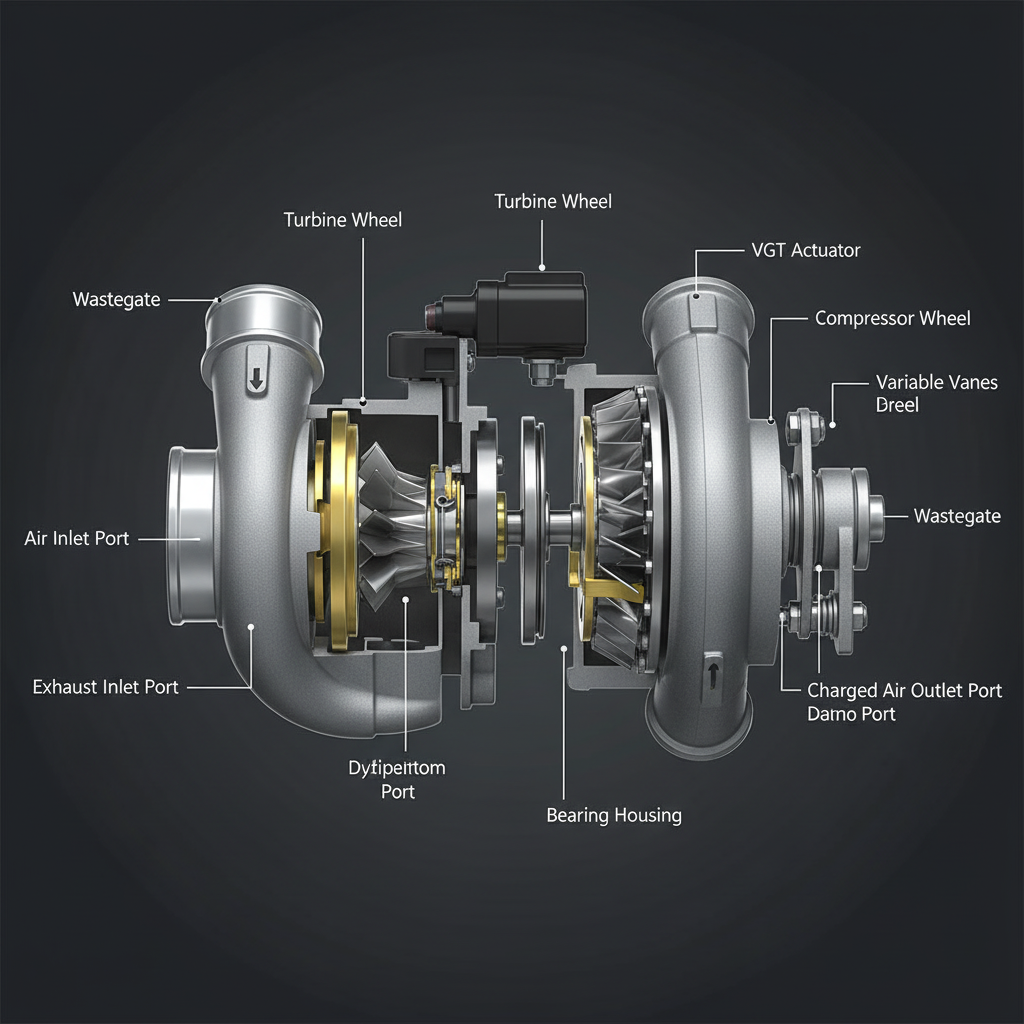
Fault Overview
Exhaust leaks upstream of the turbocharger reduce the energy available to drive the turbo, lower exhaust temperatures reaching the DOC, and can prevent successful regen. They are often overlooked when the complaint is aftertreatment-related.
Engine & Platform Coverage
Symptoms
- •Exhaust leak before turbo
- •Manifold leak
- •Turbo inlet leak
- •Pre-turbo exhaust leak
- •Low boost leak
- •Regen issues from leak
Possible Causes
- 1.Failed exhaust manifold gaskets
- 2.Cracked manifold
- 3.Loose or failed V-band or clamp at turbo inlet
- 4.Damaged bellows or flex pipe before the turbo
- 5.Warped surfaces from prior overheating
Wiring & Circuit Notes
Temperature and pressure sensors upstream may be affected by the leak environment. Verify sensor readings are rational after leak repair.
DVOM Specs & Sensor Tests
Boost pressure lower than commanded. Elevated exhaust manifold pressure or unusual EGR flow readings. Lower than expected pre-turbo or DOC inlet temperatures under load. Audible leak or soot staining at joints. Smoke under load if the leak is large.
Diagnostic Flow — FSM Sequence
AI Diesel Tech enforces this evidence-gate sequence. Each gate must pass before advancing.
6 steps locked behind Technician Mode- 1Step 1 — Compare Commanded vs Actual Boost Under Load: Compare commanded vs actual boost under load. Pre-turbo leaks reduce energy available to the turbo, producing a boost deficit that is often the first measurable sign.
- 2Step 2 — Listen and Inspect the Manifold-to-Turbo Path Under Load: Listen and inspect the manifold-to-turbo path under load for leaks. Even small leaks are often audible under load.
- 3Step 3 — Check for Soot Trails or Heat Discoloration at Joints: Check for soot trails or heat discoloration at joints. Soot staining is a reliable indicator of exhaust leakage.
- 4Step 4 — Monitor Pre-Turbo and DOC Inlet Temperatures: Monitor pre-turbo and DOC inlet temperatures. Lower than expected temperatures under load confirm energy loss from a pre-turbo leak.
- 5Step 5 — Perform Smoke or Soapy-Water Test on a Cool System if Needed: Perform a smoke or soapy-water test on a cool system if needed to locate small leaks.
- 6Step 6 — Repair All Pre-Turbo Leaks Before Diagnosing DOC/DPF Performance: Repair all pre-turbo leaks before diagnosing DOC/DPF performance. Aftertreatment diagnosis is invalid until the exhaust path is sealed.
- 7Step 7 — Retest Boost, Temperatures, and Regen Capability After Repair: Retest boost, temperatures, and regen capability after repair to confirm the aftertreatment system is now performing correctly.
Unlock the full evidence-gated diagnostic sequence, DVOM test steps, and repair procedures in Technician Mode.
Full Diagnostic Access
Verification steps, preventative measures, severity guidance, and legacy comparison are available in Technician Mode.
Typical Repair Costs
Replace manifold gaskets $200–600; replace cracked manifold $400–1,200; replace damaged bellows or clamps $100–400; proper torque and alignment.
Start Diagnosing This Fault Now
AI Diesel Tech walks you through every evidence gate in the correct order. Choose the plan that fits your shop.
Related Systems
Related Fault Codes
Related Sensor Locations
Common Symptoms
AI Diesel Tech — The Technician's Diagnostic Engine
AI Diesel Tech diagnostic logic is built by an ASE Certified Diesel Technician and engineered for professional shop use. Trusted by technicians nationwide — used in shops, fleets, and training programs.
Summary
Use the AI Diesel Tech diagnostic engine to run this code through a structured, evidence-gated sequence and get a confirmed root cause before any parts are replaced.