
2018–2022 Cummins B6.7 SCR and DPF Co-Fault Pattern
The Cummins B6.7 in MD truck and bus applications frequently presents with DPF and SCR codes appearing together. Cleaning the DPF while leaving DEF contamination active is the most documented misdiagnosis — the SCR system continues to fail after DPF service because the root cause was never addressed.
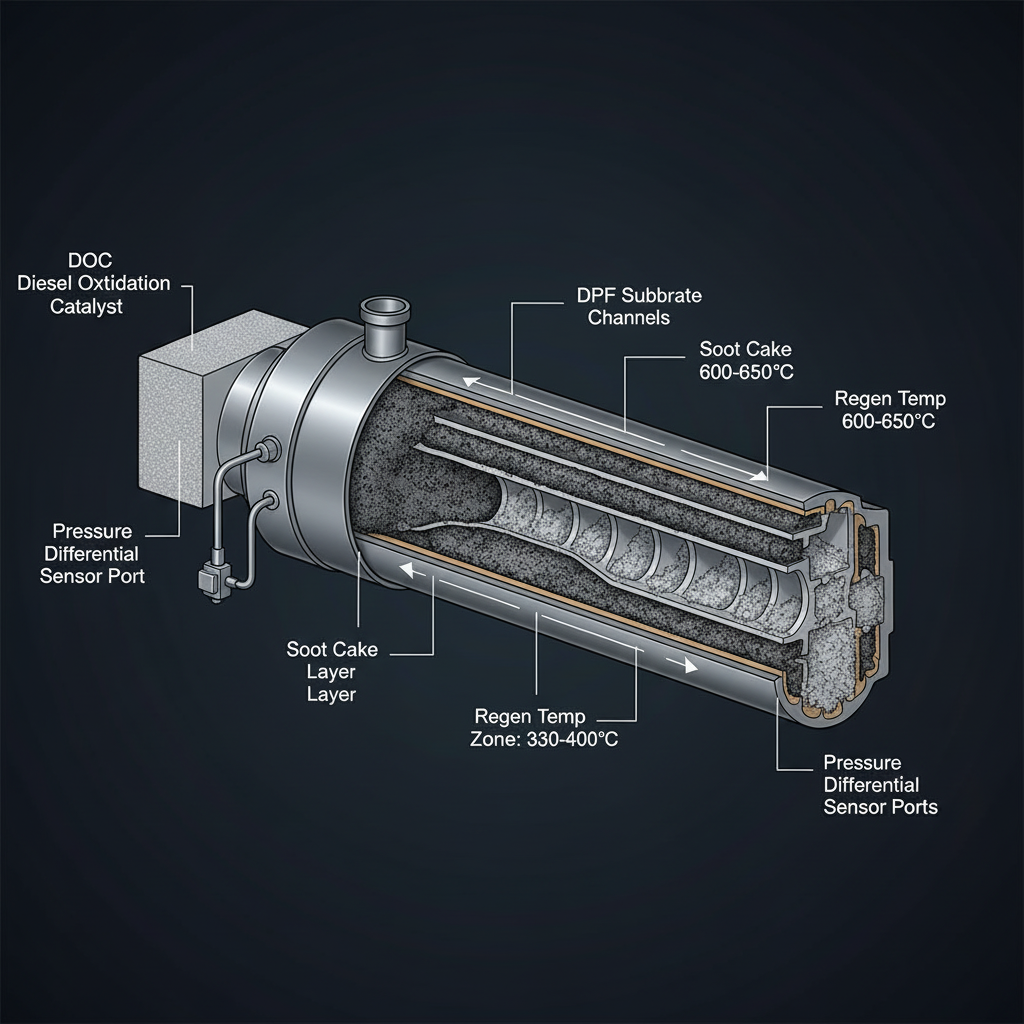
Fault Overview
The 2018–2022 Cummins B6.7 in MD truck and bus applications presents with combined DPF and SCR fault patterns where codes from both systems appear simultaneously. DEF chemistry and dosing issues, incomplete regen, underboost-driven soot loading, NOx sensor faults, and mixed consequence codes are the primary causes. Cleaning the DPF while leaving DEF contamination active is the most documented misdiagnosis — consult current Cummins service literature by engine serial number for platform-specific guidance.
Engine & Platform Coverage
Possible Causes
- 1.DEF chemistry or dosing issues driving SCR efficiency codes
- 2.Incomplete regen from underboost or inhibit conditions driving DPF soot codes
- 3.NOx sensor faults creating false SCR efficiency readings
- 4.Mixed consequence codes from both systems appearing after a single root event
- 5.DEF contamination affecting SCR performance while DPF soot accumulates from incomplete regens
Wiring & Circuit Notes
DEF header and aftertreatment sensor connectors should be inspected after family sorting identifies the root system. Do not begin connector work before the root family is identified.
DVOM Specs & Sensor Tests
Split DPF metrics (soot load, delta-P, EGT) from SCR metrics (DEF quality, NOx sensor, SCR efficiency) in the code set. Address chemistry first on the SCR side — DEF contamination is the most common root cause when both systems are faulted. Analyze regen abort reasons if DPF codes are present. Consult current Cummins service literature by engine serial number for platform-specific thresholds and procedures.
Diagnostic Flow — FSM Sequence
AI Diesel Tech enforces this evidence-gate sequence. Each gate must pass before advancing.
5 steps locked behind Technician Mode- 1Pull complete code set with timestamps from all modules
- 2Sort codes into DPF family and SCR family — identify which family has the oldest codes
- 3If SCR family is oldest: begin with DEF chemistry verification before DPF service
- 4If DPF family is oldest: analyze regen abort reasons before SCR service
- 5Resolve the root family first — do not clean DPF while DEF contamination is active
- 6Verify both systems clear before dispatch
Unlock the full evidence-gated diagnostic sequence, DVOM test steps, and repair procedures in Technician Mode.
Repair Steps
4 steps locked- 1Pull complete code set with timestamps from all modules
- 2Sort codes into DPF family and SCR family — identify which family has the oldest codes
- 3If SCR family is oldest: begin with DEF chemistry verification before DPF service
- 4If DPF family is oldest: analyze regen abort reasons before SCR service
- 5Resolve the root family first — do not clean DPF while DEF contamination is active
- 6Verify both systems clear before dispatch
Unlock full diagnostic steps, DVOM tests, and repair procedures.
Full Diagnostic Access
Verification steps, preventative measures, severity guidance, and legacy comparison are available in Technician Mode.
Start Diagnosing This Fault Now
AI Diesel Tech walks you through every evidence gate in the correct order. Choose the plan that fits your shop.
Related Resources
Related Systems
Related Fault Codes
Related Sensor Locations
Common Symptoms
AI Diesel Tech — The Technician's Diagnostic Engine
AI Diesel Tech diagnostic logic is built by an ASE Certified Diesel Technician and engineered for professional shop use. Trusted by technicians nationwide — used in shops, fleets, and training programs.
Summary
B6.7 combined AT codes require timeline family sorting before hard parts. Cleaning the DPF while DEF contamination is active is the most documented misdiagnosis on this platform.