
2016–2020 PACCAR MX-13 Fuel Rail Control and Hard-Start Path
PACCAR MX-13 hard-start and low-power complaints tied to rail control require an ordered fuel system diagnosis. HP pump replacement without proving suction-side aeration is the most documented misdiagnosis on this platform — the suction side must be proven clean before the HP pump is condemned.
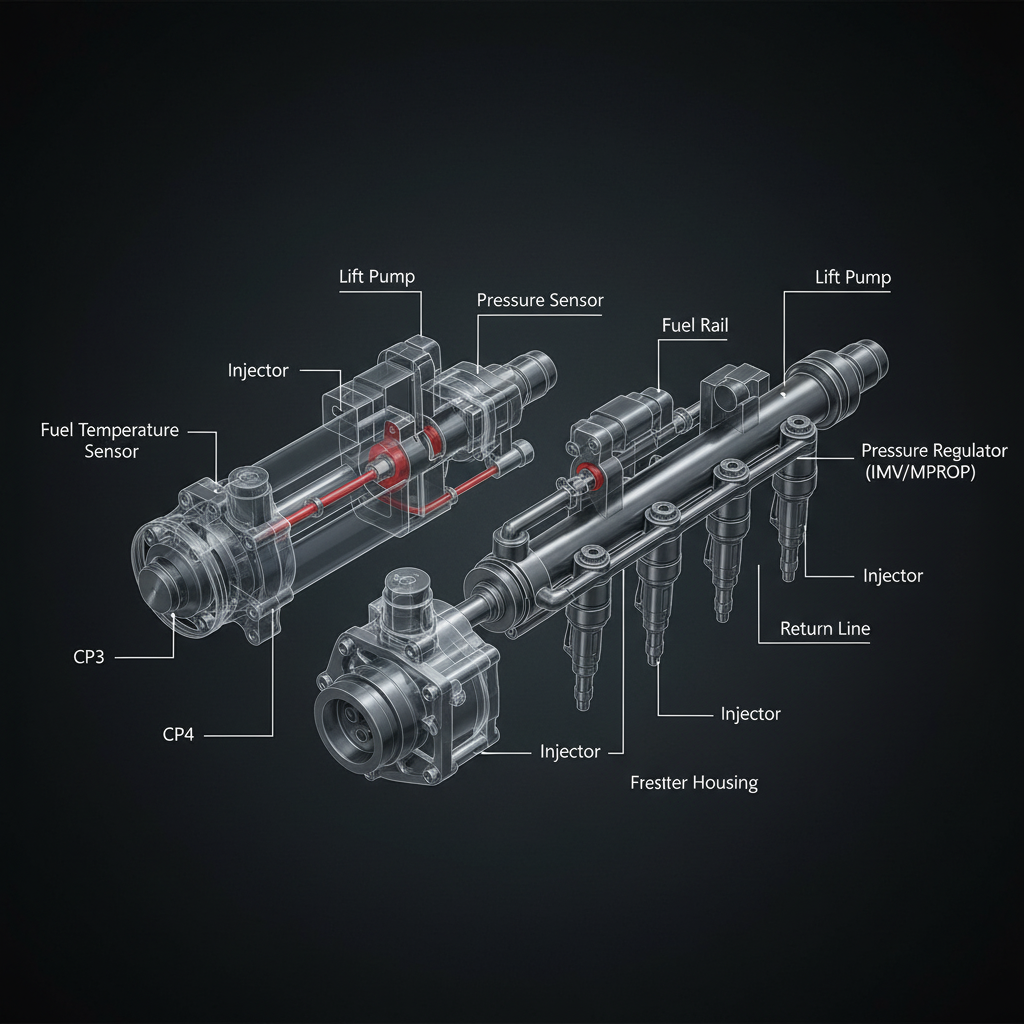
Fault Overview
The 2016–2020 PACCAR MX-13 presents with hard-start and low-power complaints tied to fuel rail control and supply integrity. Supply restriction or aeration, FRP sensor faults, control valve issues, injector leakage contribution, and HP pump wear are the primary causes. HP pump replacement without proving suction-side aeration is the most documented misdiagnosis — consult current PACCAR service information for platform-specific procedures.
Engine & Platform Coverage
Possible Causes
- 1.Suction-side aeration — air ingestion from loose fittings, cracked lines, or filter housing seals
- 2.FRP sensor fault creating false low rail pressure reading
- 3.Control valve issue — open, short, or stuck valve
- 4.Supply restriction — filter, pre-filter, or suction-side restriction
- 5.Injector leakage contributing to rail pressure loss
- 6.HP pump wear — only after supply and control path are proven
Wiring & Circuit Notes
Validate FRP sensor circuit and 5V bus health before mechanical fuel system conclusions. A sensor circuit fault can create a false hard-start or low-power complaint without any true fuel system failure.
DVOM Specs & Sensor Tests
Monitor rail pressure during cranking — a healthy system should build pressure quickly during crank. Compare desired versus actual rail pressure under load. Perform low-side gauge checks to confirm supply pressure. Check 5V bus health at the FRP sensor. Consult current PACCAR service information for cranking pressure specifications and control valve test procedures.
Diagnostic Flow — FSM Sequence
AI Diesel Tech enforces this evidence-gate sequence. Each gate must pass before advancing.
5 steps locked behind Technician Mode- 1Validate FRP sensor circuit and 5V bus health
- 2Monitor rail pressure during cranking — confirm pressure builds to OEM minimum
- 3Perform low-side supply gauge checks — confirm lift pump pressure and filter condition
- 4Inspect suction side for aeration sources — fittings, lines, filter housing seals
- 5Test control valve response — command rail pressure changes and observe response
- 6Evaluate injector contribution and HP pump only after supply and control path are proven
Unlock the full evidence-gated diagnostic sequence, DVOM test steps, and repair procedures in Technician Mode.
Repair Steps
4 steps locked- 1Validate FRP sensor circuit and 5V bus health
- 2Monitor rail pressure during cranking — confirm pressure builds to OEM minimum
- 3Perform low-side supply gauge checks — confirm lift pump pressure and filter condition
- 4Inspect suction side for aeration sources — fittings, lines, filter housing seals
- 5Test control valve response — command rail pressure changes and observe response
- 6Evaluate injector contribution and HP pump only after supply and control path are proven
Unlock full diagnostic steps, DVOM tests, and repair procedures.
Full Diagnostic Access
Verification steps, preventative measures, severity guidance, and legacy comparison are available in Technician Mode.
Start Diagnosing This Fault Now
AI Diesel Tech walks you through every evidence gate in the correct order. Choose the plan that fits your shop.
Related Resources
Related Systems
Related Sensor Locations
Common Symptoms
Related Articles
AI Diesel Tech — The Technician's Diagnostic Engine
AI Diesel Tech diagnostic logic is built by an ASE Certified Diesel Technician and engineered for professional shop use. Trusted by technicians nationwide — used in shops, fleets, and training programs.
Summary
MX-13 hard starts require ordered rail-control diagnosis. Suction-side aeration proof must precede HP pump conclusions — the pump is the last step, not the first.