
PACCAR MX-13 Underboost Pattern Diagnosis
The PACCAR MX-13 has platform-specific underboost patterns related to EGR valve contribution and VGT actuator response. EGR valve stuck open contributing to underboost and VGT actuator carbon binding after extended idle are the most documented MX-13 underboost patterns. The FSM enforces EGR and actuator gates before turbo replacement.
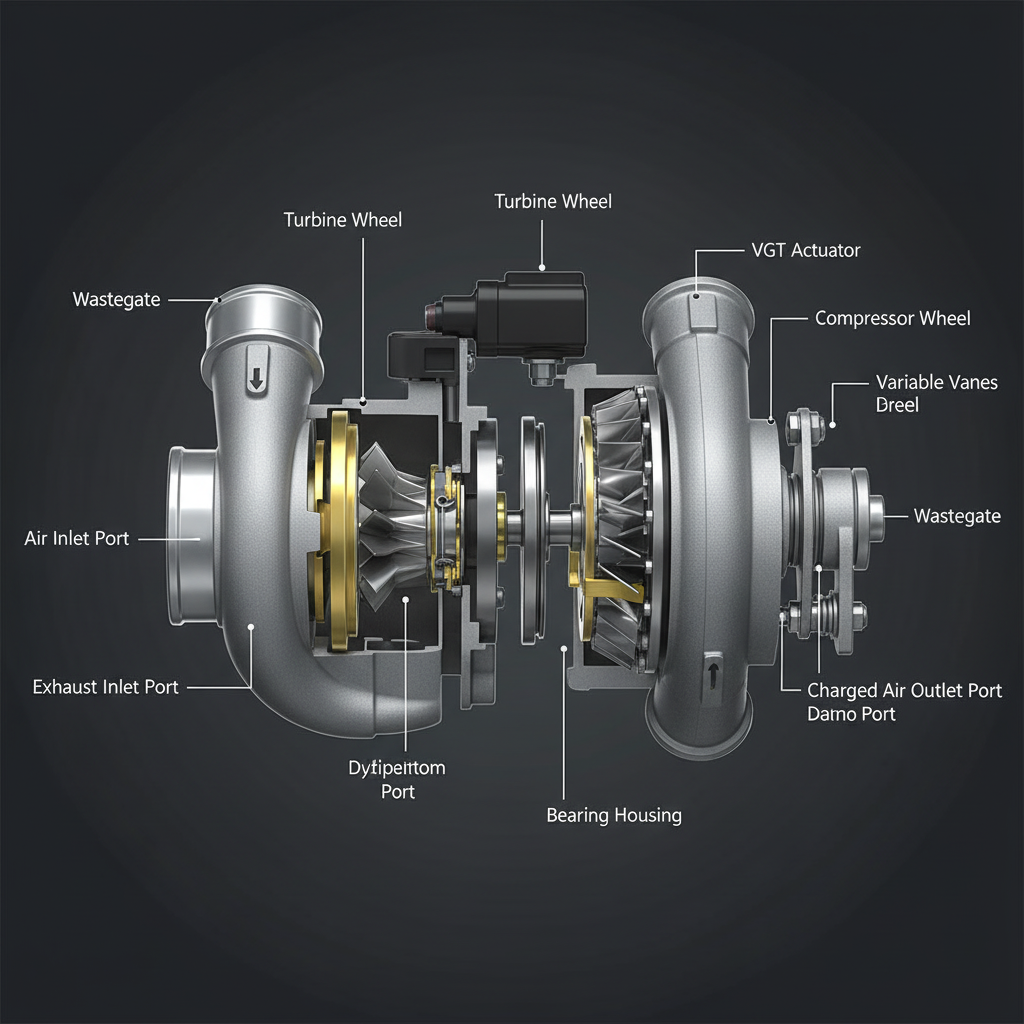
Fault Overview
PACCAR MX-13 underboost faults present as SPN 132 FMI 1 or equivalent boost-below-desired codes. EGR valve stuck open, VGT actuator carbon binding, CAC leaks, charge-air path leaks, and MAP sensor bias are the primary causes on this platform. EGR valve stuck open contributing to underboost and VGT actuator carbon binding after extended idle are documented MX-13 patterns. The EGR valve contribution to underboost is a platform-specific diagnostic step that is often missed on generic underboost flowcharts.
Engine & Platform Coverage
Symptoms
- •MX-13 underboost
- •PACCAR boost below desired
- •MX-13 power loss under load
- •MX-13 VGT actuator fault
- •MX-13 EGR contributing to underboost
Possible Causes
- 1.EGR valve stuck open — EGR valve stuck open diluting intake charge and reducing boost
- 2.VGT actuator carbon binding — VGT actuator carbon binding after extended idle preventing boost build
- 3.CAC leaks — charge-air cooler or boot leak reducing boost
- 4.Charge-air path leaks — charge-air path leak reducing boost
- 5.MAP sensor bias — MAP sensor bias producing false low boost reading
Diagnostic Flow — FSM Sequence
AI Diesel Tech enforces this evidence-gate sequence. Each gate must pass before advancing.
6 steps locked behind Technician Mode- 1Step 1 — EGR Valve Contribution Check: Check EGR valve contribution to underboost. Command the EGR valve closed and observe boost response. An EGR valve stuck open dilutes the intake charge and reduces boost. A boost improvement when the EGR valve is commanded closed confirms EGR valve contribution to underboost. Inspect the EGR valve for carbon buildup and sticking.
- 2Step 2 — VGT Actuator Sweep: Perform a VGT actuator sweep. Command the VGT actuator through its full range and confirm position feedback matches commanded position. VGT actuator carbon binding after extended idle is a documented MX-13 pattern. A VGT actuator that does not respond to commands or shows position feedback error confirms an actuator fault.
- 3Step 3 — CAC Leak Test: Perform a CAC leak test. Pressurize the charge-air system and inspect for leaks at the CAC, boots, and pipes. A CAC leak reduces boost and produces underboost codes. Repair any leaks found before further diagnosis.
- 4Step 4 — Charge-Air Path Inspection: Inspect the charge-air path from the turbo compressor outlet to the intake manifold. Inspect all boots, clamps, and pipes for cracks and loose connections. A charge-air path leak reduces boost and produces underboost codes.
- 5Step 5 — MAP Sensor Verification: Verify MAP sensor accuracy. Compare the MAP sensor reading to a known-good reference. A MAP sensor bias producing a false low boost reading confirms a sensing fault. Replace the MAP sensor if bias is confirmed after circuit proof.
- 6Step 6 — Turbo Mechanical Assessment Last: Perform turbo mechanical assessment only after EGR, actuator, and charge-air path faults are eliminated. Inspect turbo shaft play, wheel condition, and housing for damage. A turbo mechanical assessment is the last step, not the first.
- 7Step 7 — Verify After Repair: Verify boost meets the desired value under load after repair. Confirm underboost codes do not return. Monitor for return of underboost events over extended operation.
Unlock the full evidence-gated diagnostic sequence, DVOM test steps, and repair procedures in Technician Mode.
Repair Steps
3 steps locked- 1Service or replace EGR valve if stuck open.
- 2Service VGT actuator if carbon binding is confirmed.
- 3Repair CAC or charge-air path leaks.
- 4Replace MAP sensor if bias is confirmed.
- 5Replace turbo only with mechanical evidence after all upstream causes are eliminated.
Unlock full diagnostic steps, DVOM tests, and repair procedures.
Full Diagnostic Access
Verification steps, preventative measures, severity guidance, and legacy comparison are available in Technician Mode.
Start Diagnosing This Fault Now
AI Diesel Tech walks you through every evidence gate in the correct order. Choose the plan that fits your shop.
Related Resources
Related Fault Codes
Related Systems
Related Fault Codes
Related Sensor Locations
Common Symptoms
Related Articles
AI Diesel Tech — The Technician's Diagnostic Engine
AI Diesel Tech diagnostic logic is built by an ASE Certified Diesel Technician and engineered for professional shop use. Trusted by technicians nationwide — used in shops, fleets, and training programs.
Summary
The MX-13 has platform-specific underboost patterns. The AI Diesel Tech FSM enforces EGR and actuator gates before turbo replacement.