
Fuel Supply Diagnosis
Lift Pump Failure Symptoms
Lift pump failures cause low FRP, no-start conditions, and injector starvation worldwide. This USA-built diagnostic guide covers supply pressure, pump voltage, air intrusion, and filter restriction for Cummins, Detroit, Paccar, Volvo, CAT, and International engines.
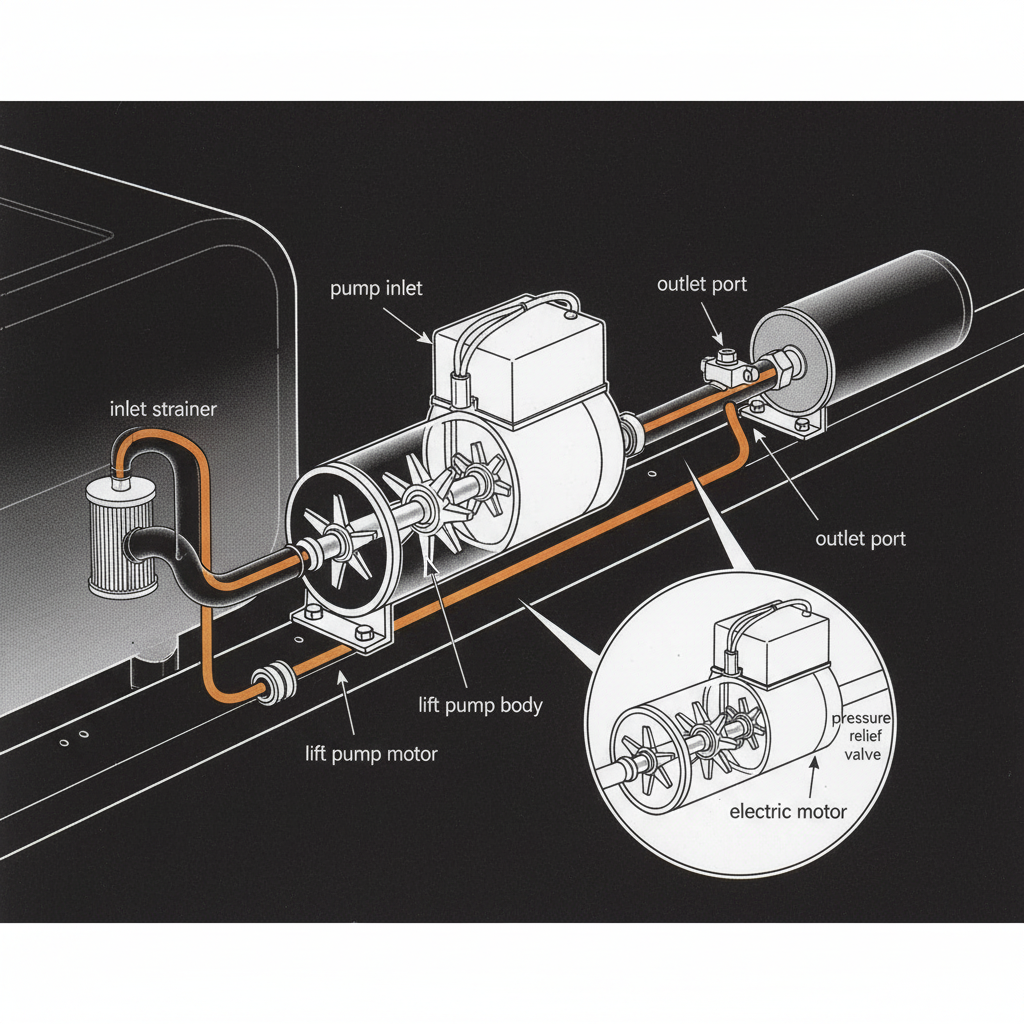
Why This Matters
- ▸A failed lift pump starves the high-pressure pump of fuel — continued operation causes HP pump seizure and injector damage.
- ▸Air intrusion from a failing lift pump causes intermittent no-start and stalling — diagnose before the truck leaves the shop.
- ▸Low lift pump pressure is often misdiagnosed as a high-pressure pump failure — always verify supply pressure first.
7-Step Diagnostic Flow
Check supply pressure
Measure lift pump output pressure with a mechanical gauge at the HP pump inlet. Cummins X15: 30–65 psi. Detroit DD15: 25–60 psi. Volvo D13: 25–55 psi. Pressure below spec = lift pump failure, clogged pre-filter, or air intrusion. Do not condemn the HP pump until supply pressure is verified.
Check pump voltage
Verify 12–14V supply voltage at the lift pump connector. Low voltage = wiring fault, blown fuse, or failed relay. Check the lift pump fuse and relay before condemning the pump. A pump that runs but produces low pressure with correct voltage = worn pump or clogged filter.
Check pump current draw
Measure lift pump current with a clamp meter. Normal current is 5–15A depending on platform. High current = pump working against restriction (clogged filter or kinked line). Low current = pump not running or open circuit. A pump that draws correct current but produces low pressure = worn pump internals.
Check air intrusion
Air in the fuel supply causes intermittent low FRP, rough idle, and stalling. Check all fuel line connections from the tank to the lift pump for loose fittings or cracked lines. A lift pump that is failing often draws air past worn shaft seals before it fails completely. Bleed the fuel system after any supply line repair.
Check filter plugging
A clogged primary fuel filter causes supply pressure drop that mimics lift pump failure. Check filter restriction — replace the filter and retest supply pressure. If pressure returns to spec after filter replacement, the filter was the cause. If pressure is still low after filter replacement, the lift pump is failing.
Check return flow
Verify fuel return circuit is not restricted. A blocked return line causes back-pressure that reduces net supply pressure. Check the return line from the HP pump back to the tank for kinks or blockage. A restricted return line causes high FRP at idle that drops at cruise — the opposite of a lift pump failure.
Check FRP contribution
With supply pressure confirmed low, verify the effect on FRP. Low supply pressure causes the HP pump to cavitate, producing low FRP with high noise. If supply pressure is within spec but FRP is still low, the HP pump is the cause — not the lift pump. Always diagnose in order: supply → HP pump → injectors.
Engine-Specific Notes
Cummins ISX / X15
Cummins X15 uses a gear-driven lift pump integral to the engine. Lift pump failures on X15 are less common than filter restriction. Check the pre-filter (strainer) at the tank pickup before condemning the lift pump. Cummins supply pressure spec is 30–65 psi — below 25 psi causes HP pump cavitation.
Detroit DD13 / DD15
Detroit uses a tandem pump (lift + HP in one unit). The lift pump section fails first — symptoms are low supply pressure with normal HP pump noise. Detroit tandem pump replacement requires the entire unit — the lift and HP sections are not serviceable separately.
Paccar MX-13
MX-13 uses a separate electric lift pump. Check pump voltage and current before condemning the pump. MX lift pump failures are common at 300,000–500,000 miles. MX supply pressure spec is 25–60 psi — below 20 psi causes CP4 HP pump cavitation and rapid wear.
Volvo / Mack MP8
Volvo D13 uses a separate electric lift pump with a dedicated fuse and relay. Check the fuse and relay before condemning the pump. Volvo lift pump failures are common in cold climates — the pump struggles to prime after cold soaks. Volvo supply pressure spec is 25–55 psi.
CAT C13 / C15
CAT uses a gear-driven lift pump. CAT lift pump failures are less common than filter restriction. Check the primary filter restriction indicator before diagnosing the lift pump. CAT supply pressure spec varies by model — consult service data. Low supply pressure on CAT causes HP pump noise before FRP drops.
International A26
A26 shares Cummins fuel system architecture. Follow Cummins lift pump logic. A26 lift pump failures are less common than Cummins but still occur at high mileage. Check the pre-filter strainer at the tank pickup — A26 is sensitive to tank sediment clogging the strainer.
DVOM Test Points
| Test | Spec | Note |
|---|---|---|
| Lift pump supply voltage | 12–14V at pump connector | Low voltage = wiring fault, blown fuse, or failed relay — check before condemning pump |
| Lift pump ground circuit | <0.1V voltage drop on ground circuit | High resistance ground causes low pump speed and insufficient supply pressure |
| Lift pump current draw | 5–15A (varies by platform) | High current = restriction; low current = pump not running or open circuit |
| Lift pump relay coil | 60–120 Ω coil resistance | Open coil = relay not energizing; verify relay operation before condemning pump |
Live Data Parameters to Monitor
Fuel Delivery Pressure (SPN 94)
30–65 psi (Cummins); 25–60 psi (Detroit/Paccar) — verify with mechanical gauge
FRP Actual vs Desired
Low FRP with low supply pressure = lift pump cause confirmed
Fuel Filter Restriction
High restriction = filter plugging causing supply pressure drop
Injection Quantity
Low quantity from supply starvation — verify supply pressure first
Fuel Temperature
High fuel temp reduces lift pump efficiency — check cooling circuit
Air-in-Fuel Status
Active AIF fault = air intrusion from failing pump or loose fitting
Related Fault Codes
Frequently Asked Questions
How do I know if the lift pump is bad vs the fuel filter?
Replace the fuel filter first — it is cheap and quick. If supply pressure returns to spec after filter replacement, the filter was the cause. If supply pressure is still low after filter replacement, test the lift pump: (1) Check voltage at the pump connector (12–14V); (2) Check current draw (5–15A); (3) Measure output pressure with a mechanical gauge. A pump with correct voltage and current but low output pressure = worn pump internals requiring replacement.
Can a failing lift pump cause a no-start?
Yes. A lift pump that fails completely causes the HP pump to cavitate — it cannot build rail pressure without supply fuel. The engine will crank but not start, or may start briefly and stall as residual rail pressure is consumed. Check supply pressure with a mechanical gauge before diagnosing the HP pump or injectors on a no-start condition.
What causes lift pumps to fail prematurely?
Common causes: (1) Running the fuel tank below 1/4 tank regularly — the fuel cools and lubricates the pump; low fuel level causes overheating; (2) Water contamination — water in the fuel corrodes pump internals; (3) Clogged pre-filter strainer at the tank pickup — the pump works against restriction and overheats; (4) Voltage drop from corroded connectors — low voltage causes the pump motor to overheat.
Master Fuel Supply Diagnosis
The AI Diesel Tech Academy covers lift pump testing, supply pressure, air intrusion, and filter restriction in depth — with DVOM procedures, live data interpretation, and real-world case studies.
Explore the Academy