
SPN 5466 FMI 2 — Aftertreatment DPF Soot Load Data Erratic
Erratic soot load is an input-correlation problem first. DPF replaced for unstable soot load while DP hoses were packed or an EGT was intermittent is the most documented misdiagnosis.
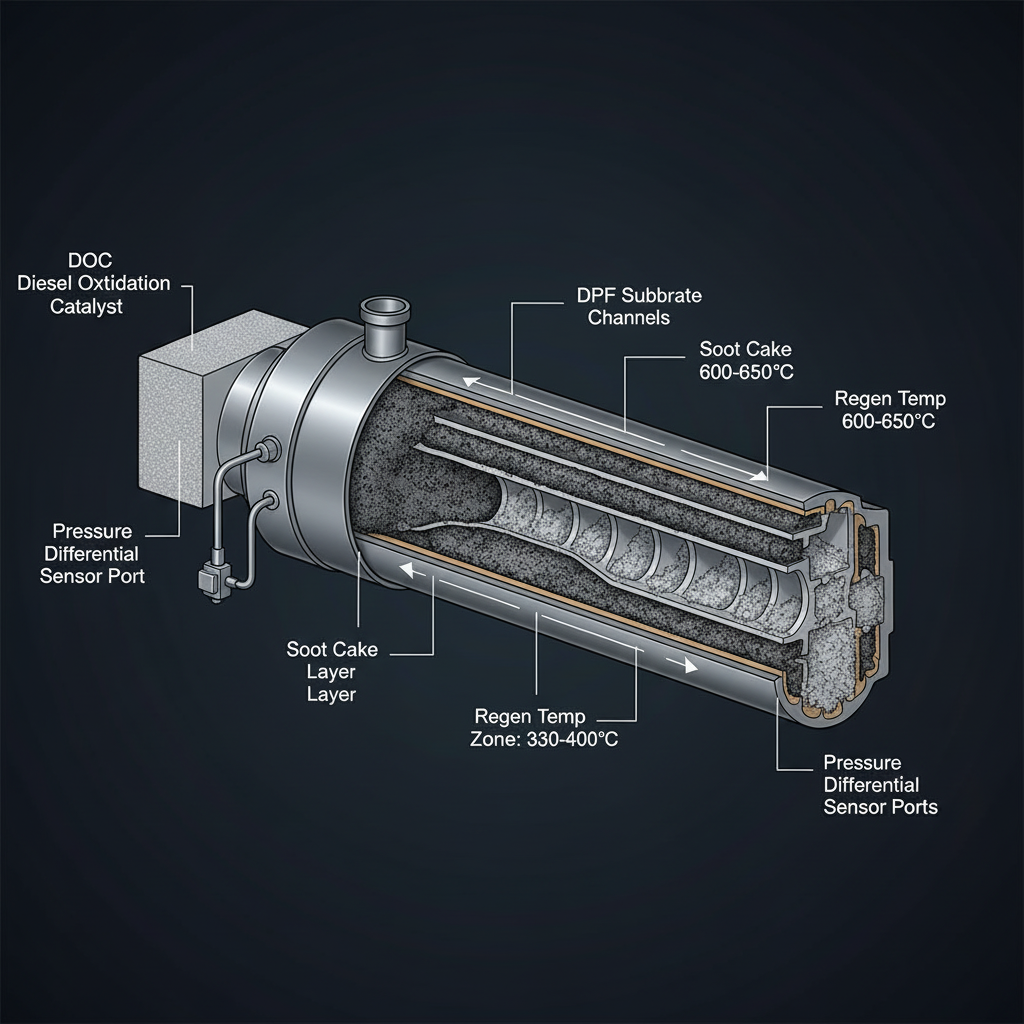
Fault Overview
SPN 5466 FMI 2 indicates the DPF soot load value is unstable or conflicting with related sensors — an erratic or data-validity class fault under extended OEM mapping. Unstable delta-P inputs, intermittent EGTs, software model conflict after service, and supply-bus instability feeding AT sensors are the primary causes. Wild soot load swings with stable pressures point to model or input faults rather than true DPF restriction.
Engine & Platform Coverage
Possible Causes
- 1.Unstable delta-P inputs from packed DP hoses or intermittent DP sensor
- 2.Intermittent EGT sensor feeding the soot model with unstable temperature data
- 3.Software model conflict after DPF service without required OEM relearn or reset
- 4.Supply-bus instability affecting multiple AT sensors feeding the soot model
- 5.Soot model recalibration needed after DPF cleaning or replacement
Wiring & Circuit Notes
Correlate soot load percentage, delta-P, and regen history together. Wild soot swings with stable pressures point to model or input faults. Inspect DP hoses and ports for soot packing and moisture before electrical checks. Check shared AT sensor supply stability.
DVOM Specs & Sensor Tests
Validate DP hoses and circuit before evaluating soot model stability. Validate EGT sensors feeding the soot model — an intermittent EGT will produce unstable soot model outputs. Check shared AT sensor supply bus voltage. Review service reset status — some platforms require an OEM relearn or reset after DPF service to re-initialize the soot model. DPF service is only indicated with true restriction evidence after all model inputs are proven stable.
Diagnostic Flow — FSM Sequence
AI Diesel Tech enforces this evidence-gate sequence. Each gate must pass before advancing.
5 steps locked behind Technician Mode- 1Inspect DP hoses and ports for soot packing and moisture
- 2Validate DP sensor circuit — open and short checks
- 3Validate EGT sensors feeding the soot model — graph during steady load
- 4Check shared AT sensor supply bus voltage stability
- 5Review service reset status — confirm OEM relearn or reset was performed after any recent DPF service
- 6DPF service only with true restriction evidence after all model inputs are proven stable
Unlock the full evidence-gated diagnostic sequence, DVOM test steps, and repair procedures in Technician Mode.
Repair Steps
4 steps locked- 1Inspect DP hoses and ports for soot packing and moisture
- 2Validate DP sensor circuit — open and short checks
- 3Validate EGT sensors feeding the soot model — graph during steady load
- 4Check shared AT sensor supply bus voltage stability
- 5Review service reset status — confirm OEM relearn or reset was performed after any recent DPF service
- 6DPF service only with true restriction evidence after all model inputs are proven stable
Unlock full diagnostic steps, DVOM tests, and repair procedures.
Full Diagnostic Access
Verification steps, preventative measures, severity guidance, and legacy comparison are available in Technician Mode.
Start Diagnosing This Fault Now
AI Diesel Tech walks you through every evidence gate in the correct order. Choose the plan that fits your shop.
Related Resources
Related Systems
Related Fault Codes
Related Sensor Locations
Common Symptoms
AI Diesel Tech — The Technician's Diagnostic Engine
AI Diesel Tech diagnostic logic is built by an ASE Certified Diesel Technician and engineered for professional shop use. Trusted by technicians nationwide — used in shops, fleets, and training programs.
Summary
SPN 5466 FMI 2 is a model-input correlation problem. DP hoses, EGT inputs, shared supply stability, and service reset status must all be validated before any DPF conclusions.