
Exhaust Pressure Map: Engine, DPF Inlet, DPF Outlet
Restriction diagnosis is a pressure-location problem, not a default DPF replacement. DPF replaced when the restriction was downstream, or downstream pipe work done when the DPF was actually loaded, is the most documented misdiagnosis.
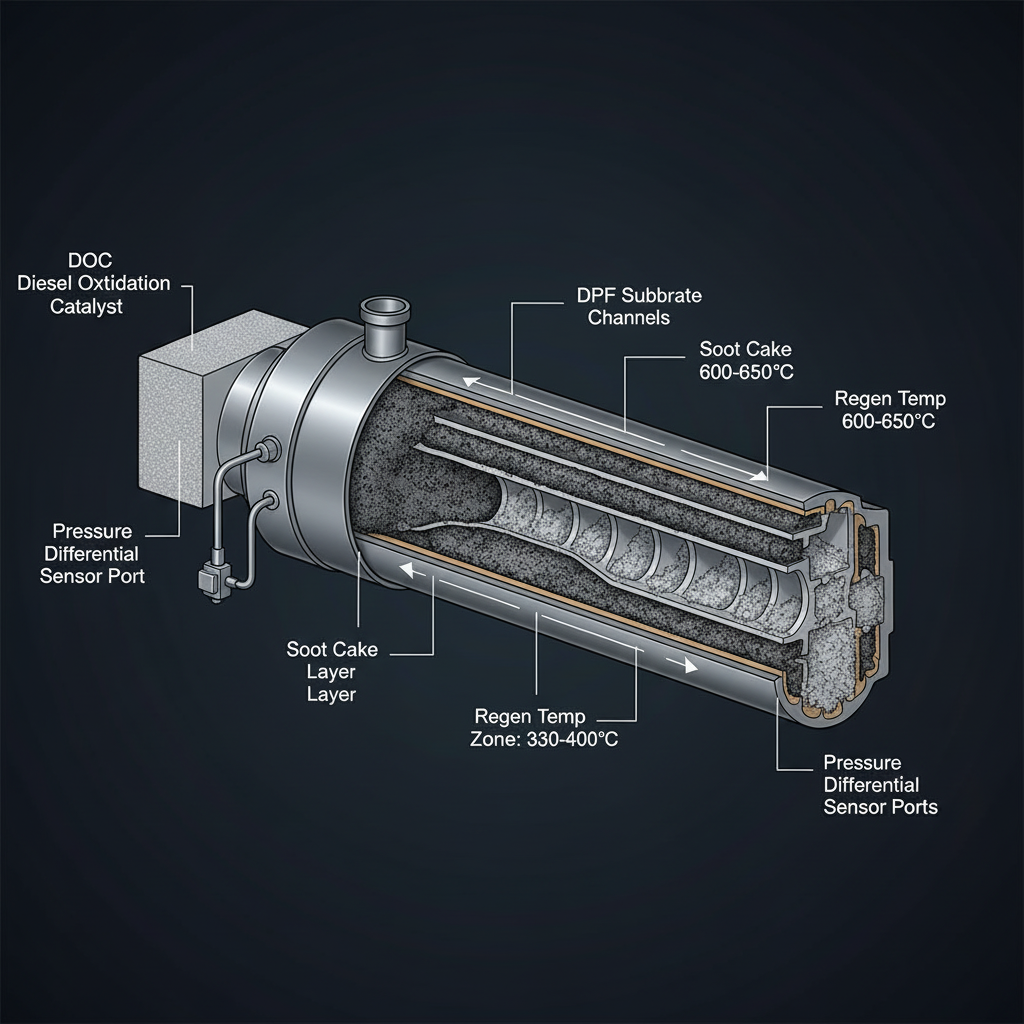
Fault Overview
This process page covers locating exhaust restriction using available pressure points rather than defaulting to DPF replacement. Loaded DPF, damaged substrate, downstream crushed exhaust or SCR path, and invalid sensors faking restriction are the primary causes. All involved pressure sensor circuits must be valid before mapping — a single invalid sensor disagreeing with the map is suspect.
Engine & Platform Coverage
Possible Causes
- 1.Loaded DPF with soot exceeding regen capability — true restriction at the brick
- 2.Damaged DPF substrate from thermal event — restriction at the brick
- 3.Downstream crushed exhaust or SCR path — restriction downstream of the DPF
- 4.Invalid pressure sensors faking restriction data
- 5.Packed DP hoses or ports producing false high delta-P readings
Wiring & Circuit Notes
All involved pressure sensor circuits must be proven valid before building the pressure map. A single sensor disagreeing with the map is suspect — validate it before accepting its data. Inspect DP hoses and ports for soot packing and moisture before electrical checks.
DVOM Specs & Sensor Tests
Use KOEO baselines, loaded pressures, and delta relationships to build the restriction map. Normal KOEO exhaust pressure should be near atmospheric. Under load, inlet pressure rises with restriction; outlet pressure rises with downstream restriction. A high inlet-to-outlet delta with normal outlet pressure localizes restriction to the DPF. A high outlet pressure with a normal inlet-to-outlet delta localizes restriction downstream. One sensor disagreeing with the map is suspect — validate it before accepting its data.
Diagnostic Flow — FSM Sequence
AI Diesel Tech enforces this evidence-gate sequence. Each gate must pass before advancing.
5 steps locked behind Technician Mode- 1Validate all exhaust pressure sensor circuits — open and short checks
- 2Inspect DP hoses and ports for soot packing and moisture — service if needed
- 3Record KOEO baseline pressures at all available points
- 4Build inlet/outlet/delta pressure map under controlled load conditions
- 5Identify the high-pressure side of the drop — inlet-to-outlet delta localizes to DPF; high outlet localizes downstream
- 6Inspect and service only the proven restriction section
Unlock the full evidence-gated diagnostic sequence, DVOM test steps, and repair procedures in Technician Mode.
Repair Steps
4 steps locked- 1Validate all exhaust pressure sensor circuits — open and short checks
- 2Inspect DP hoses and ports for soot packing and moisture — service if needed
- 3Record KOEO baseline pressures at all available points
- 4Build inlet/outlet/delta pressure map under controlled load conditions
- 5Identify the high-pressure side of the drop — inlet-to-outlet delta localizes to DPF; high outlet localizes downstream
- 6Inspect and service only the proven restriction section
Unlock full diagnostic steps, DVOM tests, and repair procedures.
Full Diagnostic Access
Verification steps, preventative measures, severity guidance, and legacy comparison are available in Technician Mode.
Start Diagnosing This Fault Now
AI Diesel Tech walks you through every evidence gate in the correct order. Choose the plan that fits your shop.
Related Resources
Related Systems
Related Fault Codes
Related Sensor Locations
Common Symptoms
AI Diesel Tech — The Technician's Diagnostic Engine
AI Diesel Tech diagnostic logic is built by an ASE Certified Diesel Technician and engineered for professional shop use. Trusted by technicians nationwide — used in shops, fleets, and training programs.
Summary
Exhaust restriction diagnosis requires a validated pressure map before any DPF or downstream service. The map identifies which section is restricted — service only the proven section.