
SPN 3228 FMI 0 — Aftertreatment Outlet NOx Above Normal
SPN 3228 FMI 0 means the outlet NOx concentration is above the expected threshold for conditions. High outlet NOx is a conversion-system performance fault — DEF chemistry, dosing quantity, upstream NOx, and combustion contributors must all be evaluated before any SCR catalyst decision.
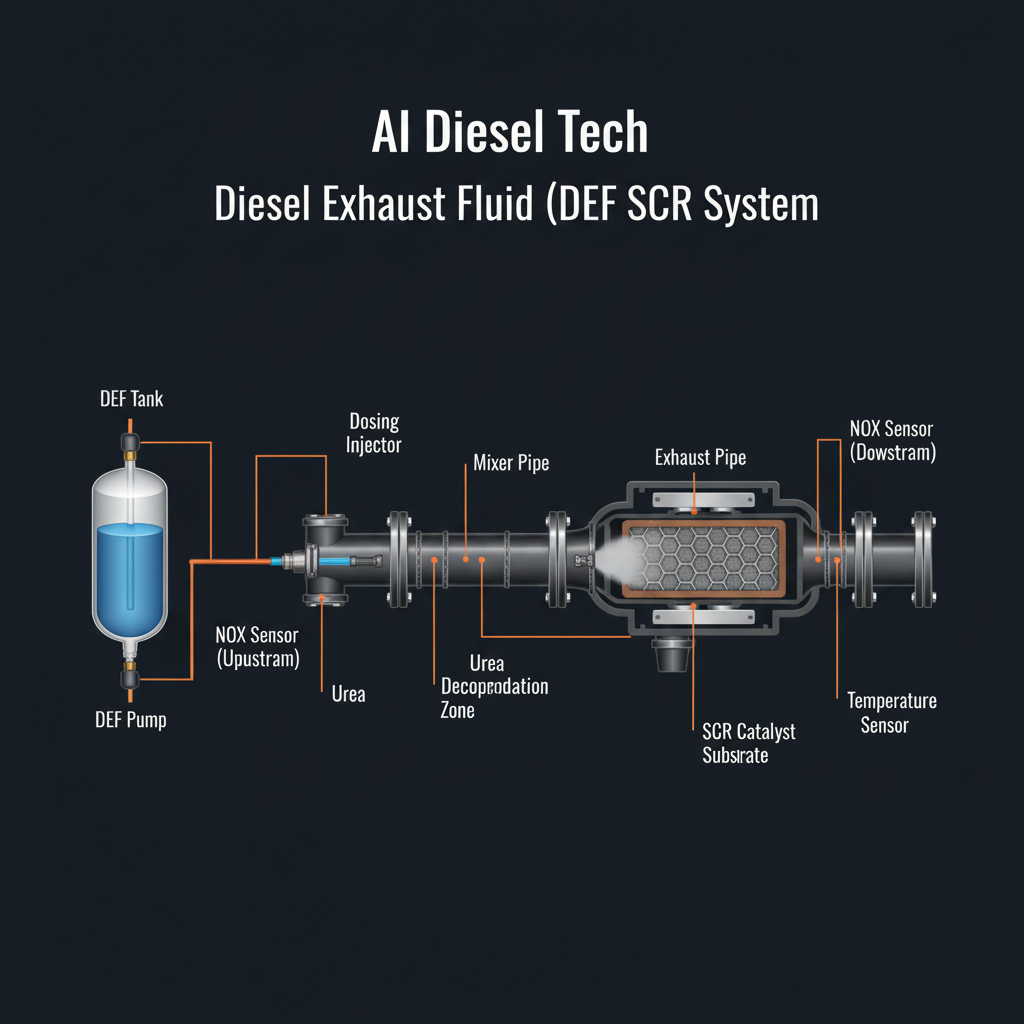
Fault Overview
FMI 0 on outlet NOx indicates the SCR system is not reducing NOx to the expected level. The ECM compares upstream and downstream NOx to calculate conversion efficiency. High outlet NOx can result from insufficient DEF dosing, contaminated DEF, degraded SCR catalyst, NOx sensor bias, exhaust leaks diluting the reading, or abnormally high engine-out NOx from combustion faults. High outlet NOx after DEF quality events and doser deposit recurrence are the most common fleet patterns. Replacing the SCR catalyst without proving DEF chemistry and dosing is the most expensive misdiagnosis on this fault.
Engine & Platform Coverage
Symptoms
- •High tailpipe NOx fault active
- •SCR not converting NOx
- •Outlet NOx above threshold
- •Emissions derate active
- •SCR efficiency declining
Possible Causes
- 1.Insufficient DEF dosing — low quantity reaching SCR catalyst
- 2.Contaminated DEF — diluted or contaminated urea solution
- 3.Degraded SCR catalyst — catalyst efficiency loss
- 4.NOx sensor bias — outlet sensor reading high without true high NOx
- 5.Exhaust leaks — ambient air diluting upstream reading
- 6.Abnormally high engine-out NOx — combustion fault contribution
Diagnostic Flow — FSM Sequence
AI Diesel Tech enforces this evidence-gate sequence. Each gate must pass before advancing.
6 steps locked behind Technician Mode- 1Single Action Gate — DEF Chemistry Verification: Test DEF concentration with a refractometer. Target: ~32.5% urea. Out-of-spec DEF is the highest-ROI first step on high outlet NOx complaints. Replace DEF before any other diagnostic step if concentration is outside the acceptable range.
- 2Binary Decision Gate — Dosing Quantity and Pressure: Verify DEF dosing quantity and pressure are within OEM specification. Insufficient dosing from a weak pump, clogged injector, or restricted lines reduces NOx conversion without any catalyst degradation.
- 3Override Manager — Upstream vs Outlet NOx Comparison: Compare upstream (inlet) NOx to outlet NOx. Calculate conversion efficiency. Low conversion with correct DEF chemistry and dosing supports catalyst degradation or exhaust leak dilution of the upstream reading.
- 4Safety Interceptor — Engine-Out NOx Evaluation: Evaluate engine-out NOx contributors. Abnormally high engine-out NOx from EGR faults, combustion issues, or injection timing problems can overwhelm a healthy SCR system and produce high outlet NOx without any aftertreatment failure.
- 5Resume Point — NOx Sensor Plausibility Check: Evaluate outlet NOx sensor plausibility against upstream NOx and dosing state. A sensor reading high with correct dosing and good upstream NOx supports sensor bias rather than true high outlet NOx.
- 6Verification Loop — Post-Service NOx Conversion Confirmation: After any repair, verify NOx conversion efficiency returns to expected levels. Monitor outlet NOx over extended operation to confirm the repair is stable.
- 7Repair Ledger Output — SCR Catalyst Decision: Replace SCR catalyst only after DEF chemistry, dosing, engine-out NOx, and sensor plausibility are all proven. Catalyst replacement without upstream proof produces repeat failures.
Unlock the full evidence-gated diagnostic sequence, DVOM test steps, and repair procedures in Technician Mode.
Repair Steps
3 steps locked- 1Replace DEF if refractometer confirms out-of-spec concentration.
- 2Service DEF dosing system if quantity or pressure is insufficient.
- 3Address engine-out NOx contributors if combustion faults are found.
- 4Replace outlet NOx sensor if bias is confirmed after plausibility check.
- 5Replace SCR catalyst only after all upstream causes are proven not to be the cause.
Unlock full diagnostic steps, DVOM tests, and repair procedures.
Full Diagnostic Access
Verification steps, preventative measures, severity guidance, and legacy comparison are available in Technician Mode.
Start Diagnosing This Fault Now
AI Diesel Tech walks you through every evidence gate in the correct order. Choose the plan that fits your shop.
Related Resources
Related Fault Codes
Related Systems
Related Fault Codes
Related Sensor Locations
Common Symptoms
Related Articles
AI Diesel Tech — The Technician's Diagnostic Engine
AI Diesel Tech diagnostic logic is built by an ASE Certified Diesel Technician and engineered for professional shop use. Trusted by technicians nationwide — used in shops, fleets, and training programs.
Summary
SPN 3228 FMI 0 is a conversion-system performance fault. Prove DEF chemistry, dosing, engine-out NOx, and sensor plausibility before any SCR catalyst decision. The AI Diesel Tech FSM enforces upstream combustion and dosing gates before the catalyst replacement branch opens.