
Exhaust Restriction Testing — Upstream vs Downstream of DPF
Restriction diagnosis is a pressure-location problem, not a single-part assumption. DPF replaced when the downstream pipe was crushed and the downstream pipe replaced when the DPF was loaded are both documented patterns — upstream and downstream isolation prevents wrong-brick work.
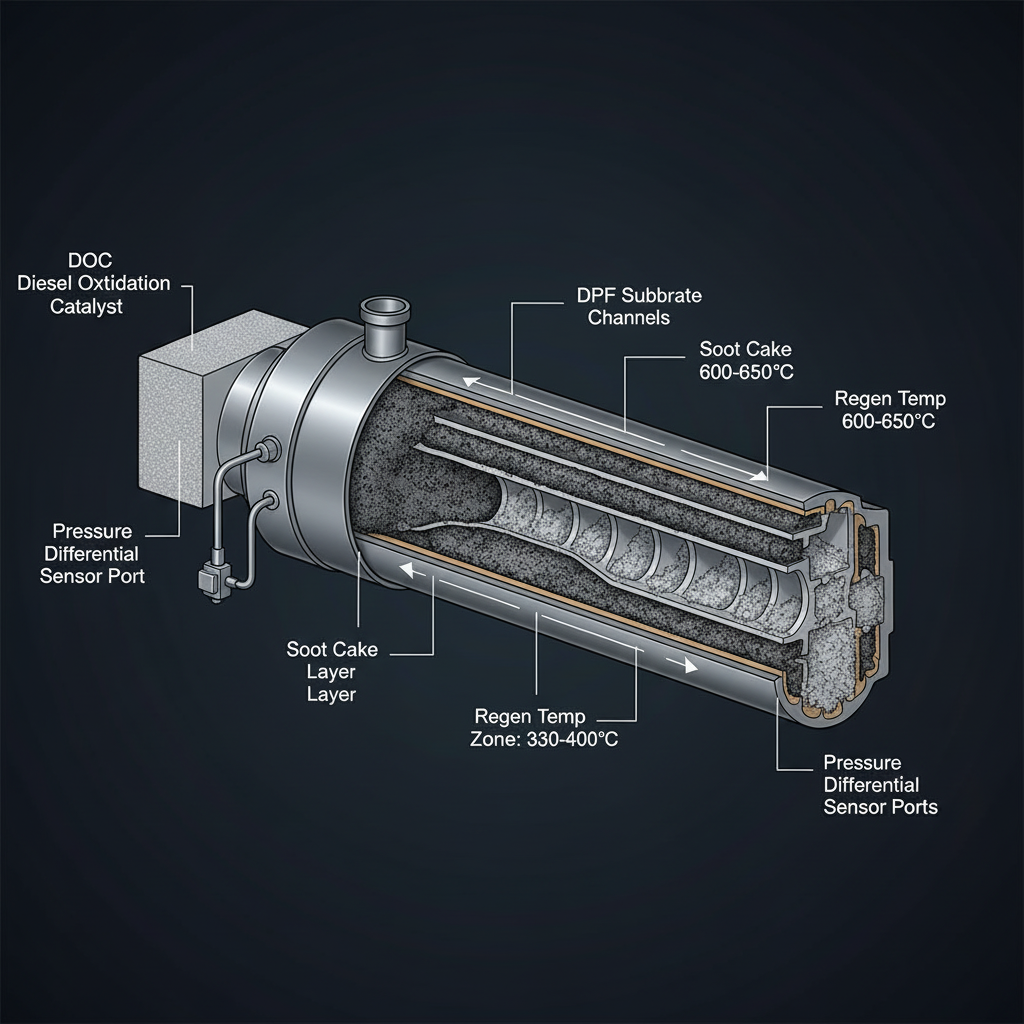
Fault Overview
Exhaust restriction can occur upstream of the DPF, within the DPF, or downstream of the DPF in the SCR or exhaust path. Loaded DPF, damaged substrate, downstream crushed exhaust, and sensor errors faking restriction are the primary causes. DPF replaced when the downstream pipe was crushed and the opposite — downstream pipe replaced when the DPF was loaded — are both documented patterns. Confirming sensor integrity before mechanical tests ensures pressure-based decisions are not based on false data.
Engine & Platform Coverage
Symptoms
- •High exhaust backpressure
- •DPF restriction indication
- •Power loss under load from restriction
- •High EGTs under load from restriction
- •Regen abort from restriction
Possible Causes
- 1.Loaded DPF — DPF soot or ash accumulation producing restriction
- 2.Damaged substrate — DPF substrate damage producing restriction
- 3.Downstream crushed exhaust — physical damage to downstream exhaust path
- 4.Downstream SCR restriction — SCR or exhaust outlet restriction
- 5.Sensor errors faking restriction — delta-P or pressure sensor fault producing false restriction indication
Diagnostic Flow — FSM Sequence
AI Diesel Tech enforces this evidence-gate sequence. Each gate must pass before advancing.
6 steps locked behind Technician Mode- 1Step 1 — Validate Sensors: Validate delta-P and pressure sensors before any mechanical restriction diagnosis. Confirm sensor baselines at KOEO are near zero differential pressure. Confirm sense hose connections are intact. A sensor or hose fault producing false restriction data leads to incorrect mechanical conclusions.
- 2Step 2 — Compare Inlet and Outlet Pressures: Compare DPF inlet and outlet pressures. A high inlet pressure with a normal outlet pressure confirms restriction upstream of the outlet sensor — within the DPF or upstream of the DPF. A high outlet pressure with a normal inlet pressure confirms restriction downstream of the DPF.
- 3Step 3 — Evaluate Delta-P: Evaluate delta-P across the DPF. A high delta-P confirms restriction within the DPF. A normal delta-P with high absolute pressures on both sides confirms restriction downstream of the DPF. Delta-P is the most direct indicator of DPF restriction.
- 4Step 4 — Inspect Downstream Path: Inspect the downstream AT and exhaust path for restriction or physical damage. DPF replaced when the downstream pipe was crushed is a documented pattern. Inspect SCR inlet, exhaust outlet, and any downstream components for restriction or physical damage from road impact.
- 5Step 5 — Confirm Under Load: Confirm restriction under load if the restriction is intermittent or borderline. True restriction increases under load. A restriction that is borderline at idle and severe under load confirms a true restriction that requires service.
- 6Step 6 — Decide Clean, Replace, or Exhaust Repair: Make the service decision based on pressure location. A confirmed DPF restriction requires DPF cleaning or replacement. A confirmed downstream restriction requires exhaust path repair. A confirmed sensor fault requires sensor or hose service.
- 7Step 7 — Verify After Service: Verify pressure readings return to normal after service. Confirm delta-P returns to normal after DPF service. Confirm outlet pressure returns to normal after downstream exhaust repair. Monitor for return of restriction over extended operation.
Unlock the full evidence-gated diagnostic sequence, DVOM test steps, and repair procedures in Technician Mode.
Repair Steps
1 steps locked- 1Service or replace DPF if DPF restriction is confirmed.
- 2Repair downstream exhaust path if downstream restriction is confirmed.
- 3Service delta-P sensor or hoses if sensor fault is confirmed.
Unlock full diagnostic steps, DVOM tests, and repair procedures.
Full Diagnostic Access
Verification steps, preventative measures, severity guidance, and legacy comparison are available in Technician Mode.
Start Diagnosing This Fault Now
AI Diesel Tech walks you through every evidence gate in the correct order. Choose the plan that fits your shop.
Related Resources
Related Fault Codes
Related Systems
Related Fault Codes
Related Sensor Locations
Common Symptoms
AI Diesel Tech — The Technician's Diagnostic Engine
AI Diesel Tech diagnostic logic is built by an ASE Certified Diesel Technician and engineered for professional shop use. Trusted by technicians nationwide — used in shops, fleets, and training programs.
Summary
Restriction diagnosis is a pressure-location problem. The AI Diesel Tech FSM enforces upstream and downstream isolation to prevent wrong-brick work.