
2015–2019 Volvo D13 DEF Dosing and Inducement Path
D13 inducement is typically upstream dosing, quality, or NOx left unresolved. Ordered inducement cascade control prevents clearing inducement repeatedly without correcting the root cause.
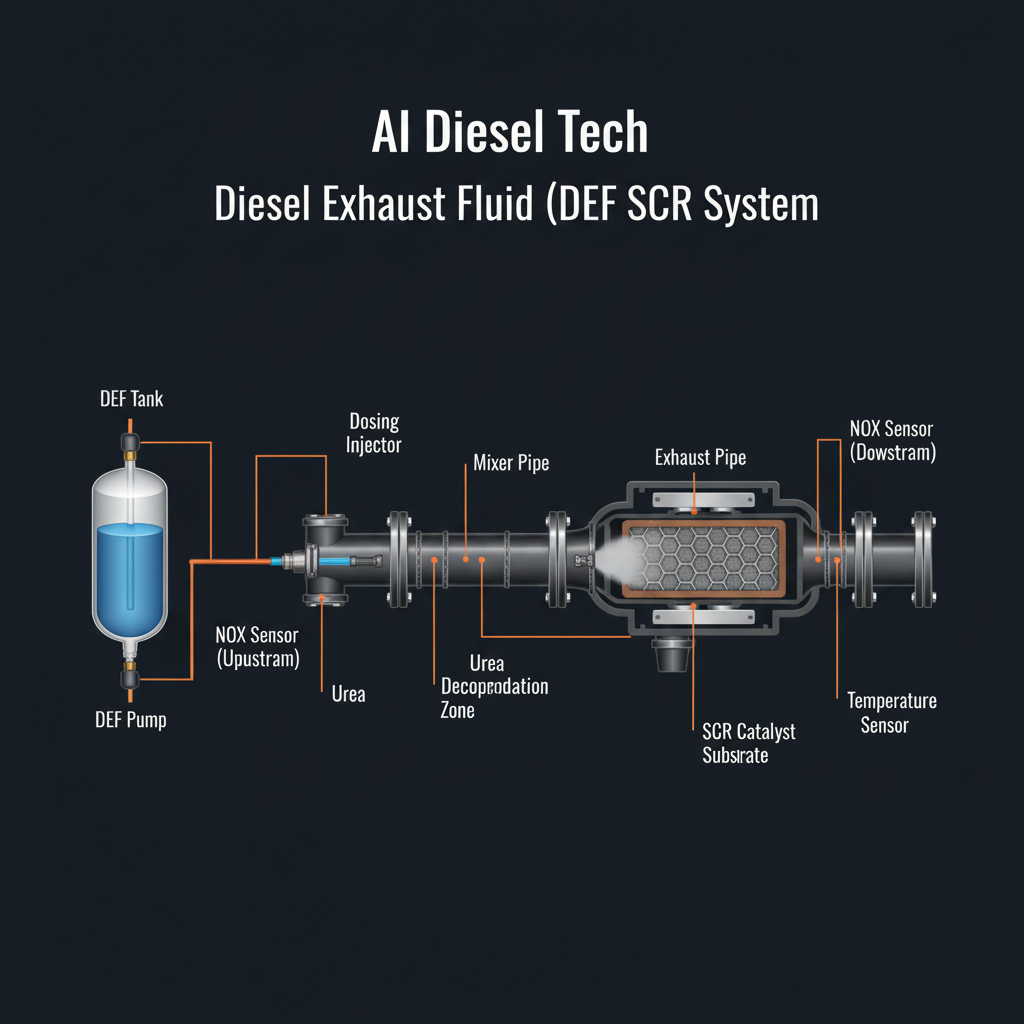
Fault Overview
The Volvo D13 DEF dosing and inducement path covers DEF quality, pump and line restrictions, doser deposits, NOx sensor faults, and ignored efficiency codes progressing toward inducement. Cold-climate line heater issues contributing to dosing faults and doser deposit accumulation are documented patterns on D13 platforms. Clearing inducement repeatedly without correcting the root cause is the most documented misdiagnosis pattern — inducement returns immediately after clearing when the root cause remains active. Confirm by VIN and engine serial for exact strategy on the specific D13 application.
Engine & Platform Coverage
Symptoms
- •Volvo D13 DEF derate
- •D13 SCR inducement
- •Volvo dosing quantity low
- •D13 NOx efficiency fault
- •Cold-climate DEF line heater fault on D13
Possible Causes
- 1.DEF quality — DEF quality below specification
- 2.Pump or line restrictions — DEF pump or line restriction limiting dosing
- 3.Doser deposits — doser deposit accumulation
- 4.NOx sensor faults — NOx sensor failure producing efficiency faults
- 5.Cold-climate line heater issues — DEF line heater fault preventing dosing in cold weather
- 6.Ignored efficiency codes — efficiency codes left unresolved progressing to inducement
Diagnostic Flow — FSM Sequence
AI Diesel Tech enforces this evidence-gate sequence. Each gate must pass before advancing.
6 steps locked behind Technician Mode- 1Step 1 — Code Timeline Review: Review the code timeline to identify the first fault in the inducement cascade. The first fault in the timeline identifies the root cause. A DEF quality or dosing fault appearing before an efficiency fault confirms the quality or dosing fault is the root cause.
- 2Step 2 — DEF Chemistry Proof: Test DEF chemistry with a refractometer. A refractometer reading below the minimum specification confirms diluted or contaminated DEF. Electrical sensor diagnosis only after chemistry is proven good.
- 3Step 3 — Pressure and Dosing Tests: Perform OEM pressure and dosing tests. Confirm DEF pressure meets specification during dosing. Confirm dosing quantity is within specification. A pressure or dosing quantity fault confirms a pump, line, or doser fault.
- 4Step 4 — Cold-Climate Line Heater Enable Check: Check DEF line heater enable in cold weather. Cold-climate line heater issues contributing to dosing faults are a documented D13 pattern. Confirm the line heater is enabling correctly in cold weather. Inspect frame-rail heated line connections for corrosion or damage.
- 5Step 5 — NOx Sensor Plausibility Checks: Perform NOx sensor plausibility checks. Compare upstream and downstream NOx readings. A sensor that reads implausibly while the other reads normally confirms sensor failure. Confirm NOx sensor heater operation.
- 6Step 6 — Inducement Recovery After Repair: Perform inducement recovery procedure after repair. Follow OEM inducement recovery procedure for the specific D13 application. Confirm all fault codes are resolved and inducement is cleared before road dispatch.
- 7Step 7 — Verify Over Extended Operation: Verify the repair over extended operation. Monitor for return of DEF quality, dosing, or NOx faults. Confirm inducement does not return after extended operation.
Unlock the full evidence-gated diagnostic sequence, DVOM test steps, and repair procedures in Technician Mode.
Repair Steps
3 steps locked- 1Drain, flush, and refill DEF tank with verified DEF if quality fault is confirmed.
- 2Repair DEF pump, lines, or doser if dosing fault is confirmed.
- 3Repair or replace DEF line heater if cold-climate fault is confirmed.
- 4Replace NOx sensor if failure is confirmed after plausibility checks.
- 5Perform inducement recovery procedure after repair.
Unlock full diagnostic steps, DVOM tests, and repair procedures.
Full Diagnostic Access
Verification steps, preventative measures, severity guidance, and legacy comparison are available in Technician Mode.
Start Diagnosing This Fault Now
AI Diesel Tech walks you through every evidence gate in the correct order. Choose the plan that fits your shop.
Related Resources
Related Fault Codes
Related Systems
Related Fault Codes
Related Sensor Locations
Common Symptoms
Related Articles
AI Diesel Tech — The Technician's Diagnostic Engine
AI Diesel Tech diagnostic logic is built by an ASE Certified Diesel Technician and engineered for professional shop use. Trusted by technicians nationwide — used in shops, fleets, and training programs.
Summary
D13 inducement is typically upstream dosing, quality, or NOx left unresolved. The AI Diesel Tech FSM enforces ordered inducement cascade control.