
Turbo Oil Supply and Drain Restriction Checks
Many turbo comebacks are oil supply and drain problems, not just bad cores. Repeat turbo failures after replacement when the drain was restricted or the oil feed was not primed or cleaned are the most documented patterns in turbo service. The FSM prevents repeat turbo failure by forcing oil-circuit verification.
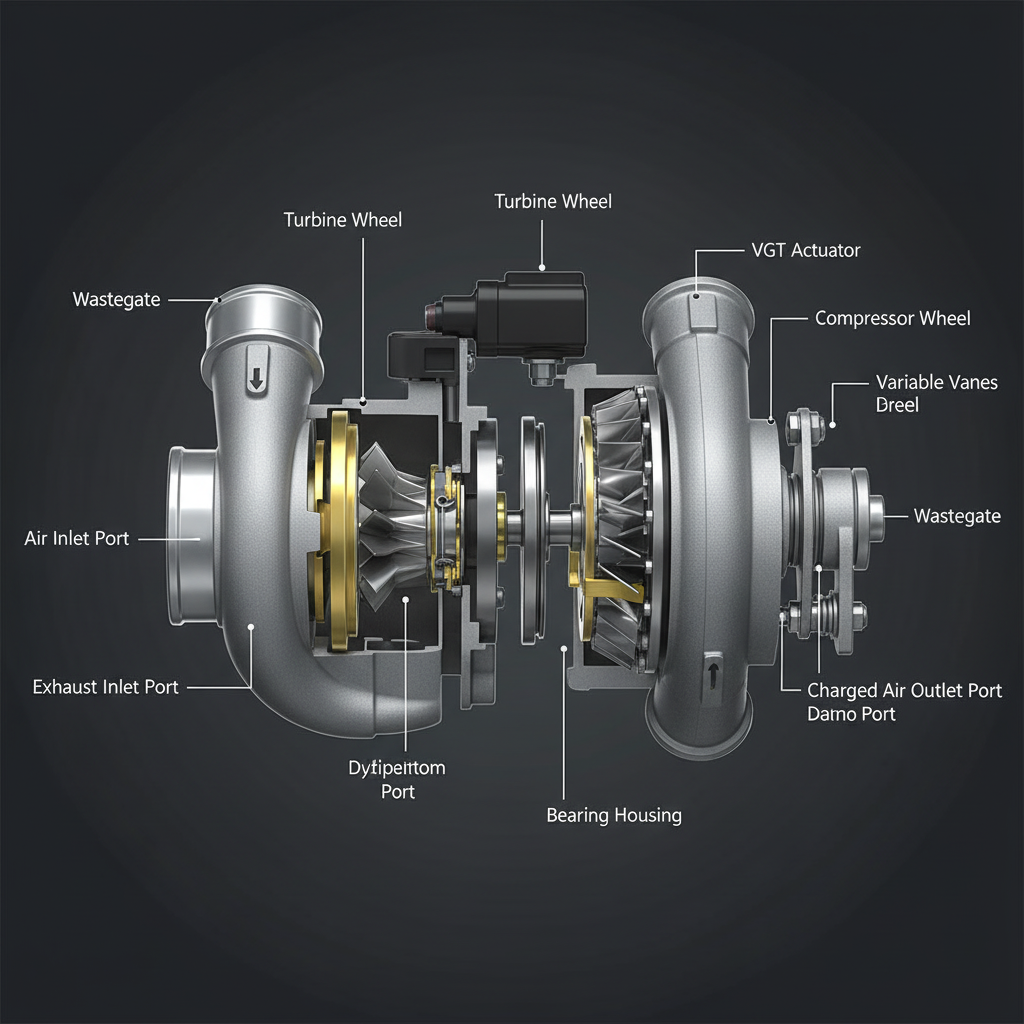
Fault Overview
Turbo failures and seal leakage related to oil feed and drain restrictions are a distinct diagnostic category from core turbo mechanical failures. Coked feed line, restricted drain, improper gasket or restrictor omission or duplication, sludge, and aftertreatment backpressure contributing to seal push are the primary causes. Repeat turbo failures after replacement when the drain was restricted or the oil feed was not primed or cleaned are documented patterns. Oil-circuit verification is required before and after any turbo replacement to prevent repeat failures.
Engine & Platform Coverage
Symptoms
- •Repeat turbo failure after replacement
- •Turbo oil supply restriction
- •Turbo drain blocked
- •Turbo smoking oil from seal push
- •Turbo bearing failure from oil starvation
Possible Causes
- 1.Coked feed line — oil feed line coked from heat and oil degradation
- 2.Restricted drain — turbo drain restriction preventing oil return to crankcase
- 3.Improper gasket or restrictor — gasket or restrictor omission or duplication during service
- 4.Sludge — oil sludge accumulation in feed or drain path
- 5.Aftertreatment backpressure — excessive exhaust backpressure contributing to seal push
Diagnostic Flow — FSM Sequence
AI Diesel Tech enforces this evidence-gate sequence. Each gate must pass before advancing.
6 steps locked behind Technician Mode- 1Step 1 — Inspect Feed Line Screen and Restriction: Inspect the turbo oil feed line screen and line for restriction. A coked or restricted feed line starves the turbo bearing of oil and produces bearing failure. Inspect the feed line screen for debris. Inspect the feed line for coke deposits and restriction. Clean or replace the feed line if restriction is found.
- 2Step 2 — Verify Free Drain to Crankcase: Verify the turbo drain line is free and drains to the crankcase without restriction. A restricted drain prevents oil from returning to the crankcase and produces oil seal push and bearing flooding. Confirm the drain line is clear and properly routed with adequate slope to the crankcase.
- 3Step 3 — Confirm Correct Gaskets and Restrictors: Confirm the correct gaskets and restrictors are installed. An omitted or duplicated restrictor changes the oil flow rate to the turbo bearing. Verify the correct gasket and restrictor are installed per OEM specifications. An incorrect restrictor installation is a documented cause of repeat turbo failure after service.
- 4Step 4 — Evaluate Excessive Crankcase Pressure: Evaluate excessive crankcase pressure as a contributor to turbo seal push. Excessive crankcase pressure pushes oil past the turbo seals and produces oil consumption and smoke. Confirm crankcase pressure is within specification before turbo replacement. Address crankcase pressure causes before turbo service.
- 5Step 5 — Prime and Verify Oil at Feed Before Start: Prime the turbo and verify oil at the feed before the first start after any turbo replacement. A dry-start after turbo replacement produces immediate bearing damage. Prime the turbo per OEM procedure. Confirm oil is present at the feed before cranking.
- 6Step 6 — Address Aftertreatment Backpressure If Elevated: Address aftertreatment backpressure if elevated. Excessive exhaust backpressure contributes to turbo seal push by increasing the pressure differential across the turbine seal. Confirm exhaust backpressure is within specification before returning to service after turbo replacement.
- 7Step 7 — Verify After Service: Verify oil supply and drain integrity after turbo service. Confirm oil is flowing freely to and from the turbo after the first start. Monitor for oil consumption or smoke after turbo replacement. A repeat failure within a short time after replacement confirms an oil supply or drain fault was not corrected.
Unlock the full evidence-gated diagnostic sequence, DVOM test steps, and repair procedures in Technician Mode.
Repair Steps
4 steps locked- 1Clean or replace coked or restricted oil feed line.
- 2Clear or replace restricted drain line.
- 3Install correct gaskets and restrictors per OEM specifications.
- 4Address crankcase pressure causes before turbo service.
- 5Prime turbo per OEM procedure before first start after replacement.
- 6Address aftertreatment backpressure if elevated.
Unlock full diagnostic steps, DVOM tests, and repair procedures.
Full Diagnostic Access
Verification steps, preventative measures, severity guidance, and legacy comparison are available in Technician Mode.
Start Diagnosing This Fault Now
AI Diesel Tech walks you through every evidence gate in the correct order. Choose the plan that fits your shop.
Related Resources
Related Fault Codes
Related Systems
Related Fault Codes
Related Sensor Locations
Common Symptoms
Related Articles
AI Diesel Tech — The Technician's Diagnostic Engine
AI Diesel Tech diagnostic logic is built by an ASE Certified Diesel Technician and engineered for professional shop use. Trusted by technicians nationwide — used in shops, fleets, and training programs.
Summary
Many turbo comebacks are oil supply and drain problems, not just bad cores. The AI Diesel Tech FSM prevents repeat turbo failure by forcing oil-circuit verification.