
SPN 103 FMI 2 — Turbocharger Speed Data Erratic
Erratic turbo speed is usually sensor or harness integrity in the heat zone. Actuator or turbo replaced for an intermittent speed sensor is the most documented misdiagnosis on this fault class.
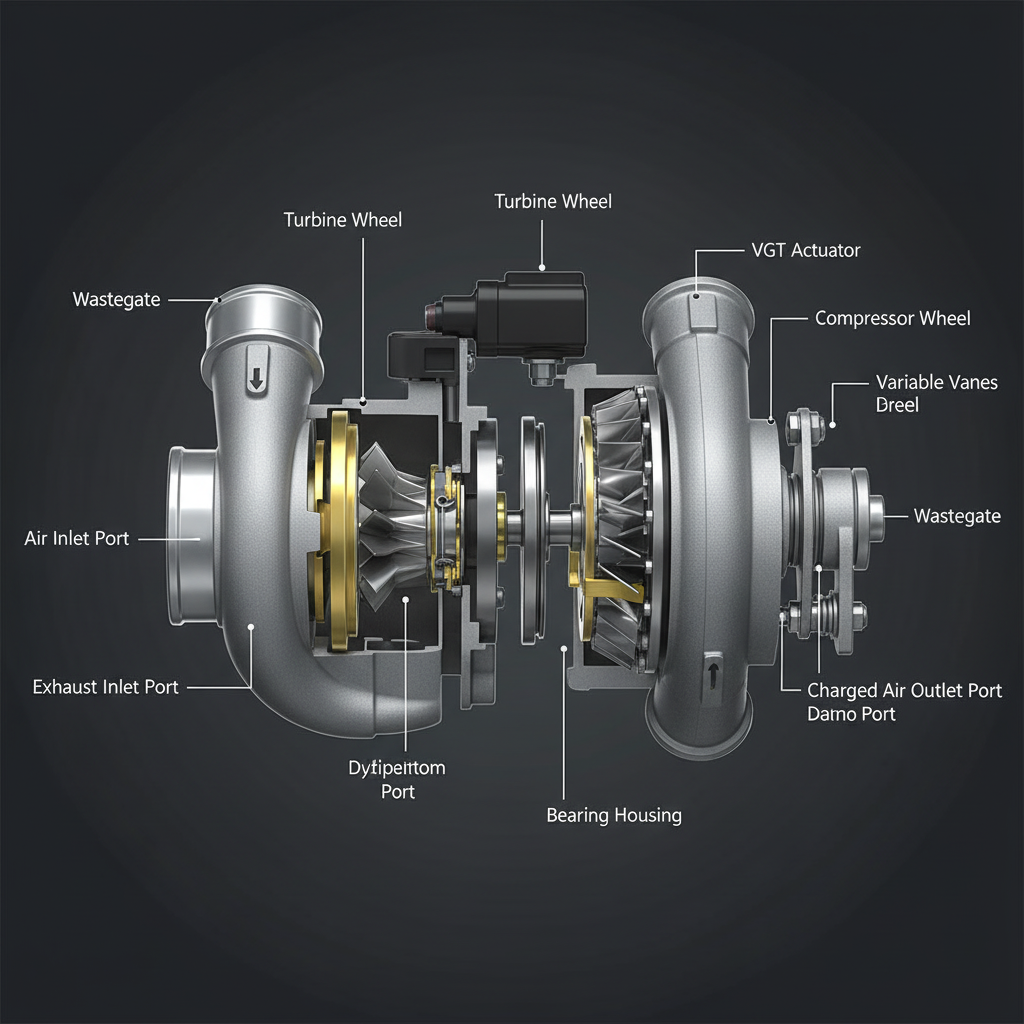
Fault Overview
SPN 103 FMI 2 indicates the turbo speed signal is unstable or implausible. Failing speed sensor, heat-zone harness intermittents, connector fretting, and debris or tone issues on the sensing element path are the primary causes. Hot wiggle testing and speed-versus-boost graphing are required before any actuator or turbo replacement.
Engine & Platform Coverage
Symptoms
- •Turbo speed reading jumping erratically on scan tool
- •Intermittent speed sensor fault with no consistent pattern
- •Speed reading unstable during steady road load
- •Actuator or turbo replaced without resolving the erratic reading
- •Speed sensor connector fretting in the heat zone
Possible Causes
- 1.Failing speed sensor with intermittent output
- 2.Heat-zone harness intermittent fault near the turbo
- 3.Connector fretting at the speed sensor in the heat zone
- 4.Debris or tone issues on the sensing element path
Diagnostic Flow — FSM Sequence
AI Diesel Tech enforces this evidence-gate sequence. Each gate must pass before advancing.
4 steps locked behind Technician Mode- 1Step 1 — Graph Speed and Boost Together: Graph turbo speed against boost pressure. Electrical dropouts are abrupt and instantaneous. Real turbo instability usually correlates with boost instability. Abrupt speed drops with stable boost confirm a sensor or circuit fault.
- 2Step 2 — Hot Wiggle Test: Perform a hot wiggle test at the turbo speed sensor connector and nearest harness clips while monitoring the speed reading. An abrupt change in reading during the wiggle test confirms an intermittent connector or harness fault in the heat zone.
- 3Step 3 — Circuit Continuity: Perform circuit continuity checks on the speed sensor circuit. Heat-zone harness intermittents may not be detectable cold — perform checks at operating temperature when possible.
- 4Step 4 — Sensor Replacement After Proof: Replace the speed sensor and heat-zone harness only after the connector and circuit are confirmed as the source of the erratic data.
- 5Step 5 — Control Path Only If Speed Data Is Stable and Performance Is Still Wrong: Proceed to actuator or turbo diagnosis only if speed data is stable and consistent after sensor and harness repair, and performance is still abnormal.
Unlock the full evidence-gated diagnostic sequence, DVOM test steps, and repair procedures in Technician Mode.
Repair Steps
2 steps locked- 1Replace speed sensor after intermittent output is confirmed.
- 2Repair heat-zone harness intermittent fault.
- 3Replace fretting connector at the speed sensor.
- 4Proceed to actuator or turbo diagnosis only if speed data is stable and performance remains abnormal.
Unlock full diagnostic steps, DVOM tests, and repair procedures.
Full Diagnostic Access
Verification steps, preventative measures, severity guidance, and legacy comparison are available in Technician Mode.
Start Diagnosing This Fault Now
AI Diesel Tech walks you through every evidence gate in the correct order. Choose the plan that fits your shop.
Related Resources
Related Fault Codes
Related Systems
Related Fault Codes
Related Sensor Locations
Common Symptoms
Related Articles
AI Diesel Tech — The Technician's Diagnostic Engine
AI Diesel Tech diagnostic logic is built by an ASE Certified Diesel Technician and engineered for professional shop use. Trusted by technicians nationwide — used in shops, fleets, and training programs.
Summary
SPN 103 FMI 2 is a turbo speed signal integrity fault. Graph speed against boost, perform a hot wiggle test, and prove the sensor before any actuator or turbo replacement.