
SPN 103 FMI 1 — Turbocharger Speed Below Normal
Low turbo speed is either a sensor problem or a real underboost problem — correlation decides. Underboost leak paths missed because only the speed sensor was replaced, and the reverse, are the most documented patterns on this fault class.
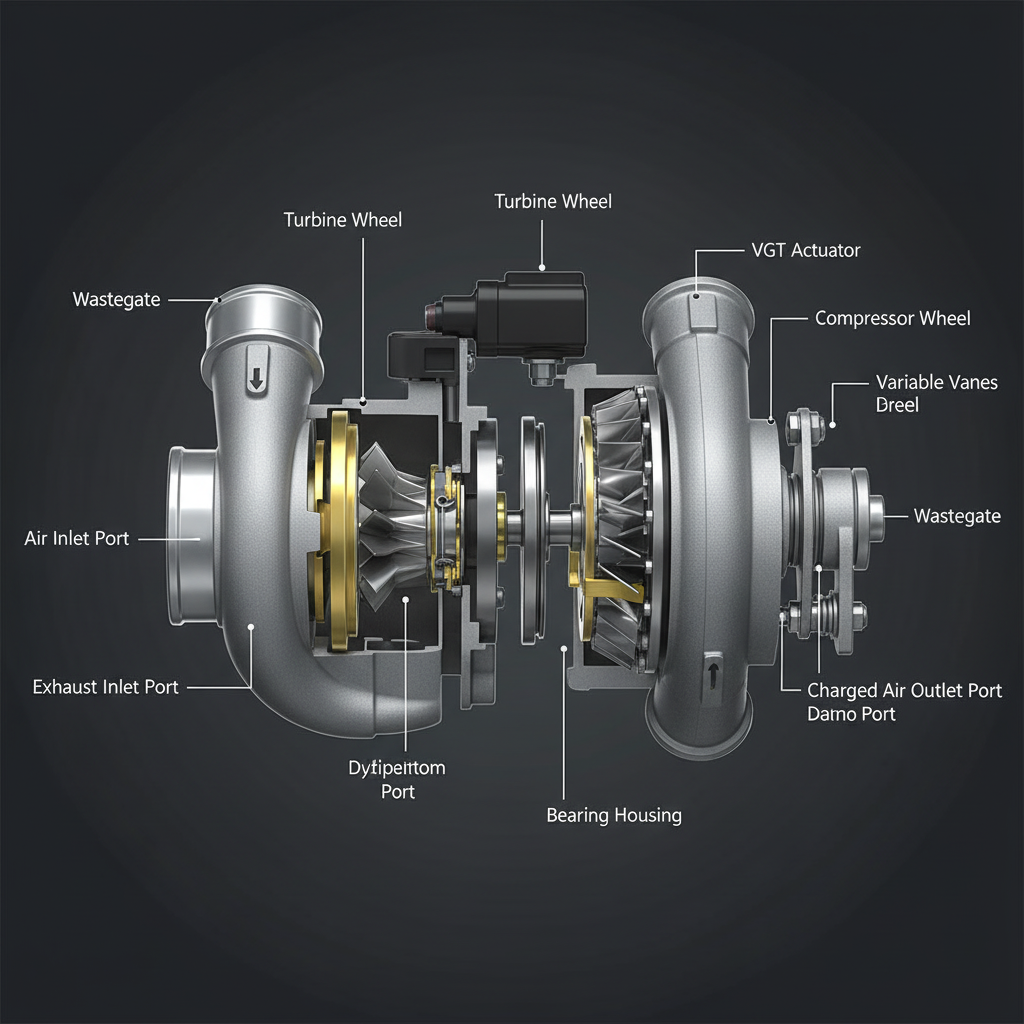
Fault Overview
SPN 103 FMI 1 indicates turbo speed is below the expected minimum for conditions. Speed sensor fault, wiring open or short, actual turbo lag from leaks or wear, exhaust leaks, and binding geometry are the primary causes. Speed-versus-boost correlation is the required diagnostic gate before any sensor or turbo replacement.
Engine & Platform Coverage
Symptoms
- •Turbo speed reading near zero or below minimum on scan tool
- •Underboost condition concurrent with low speed reading
- •Speed sensor replaced without resolving the fault
- •Boost present but speed reads low
- •Both boost and speed low under load
Possible Causes
- 1.Speed sensor fault — open or short circuit
- 2.Wiring open or short in the speed sensor circuit
- 3.Actual turbo lag from charge-air leaks or turbo wear
- 4.Exhaust leaks pre-turbo reducing drive energy
- 5.Binding geometry in the VGT mechanism
Diagnostic Flow — FSM Sequence
AI Diesel Tech enforces this evidence-gate sequence. Each gate must pass before advancing.
3 steps locked behind Technician Mode- 1Step 1 — Circuit and Sensor Proof: Verify turbo speed sensor circuit integrity. An open or short in the speed sensor circuit will produce a false low or zero speed reading.
- 2Step 2 — Correlate Speed to Boost: If boost is present and responsive while speed reads near zero, suspect sensor or circuit. If both boost and speed are low under load, follow the underboost diagnostic path.
- 3Step 3 — Leak and Actuator Checks If Both Are Low: If both boost and speed are low, perform a charge-air leak test and verify actuator response. Charge-air leaks are the most common cause of genuine low turbo speed.
- 4Step 4 — Turbo Hardware Last: Proceed to turbo replacement only after sensor, circuit, leaks, and actuator are all proven and a genuine hardware fault is confirmed.
Unlock the full evidence-gated diagnostic sequence, DVOM test steps, and repair procedures in Technician Mode.
Repair Steps
3 steps locked- 1Replace speed sensor after circuit proof confirms sensor fault.
- 2Repair wiring open or short in the speed sensor circuit.
- 3Repair charge-air leaks if both boost and speed are low.
- 4Repair actuator if not responding to closed-vane command.
- 5Replace turbo only after hardware failure is confirmed.
Unlock full diagnostic steps, DVOM tests, and repair procedures.
Full Diagnostic Access
Verification steps, preventative measures, severity guidance, and legacy comparison are available in Technician Mode.
Start Diagnosing This Fault Now
AI Diesel Tech walks you through every evidence gate in the correct order. Choose the plan that fits your shop.
Related Resources
Related Fault Codes
Related Systems
Related Fault Codes
Related Sensor Locations
Common Symptoms
Related Articles
AI Diesel Tech — The Technician's Diagnostic Engine
AI Diesel Tech diagnostic logic is built by an ASE Certified Diesel Technician and engineered for professional shop use. Trusted by technicians nationwide — used in shops, fleets, and training programs.
Summary
SPN 103 FMI 1 is a low turbo speed fault. Correlate speed with boost to determine whether the fault is a sensor problem or a real underboost problem before any replacement.