
Short-Trip / Low-Load Duty Cycle Effects on DPF and DOC
Short-trip and low-load duty cycles are a primary driver of DPF problems. Confirm the regen system works, then address operational and abort issues.
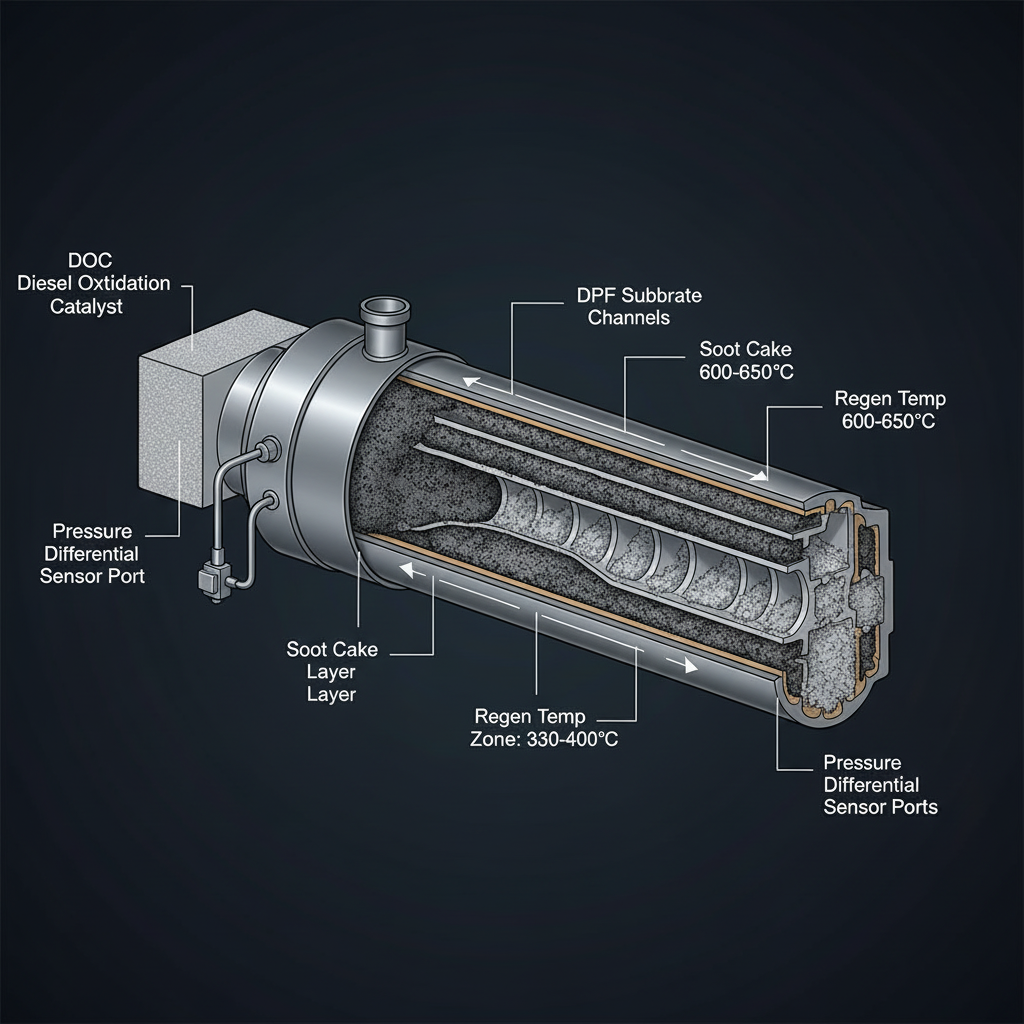
Fault Overview
Short-trip and low-load duty cycles prevent passive regen and successful active regen, leading to chronic soot accumulation and face-plugging risk. Many 'defective DPF' complaints on vocational trucks are duty-cycle driven. OEM guidance often includes operational recommendations or more frequent forced regens.
Engine & Platform Coverage
Symptoms
- •Short trip DPF
- •Low load soot
- •Vocational DPF loading
- •City cycle regen failure
- •Idle soot accumulation
Possible Causes
- 1.Low exhaust temperatures preventing passive soot oxidation
- 2.Parked regens often interrupted or never performed
- 3.Frequent cold starts increasing engine-out soot
Wiring & Circuit Notes
Ensure sensors that enable regen are functional so the system can take advantage of any available heat.
DVOM Specs & Sensor Tests
Average exhaust temperatures over a typical shift. Frequency of regen enable opportunities. Soot accumulation rate. Number of interrupted regens.
Diagnostic Flow — FSM Sequence
AI Diesel Tech enforces this evidence-gate sequence. Each gate must pass before advancing.
5 steps locked behind Technician Mode- 1Step 1 — Review Duty-Cycle Data or Interview the Operator: Review duty-cycle data or interview the operator on typical routes and idle time. Many DPF problems on vocational trucks are duty-cycle driven.
- 2Step 2 — Capture Average DOC/DPF Temperatures During Normal Operation: Capture average DOC/DPF temperatures during normal operation. Low average temperatures confirm passive regen is not occurring.
- 3Step 3 — Confirm the Regen System Can Complete a Forced Regen When Allowed: Confirm the regen system can complete a forced regen when allowed. This separates a duty-cycle problem from a hardware failure.
- 4Step 4 — Educate on the Need for Periodic High-Load Operation or Scheduled Parked Regens: Educate on the need for periodic high-load operation or scheduled parked regens. Operator education is a legitimate and effective repair.
- 5Step 5 — Correct Any Abort Causes That Make the Rare Regen Opportunities Fail: Correct any abort causes that make the rare regen opportunities fail. On vocational trucks, every regen opportunity must succeed.
- 6Step 6 — Consider Ash Service Intervals More Carefully on High-Idle Equipment: Consider ash service intervals more carefully on high-idle equipment. High idle time accelerates ash accumulation.
Unlock the full evidence-gated diagnostic sequence, DVOM test steps, and repair procedures in Technician Mode.
Full Diagnostic Access
Verification steps, preventative measures, severity guidance, and legacy comparison are available in Technician Mode.
Typical Repair Costs
Operator education and scheduled regen policy (no parts cost); repair of any abort causes variable; more frequent ash cleaning on severe-duty units $400–800 per service.
Start Diagnosing This Fault Now
AI Diesel Tech walks you through every evidence gate in the correct order. Choose the plan that fits your shop.
Related Systems
Related Fault Codes
Related Sensor Locations
Common Symptoms
AI Diesel Tech — The Technician's Diagnostic Engine
AI Diesel Tech diagnostic logic is built by an ASE Certified Diesel Technician and engineered for professional shop use. Trusted by technicians nationwide — used in shops, fleets, and training programs.
Summary
Use the AI Diesel Tech diagnostic engine to run this code through a structured, evidence-gated sequence and get a confirmed root cause before any parts are replaced.