
2019–2023 RAM Cummins 6.7 SCR Efficiency and DEF Quality Pattern
On 6.7 Cummins SCR complaints, prove DEF chemistry before expensive aftertreatment parts. YMM-aware chemistry-first SCR logic prevents replacing the catalyst for a DEF quality or dosing fault.
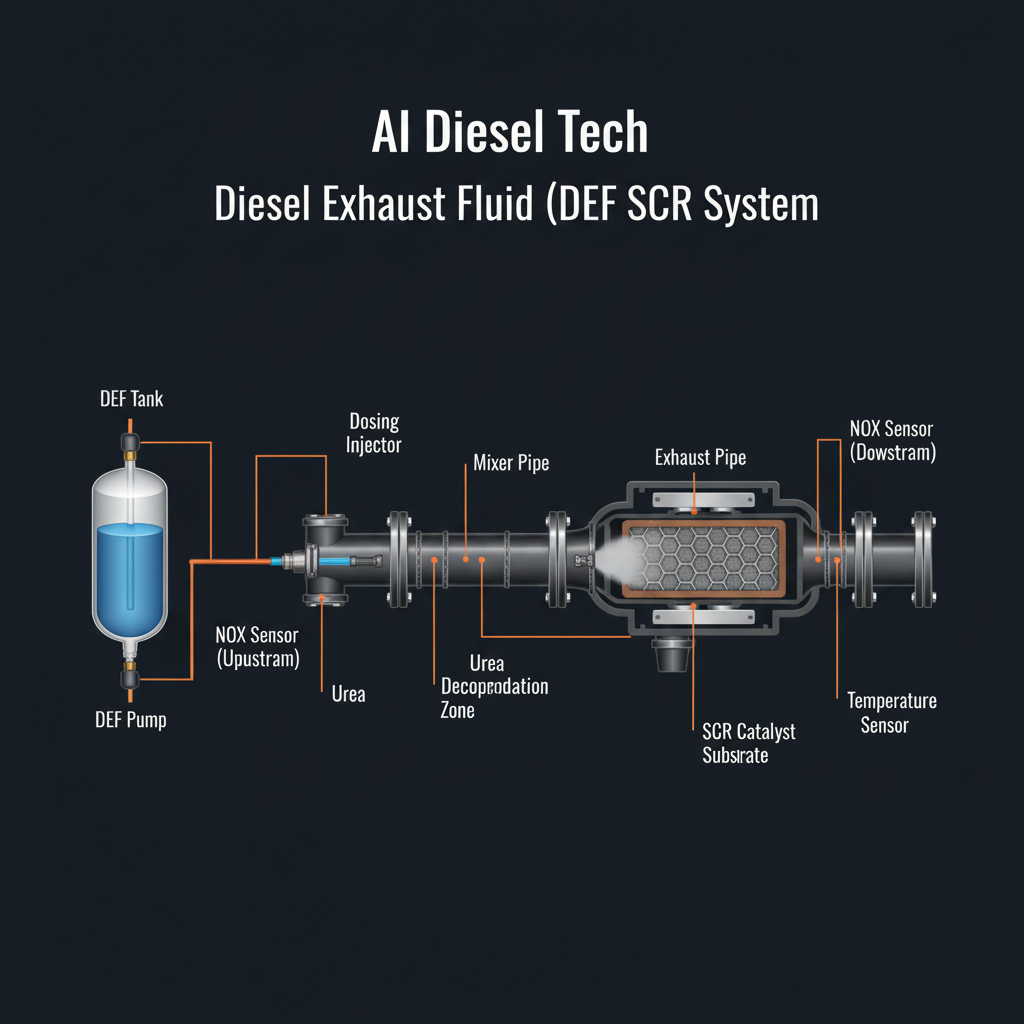
Fault Overview
The 6.7 Cummins SCR efficiency and DEF quality cascade pattern covers P20EE, P20E8, P2002, and related SCR and DEF codes on RAM trucks. Contaminated or diluted DEF, doser deposits, NOx sensor aging, exhaust leaks, and genuine SCR degradation are the primary causes — genuine SCR degradation is less common than fluid and dosing issues. Quality events after poor DEF source and doser deposit accumulation from extended service intervals are documented patterns. Consult current OEM service information by VIN for any applicable TSBs before any SCR hardware replacement.
Engine & Platform Coverage
Symptoms
- •RAM 6.7 DEF quality derate
- •6.7 SCR efficiency code
- •P20EE 6.7 Cummins
- •DEF contaminated RAM
- •SCR derate on 6.7 Cummins
- •P20E8 reductant pressure low 6.7
Possible Causes
- 1.Contaminated or diluted DEF — DEF quality below specification from contamination or dilution
- 2.Doser deposits — doser deposit accumulation from extended service intervals
- 3.NOx sensor aging — NOx sensor degradation producing efficiency faults
- 4.Exhaust leaks — exhaust leak affecting NOx measurement
- 5.Genuine SCR degradation — SCR catalyst degradation after high mileage
Diagnostic Flow — FSM Sequence
AI Diesel Tech enforces this evidence-gate sequence. Each gate must pass before advancing.
6 steps locked behind Technician Mode- 1Step 1 — Code Timeline Review: Review the code timeline to identify the first fault in the cascade. The first fault in the timeline identifies the root cause — subsequent faults are often consequences of the first fault. A DEF quality fault appearing before an SCR efficiency fault confirms the quality fault is the root cause.
- 2Step 2 — DEF Chemistry Proof: Test DEF chemistry with a refractometer. The target DEF concentration is approximately 32.5% urea. A refractometer reading below the minimum specification confirms diluted or contaminated DEF. Electrical sensor diagnosis only after chemistry is proven good.
- 3Step 3 — Dosing Path Evaluation: Evaluate the DEF dosing path. Inspect DEF pressure, doser operation, and dosing quantity. Doser deposit accumulation from extended service intervals is a documented cause of dosing faults on the 6.7 Cummins. Confirm dosing path integrity before any NOx or catalyst diagnosis.
- 4Step 4 — NOx Sensor Correlation: Correlate upstream and downstream NOx sensor readings. NOx sensor aging producing efficiency faults is a documented pattern. Compare upstream and downstream NOx readings to confirm sensor plausibility. A sensor that reads implausibly while the other reads normally confirms sensor failure.
- 5Step 5 — Exhaust Leak Inspection: Inspect for exhaust leaks that could affect NOx measurement. An exhaust leak between the engine and the upstream NOx sensor or between the upstream and downstream sensors affects NOx measurement accuracy. Inspect exhaust connections and gaskets for leaks.
- 6Step 6 — Catalyst Assessment Last: Assess the SCR catalyst only after DEF chemistry, dosing path, NOx sensors, and exhaust leaks are confirmed not to be the cause. Genuine SCR degradation is less common than fluid and dosing issues. Consult current OEM service information by VIN for any applicable TSBs before catalyst replacement.
- 7Step 7 — Inducement Recovery After Repair: Perform inducement recovery procedure after repair if inducement was active. Follow OEM inducement recovery procedure for the specific platform and fault combination. Confirm all fault codes are resolved and inducement is cleared before road dispatch.
Unlock the full evidence-gated diagnostic sequence, DVOM test steps, and repair procedures in Technician Mode.
Repair Steps
4 steps locked- 1Drain, flush, and refill DEF tank with verified ISO 22241-compliant DEF if quality fault is confirmed.
- 2Service or replace doser if deposit accumulation is confirmed.
- 3Replace NOx sensor if aging or failure is confirmed after correlation.
- 4Repair exhaust leak if confirmed.
- 5Replace SCR catalyst only after all upstream causes are eliminated.
- 6Perform inducement recovery procedure after repair.
Unlock full diagnostic steps, DVOM tests, and repair procedures.
Full Diagnostic Access
Verification steps, preventative measures, severity guidance, and legacy comparison are available in Technician Mode.
Start Diagnosing This Fault Now
AI Diesel Tech walks you through every evidence gate in the correct order. Choose the plan that fits your shop.
Related Resources
Related Fault Codes
Related Systems
Related Fault Codes
Related Sensor Locations
Common Symptoms
Related Articles
AI Diesel Tech — The Technician's Diagnostic Engine
AI Diesel Tech diagnostic logic is built by an ASE Certified Diesel Technician and engineered for professional shop use. Trusted by technicians nationwide — used in shops, fleets, and training programs.
Summary
On 6.7 RAM Cummins SCR complaints, prove DEF chemistry before expensive AT parts. The AI Diesel Tech FSM enforces YMM-aware chemistry-first SCR logic.