
Post-DPF Cleaning / Service Validation Standard
After every DPF cleaning or replacement, verify hoses, baseline DP, successful regen, and root-cause correction before releasing the vehicle.
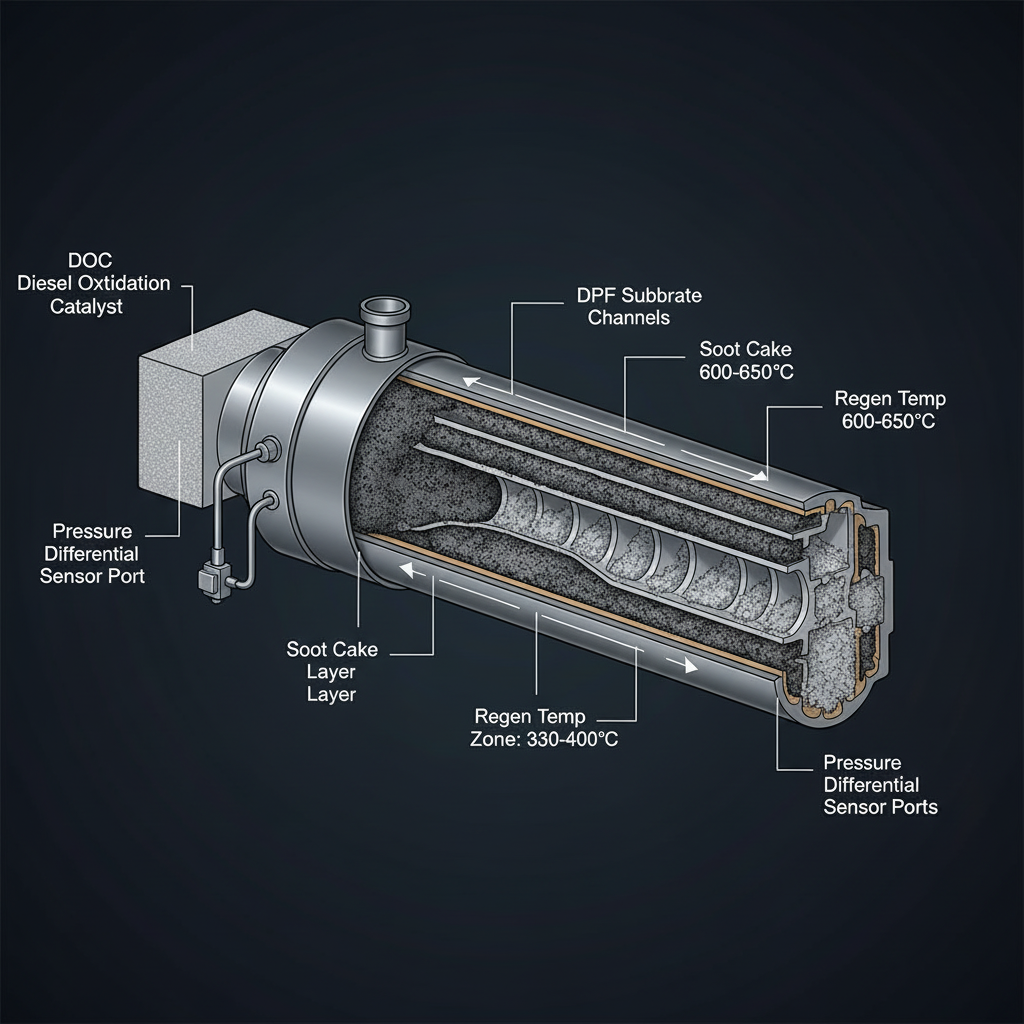
Fault Overview
Validation process after professional DPF cleaning or replacement to confirm differential pressure is restored, regen completes, and no secondary damage exists downstream. Many comebacks after cleaning occur because the root cause was not fixed or the DP tubes were reinstalled dirty.
Engine & Platform Coverage
Symptoms
- •After DPF cleaning validation
- •Post cleaning DP check
- •DPF service verification
- •Regen after cleaning
- •SCR after DPF service
Possible Causes
- 1.Reinstalled restricted tubes
- 2.Incomplete cleaning
- 3.Debris left in the SCR
- 4.Uncorrected root causes that reload the DPF rapidly
Wiring & Circuit Notes
Re-verify DP sensor hoses are correctly connected and clear after reassembly.
DVOM Specs & Sensor Tests
DP at idle and load immediately after service. Complete forced regen with temperature targets met. Post-regen DP. Downstream NOx and SCR temperatures for debris or restriction signs. Soot load reset if required by OEM.
Diagnostic Flow — FSM Sequence
AI Diesel Tech enforces this evidence-gate sequence. Each gate must pass before advancing.
7 steps locked behind Technician Mode- 1Step 1 — Confirm Cleaning Quality or New DPF Installation: Confirm cleaning quality or new DPF installation. Verify the DPF is correctly installed with all gaskets and clamps torqued.
- 2Step 2 — Verify DP Sensor Hoses and Ports Are Clean and Connected: Verify DP sensor hoses and ports are clean and connected after reassembly. This is the most common source of comebacks.
- 3Step 3 — Measure Baseline DP at Idle and Load: Measure baseline DP at idle and load. This establishes the post-service starting point.
- 4Step 4 — Perform a Complete Forced Regen: Perform a complete forced regen. Confirm temperature targets are met and the regen runs to completion.
- 5Step 5 — Re-Measure DP and Confirm Soot Load Reduction: Re-measure DP and confirm soot load reduction after the regen.
- 6Step 6 — Check Downstream SCR for Debris or Restriction: Check downstream SCR for debris or restriction if the old DPF was damaged.
- 7Step 7 — Address Any Remaining Abort Causes or Engine-Out Soot Sources: Address any remaining abort causes or engine-out soot sources before releasing the vehicle.
- 8Step 8 — Road Test and Verify No Rapid Reload: Road test and verify no rapid reload. A vehicle that reloads within hours has an unresolved combustion or regen issue.
Unlock the full evidence-gated diagnostic sequence, DVOM test steps, and repair procedures in Technician Mode.
Full Diagnostic Access
Verification steps, preventative measures, severity guidance, and legacy comparison are available in Technician Mode.
Typical Repair Costs
Correct any reassembly errors at no additional parts cost; re-clean or replace if cleaning was incomplete $400–3,000+; repair root cause variable.
Start Diagnosing This Fault Now
AI Diesel Tech walks you through every evidence gate in the correct order. Choose the plan that fits your shop.
Related Systems
Related Fault Codes
Related Sensor Locations
Common Symptoms
AI Diesel Tech — The Technician's Diagnostic Engine
AI Diesel Tech diagnostic logic is built by an ASE Certified Diesel Technician and engineered for professional shop use. Trusted by technicians nationwide — used in shops, fleets, and training programs.
Summary
Use the AI Diesel Tech diagnostic engine to run this code through a structured, evidence-gated sequence and get a confirmed root cause before any parts are replaced.