
PACCAR MX-11 / MX-13 DPF Ash Service and Differential Pressure Path
On PACCAR MX engines, confirm ash restriction with post-regen differential pressure and sensor tube inspection before performing DPF cleaning or replacement.
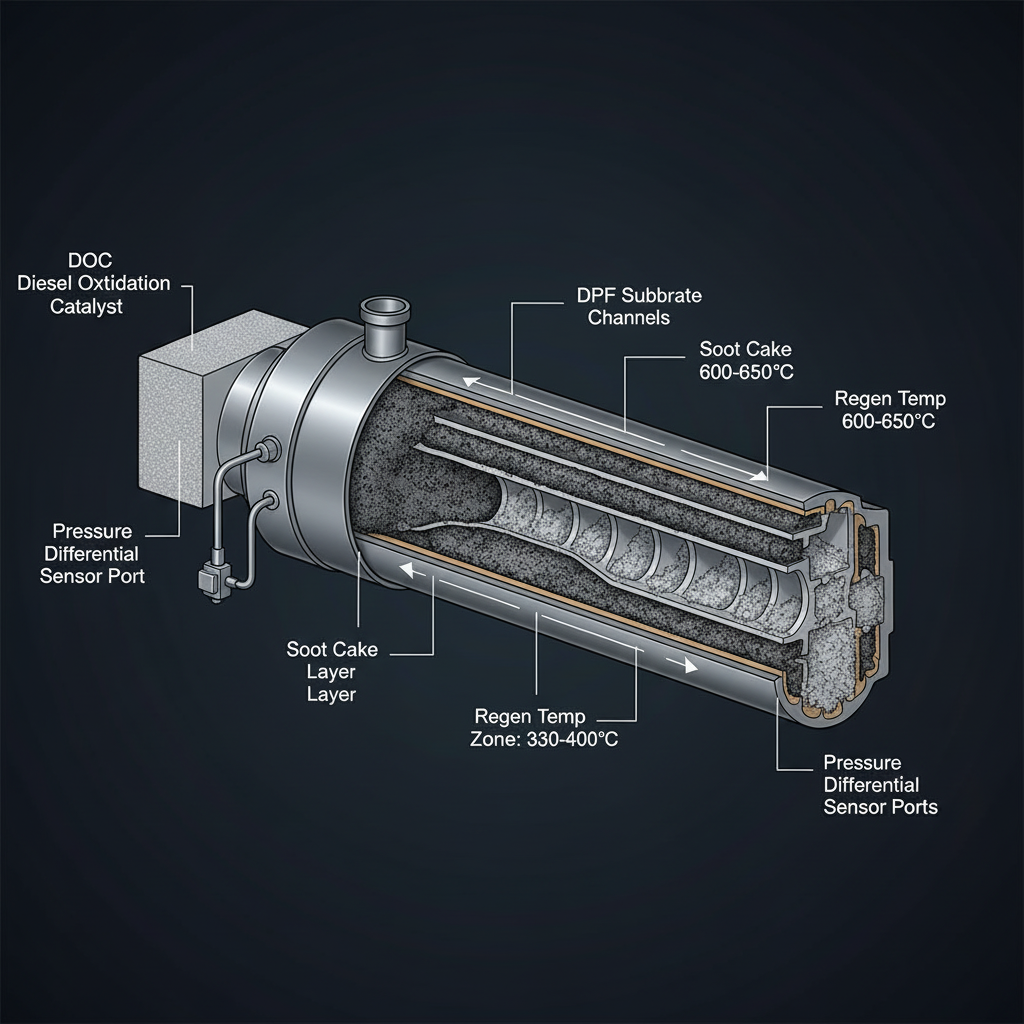
Fault Overview
YMM-specific diagnostic and service path for DPF ash accumulation, differential pressure behavior, and cleaning procedures on PACCAR MX-11 and MX-13 engines in Kenworth and Peterbilt chassis. PACCAR publishes ash cleaning intervals and procedures. DP sensor tube restrictions are common.
Engine & Platform Coverage
Symptoms
- •PACCAR MX DPF ash
- •MX-13 differential pressure
- •MX-11 ash cleaning
- •PACCAR DPF service
- •MX soot vs ash
- •Peterbilt Kenworth DPF
Possible Causes
- 1.Normal ash accumulation over high mileage
- 2.Elevated oil consumption
- 3.Repeated incomplete regens leaving soot that is later misidentified
- 4.Clogged DP sensor tubes
- 5.DOC restriction contributing to loading
Wiring & Circuit Notes
Inspect PACCAR MX-specific DP and temperature sensor connectors and tube routing. Check for heat damage and contamination.
DVOM Specs & Sensor Tests
DP and soot/ash data via DAVIE or equivalent. Temperature map during regen. Abort reasons. Post-regen DP comparison. OEM ash service interval based on hours or fuel consumed.
Diagnostic Flow — FSM Sequence
AI Diesel Tech enforces this evidence-gate sequence. Each gate must pass before advancing.
6 steps locked behind Technician Mode- 1Step 1 — Record Current Soot Load, Ash Load, and DP at Idle/Load: Record current soot load, ash load (if available), and DP at idle/load via DAVIE or equivalent. Always follow the latest MX service literature for cleaning criteria and torque specifications.
- 2Step 2 — Perform a Complete Forced Regen and Confirm Temperature Targets: Perform a complete forced regen and confirm temperature targets are met.
- 3Step 3 — Re-Measure DP Immediately After Regen: Re-measure DP immediately after regen. If DP remains high, inspect and clean DP sensor tubes and ports.
- 4Step 4 — Review Oil Consumption and Engine Hours Against PACCAR Ash Interval: Review oil consumption and engine hours against PACCAR ash interval. Elevated oil consumption accelerates ash accumulation.
- 5Step 5 — Perform Professional DPF Cleaning or Replace per OEM Criteria: Perform professional DPF cleaning or replace per OEM criteria only after confirming ash is the restriction.
- 6Step 6 — Correct Any Incomplete-Regen or Oil-Consumption Root Causes: Correct any incomplete-regen or oil-consumption root causes before returning to service.
- 7Step 7 — Verify Post-Cleaning DP and Successful Regen Capability: Verify post-cleaning DP and successful regen capability before releasing the vehicle.
Unlock the full evidence-gated diagnostic sequence, DVOM test steps, and repair procedures in Technician Mode.
Full Diagnostic Access
Verification steps, preventative measures, severity guidance, and legacy comparison are available in Technician Mode.
Typical Repair Costs
DP sensor tube service $80–200; professional DPF ash cleaning $400–800; DPF replacement if damaged $1,500–3,500+; address oil control or regen abort causes variable.
Start Diagnosing This Fault Now
AI Diesel Tech walks you through every evidence gate in the correct order. Choose the plan that fits your shop.
Related Systems
Related Fault Codes
Related Sensor Locations
Common Symptoms
AI Diesel Tech — The Technician's Diagnostic Engine
AI Diesel Tech diagnostic logic is built by an ASE Certified Diesel Technician and engineered for professional shop use. Trusted by technicians nationwide — used in shops, fleets, and training programs.
Summary
Use the AI Diesel Tech diagnostic engine to run this code through a structured, evidence-gated sequence and get a confirmed root cause before any parts are replaced.