
Oil or Coolant Contamination of DOC / DPF
Oil or coolant contamination of the DOC/DPF requires repair of the engine leak source before any aftertreatment cleaning or replacement.
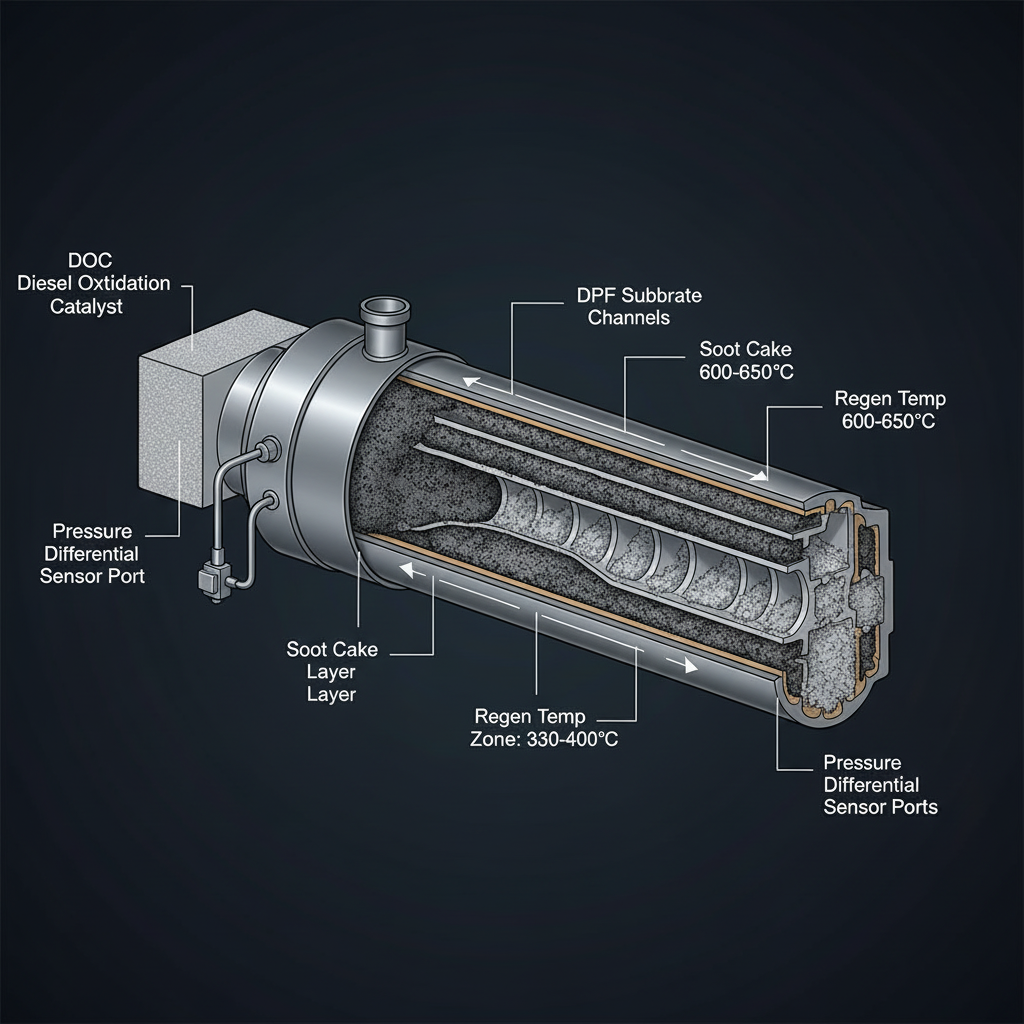
Fault Overview
Oil or coolant entry into the exhaust contaminates and damages the DOC and DPF, producing face-plugging, ash-like deposits, and failed regens. Contamination events require both aftertreatment cleaning/replacement and repair of the engine leak source.
Engine & Platform Coverage
Symptoms
- •Oil in DPF
- •Coolant in DOC
- •Contaminated aftertreatment
- •Oil consumption DPF
- •Coolant loss exhaust
- •White or blue smoke AT
Possible Causes
- 1.Turbocharger oil seal failure
- 2.Valve guide or stem seal wear
- 3.PCV/CCV system problems
- 4.EGR cooler leak
- 5.Head gasket or injector cup leakage allowing coolant into the cylinder
- 6.Overfilled oil
Wiring & Circuit Notes
Temperature and DP sensors may be contaminated or damaged by the same event. Verify sensor integrity after contamination repair.
DVOM Specs & Sensor Tests
Rapid ash-like loading. Unusual deposits on the DOC face (oily, white, or greenish). Coolant loss without external leak. Elevated oil consumption. Sweet smell or white smoke. Spectroscopic oil analysis or exhaust deposit analysis if needed.
Diagnostic Flow — FSM Sequence
AI Diesel Tech enforces this evidence-gate sequence. Each gate must pass before advancing.
6 steps locked behind Technician Mode- 1Step 1 — Document Oil Consumption Rate and Coolant Loss: Document oil consumption rate and coolant loss. Failure to fix the source produces rapid repeat failure after cleaning or replacement.
- 2Step 2 — Inspect DOC Inlet Face for Oily or Coolant-Derived Deposits: Inspect DOC inlet face for oily or coolant-derived deposits. Unusual deposits (oily, white, or greenish) confirm contamination.
- 3Step 3 — Pressure-Test the Cooling System and EGR Cooler: Pressure-test the cooling system and EGR cooler. EGR cooler leaks are a common source of coolant in the exhaust.
- 4Step 4 — Check Turbocharger for Oil Leakage Into the Exhaust Side: Check turbocharger for oil leakage into the exhaust side. Turbo oil seal failure is the most common source of oil contamination.
- 5Step 5 — Evaluate CCV System and Crankcase Pressure: Evaluate CCV system and crankcase pressure. A failed CCV routes oil mist directly into the intake and exhaust.
- 6Step 6 — Clean or Replace Contaminated DOC/DPF Only After the Leak Source Is Repaired: Clean or replace contaminated DOC/DPF only after the leak source is repaired. Replacing the aftertreatment without fixing the source guarantees repeat failure.
- 7Step 7 — Verify No Further Contamination After Repair: Verify no further contamination after repair with a follow-up inspection at the next service interval.
Unlock the full evidence-gated diagnostic sequence, DVOM test steps, and repair procedures in Technician Mode.
Full Diagnostic Access
Verification steps, preventative measures, severity guidance, and legacy comparison are available in Technician Mode.
Typical Repair Costs
Turbo replacement $800–3,000; EGR cooler replacement $400–1,500; head gasket repair $1,500–4,000+; CCV service $100–400; DOC/DPF cleaning or replacement $300–3,000+.
Start Diagnosing This Fault Now
AI Diesel Tech walks you through every evidence gate in the correct order. Choose the plan that fits your shop.
Related Systems
Related Fault Codes
Related Sensor Locations
Common Symptoms
AI Diesel Tech — The Technician's Diagnostic Engine
AI Diesel Tech diagnostic logic is built by an ASE Certified Diesel Technician and engineered for professional shop use. Trusted by technicians nationwide — used in shops, fleets, and training programs.
Summary
Use the AI Diesel Tech diagnostic engine to run this code through a structured, evidence-gated sequence and get a confirmed root cause before any parts are replaced.