
Inhibits Preventing Parked Regen — Switch and Interlock Matrix
When a parked regen will not start, verify every interlock switch state before any aftertreatment component diagnosis.
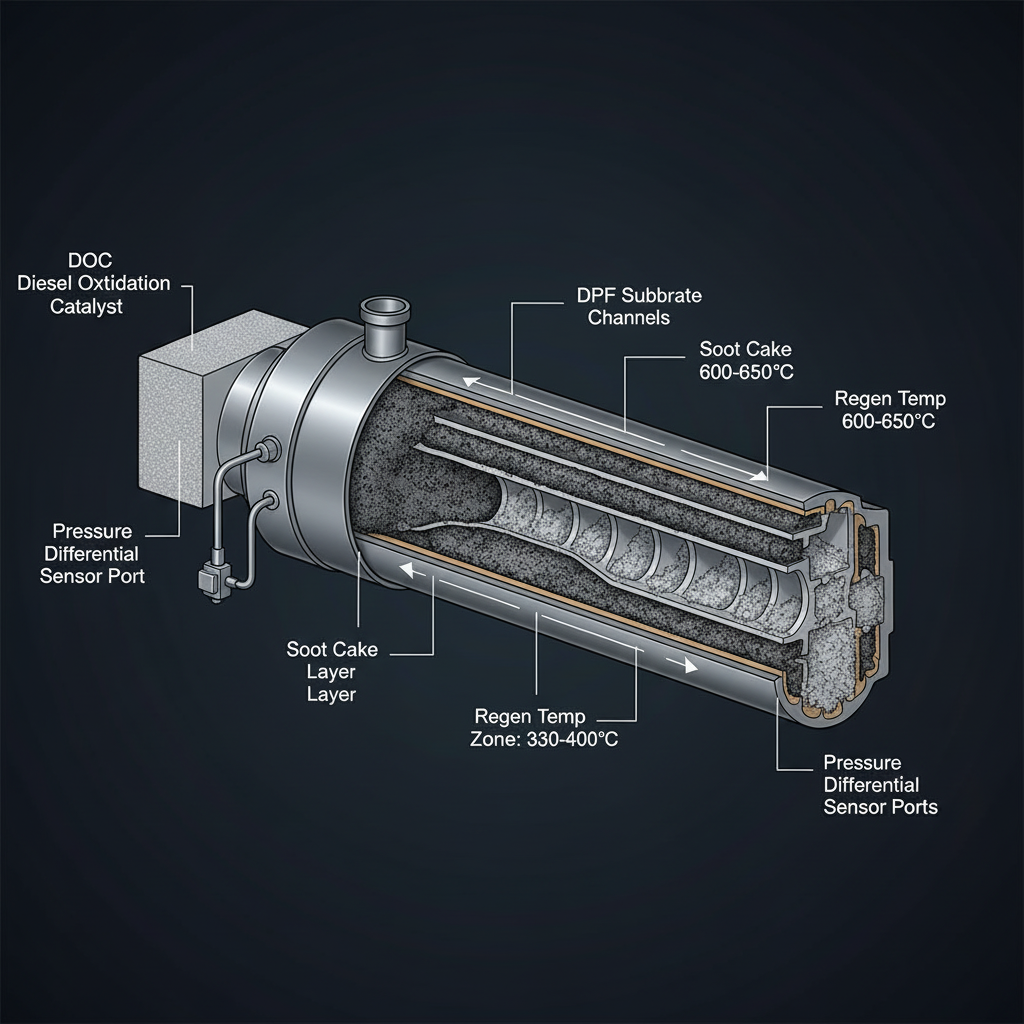
Fault Overview
Switch and interlock conditions that prevent a parked/forced regeneration from starting or that abort it once started. Brake and clutch switch adjustment or failure are the most common reasons a parked regen will not initiate. Aftermarket equipment can also assert an inhibit.
Engine & Platform Coverage
Symptoms
- •Parked regen will not start
- •Regen inhibit
- •Regen blocked by switch
- •Brake switch regen
- •Clutch switch regen
- •Neutral regen inhibit
Possible Causes
- 1.Misadjusted or failed brake switch
- 2.Clutch switch
- 3.Neutral or park switch
- 4.Parking brake switch
- 5.Hood switch
- 6.PTO active
- 7.Cruise control status
- 8.Aftermarket devices holding an inhibit active
Wiring & Circuit Notes
Inspect each inhibit switch circuit for voltage, adjustment, and proper state when the pedal or lever is in the required position.
DVOM Specs & Sensor Tests
Live status of every inhibit input while attempting to start a parked regen. Voltage or state of each switch. Confirm the scan tool shows all enables satisfied before blaming the aftertreatment system.
Diagnostic Flow — FSM Sequence
AI Diesel Tech enforces this evidence-gate sequence. Each gate must pass before advancing.
4 steps locked behind Technician Mode- 1Step 1 — Attempt to Start a Parked Regen and Note Any Inhibit Message: Attempt to start a parked regen and note any inhibit message. The scan tool often identifies the specific inhibit that is active.
- 2Step 2 — Monitor All Interlock PIDs: Monitor all interlock PIDs (brake, clutch, neutral, park, hood, PTO, etc.). Confirm the scan tool shows all enables satisfied before blaming the aftertreatment system.
- 3Step 3 — Correct the Switch or Circuit That Is Not in the Required State: Correct the switch or circuit that is not in the required state. Brake and clutch switch adjustment or failure are the most common causes.
- 4Step 4 — Verify No Aftermarket Device Is Asserting an Inhibit: Verify no aftermarket device is asserting an inhibit. Aftermarket equipment can hold an inhibit active without a clear fault code.
- 5Step 5 — Once All Interlocks Are Satisfied, Proceed With the Regen: Once all interlocks are satisfied, proceed with the regen and aftertreatment diagnosis if it still fails.
Unlock the full evidence-gated diagnostic sequence, DVOM test steps, and repair procedures in Technician Mode.
Full Diagnostic Access
Verification steps, preventative measures, severity guidance, and legacy comparison are available in Technician Mode.
Typical Repair Costs
Adjust or replace the offending switch $40–150; repair wiring $100–250; disable or correct aftermarket inhibits variable.
Start Diagnosing This Fault Now
AI Diesel Tech walks you through every evidence gate in the correct order. Choose the plan that fits your shop.
Related Systems
Related Fault Codes
Related Sensor Locations
Common Symptoms
AI Diesel Tech — The Technician's Diagnostic Engine
AI Diesel Tech diagnostic logic is built by an ASE Certified Diesel Technician and engineered for professional shop use. Trusted by technicians nationwide — used in shops, fleets, and training programs.
Summary
Use the AI Diesel Tech diagnostic engine to run this code through a structured, evidence-gated sequence and get a confirmed root cause before any parts are replaced.