
High Engine-Out Soot — Combustion Contributors to DPF Loading
When the DPF loads rapidly, confirm the regen system works, then diagnose injector, EGR, and boost contributors to engine-out soot.
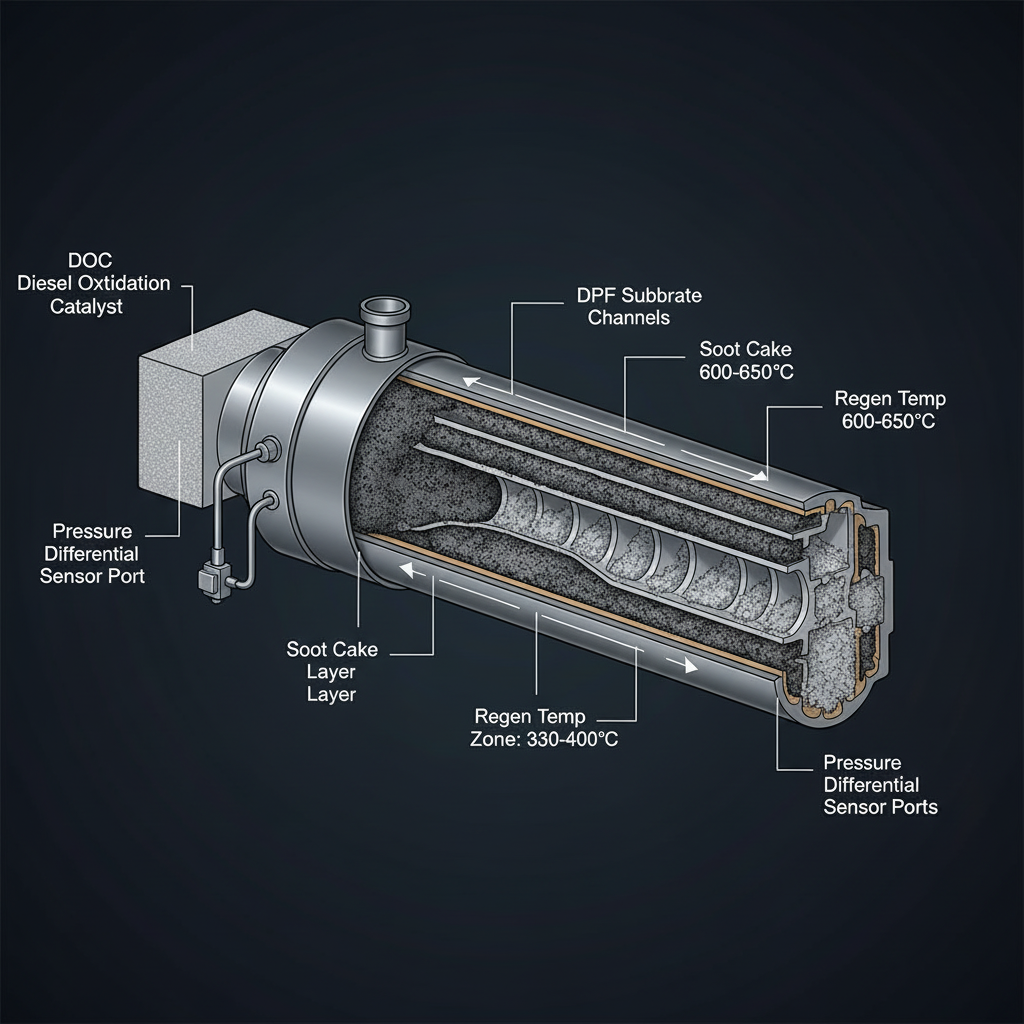
Fault Overview
Many DPF problems are actually high engine-out soot from injectors or air-handling faults. Fixing the combustion source dramatically reduces regen frequency and DPF stress.
Engine & Platform Coverage
Symptoms
- •High engine out soot
- •Excessive soot production
- •Injector contribution soot
- •EGR soot
- •Boost soot
- •Black smoke DPF loading
Possible Causes
- 1.Poor injector contribution or balance
- 2.Excessive EGR rate or cooler issues
- 3.Underboost or overboost
- 4.Intake or exhaust restrictions
- 5.Low compression
- 6.Incorrect fuel or low cetane
- 7.Sensor errors (MAF, MAP, IAT) affecting fueling
Wiring & Circuit Notes
Verify injector circuit integrity, EGR valve and position sensor circuits, and boost control circuits so data used for combustion diagnosis is valid.
DVOM Specs & Sensor Tests
Injector contribution or cylinder balance results. EGR position and flow. Commanded vs actual boost. Intake restriction. Exhaust backpressure. Opacity or visual smoke under load. Soot load accumulation rate.
Diagnostic Flow — FSM Sequence
AI Diesel Tech enforces this evidence-gate sequence. Each gate must pass before advancing.
6 steps locked behind Technician Mode- 1Step 1 — Confirm the Aftertreatment System Can Complete a Regen: Confirm the aftertreatment system can complete a regen when soot is present. This rules out pure AT failure and establishes that the loading rate is the problem.
- 2Step 2 — Perform Injector Contribution/Balance Test: Perform injector contribution/balance test. Uneven injectors are a primary source of excessive engine-out soot.
- 3Step 3 — Evaluate EGR Rate and Cooler Condition: Evaluate EGR rate and cooler condition. Excessive EGR or a fouled cooler reduces oxygen and increases soot production.
- 4Step 4 — Check Boost Deviation and Air Filter Restriction: Check boost deviation and air filter restriction. Underboost from any cause increases soot output.
- 5Step 5 — Inspect for Intake or Exhaust Leaks: Inspect for intake or exhaust leaks that affect air-fuel ratio.
- 6Step 6 — Address the Dominant Combustion Fault: Address the dominant combustion fault identified by the above steps.
- 7Step 7 — Recheck Soot Accumulation Rate After Repair: Recheck soot accumulation rate after repair to confirm the DPF loading rate has returned to normal.
Unlock the full evidence-gated diagnostic sequence, DVOM test steps, and repair procedures in Technician Mode.
Full Diagnostic Access
Verification steps, preventative measures, severity guidance, and legacy comparison are available in Technician Mode.
Typical Repair Costs
Injector service or replacement $300–2,000+; EGR system repair $200–1,500; boost control or turbo repair $300–2,500; air filter and restriction correction $50–200.
Start Diagnosing This Fault Now
AI Diesel Tech walks you through every evidence gate in the correct order. Choose the plan that fits your shop.
Related Systems
Related Fault Codes
Related Sensor Locations
Common Symptoms
AI Diesel Tech — The Technician's Diagnostic Engine
AI Diesel Tech diagnostic logic is built by an ASE Certified Diesel Technician and engineered for professional shop use. Trusted by technicians nationwide — used in shops, fleets, and training programs.
Summary
Use the AI Diesel Tech diagnostic engine to run this code through a structured, evidence-gated sequence and get a confirmed root cause before any parts are replaced.