
DPF Soot Load High — Regen Frequency and Incomplete Regen Cascade
High soot load with frequent regens is diagnosed by reviewing abort history and correcting the reason regens cannot complete.
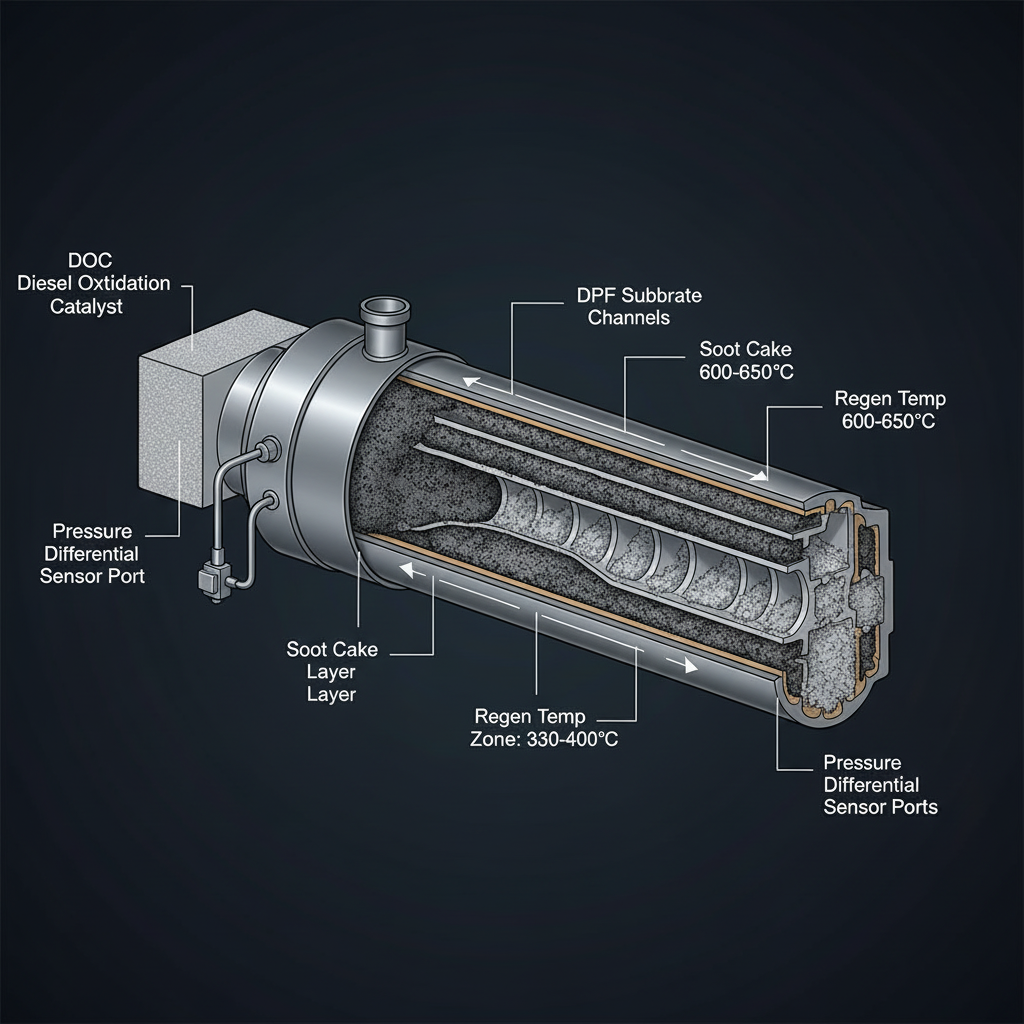
Fault Overview
Elevated soot load caused by frequent incomplete regens, short-trip duty cycles, or excessive engine-out soot, creating a cascade of higher loading and more frequent regen attempts. Correcting the abort cause is more effective than repeated forced regens.
Engine & Platform Coverage
Symptoms
- •High soot load
- •Frequent regen
- •Soot load not clearing
- •Regen cascade
- •DPF loading rapid
- •Short trip soot
Possible Causes
- 1.Repeated temperature-rise or other aborts
- 2.DOC face-plugging
- 3.HC dosing problems
- 4.Excessive engine-out soot from injectors, EGR, or boost issues
- 5.Low-load duty cycle preventing passive regen
- 6.Failed temperature sensors aborting events
- 7.Ash contribution misread as soot
Wiring & Circuit Notes
Verify all temperature and DP sensor circuits that participate in regen control and abort decisions.
DVOM Specs & Sensor Tests
Soot load trend over time. Number of successful vs aborted regens. Temperature rise rates during attempts. Post-regen soot load and DP. Engine-out indicators (injector contribution, EGR rate, boost error).
Diagnostic Flow — FSM Sequence
AI Diesel Tech enforces this evidence-gate sequence. Each gate must pass before advancing.
6 steps locked behind Technician Mode- 1Step 1 — Review Regen History: Successful vs Aborted and Abort Reasons: Review regen history: successful vs aborted and abort reasons. Vocational short-trip trucks frequently accumulate soot because active regens are aborted or never enabled.
- 2Step 2 — Capture Temperature and HC Dosing Data During a Forced Regen: Capture temperature and HC dosing data during a forced regen to identify the dominant abort reason.
- 3Step 3 — Identify the Dominant Abort Reason: Identify the dominant abort reason. Correcting the abort cause is more effective than repeated forced regens.
- 4Step 4 — Correct That Root Cause: Correct that root cause (dosing, DOC, leak, sensor, etc.) before attempting another regen.
- 5Step 5 — Address Any High Engine-Out Soot Sources: Address any high engine-out soot sources. Injector, EGR, and boost issues can overwhelm even a functioning regen system.
- 6Step 6 — Differentiate Ash Contribution with Post-Regen DP: Differentiate ash contribution with post-regen DP after a successful regen to determine if ash service is also needed.
- 7Step 7 — Perform a Complete Successful Regen and Verify Soot Load and DP Return to Normal: Perform a complete successful regen and verify soot load and DP return to normal before releasing the vehicle.
Unlock the full evidence-gated diagnostic sequence, DVOM test steps, and repair procedures in Technician Mode.
Full Diagnostic Access
Verification steps, preventative measures, severity guidance, and legacy comparison are available in Technician Mode.
Typical Repair Costs
Repair the specific abort cause; correct combustion or oil issues; clean DOC if plugged; perform ash service if needed. Costs depend on root cause.
Start Diagnosing This Fault Now
AI Diesel Tech walks you through every evidence gate in the correct order. Choose the plan that fits your shop.
Related Systems
Related Fault Codes
Related Sensor Locations
Common Symptoms
AI Diesel Tech — The Technician's Diagnostic Engine
AI Diesel Tech diagnostic logic is built by an ASE Certified Diesel Technician and engineered for professional shop use. Trusted by technicians nationwide — used in shops, fleets, and training programs.
Summary
Use the AI Diesel Tech diagnostic engine to run this code through a structured, evidence-gated sequence and get a confirmed root cause before any parts are replaced.