
DPF Internal Damage / Melting / Cracking Diagnosis
DPF internal damage is confirmed by thermal history and physical inspection. Always correct the over-temperature cause when replacing the unit.
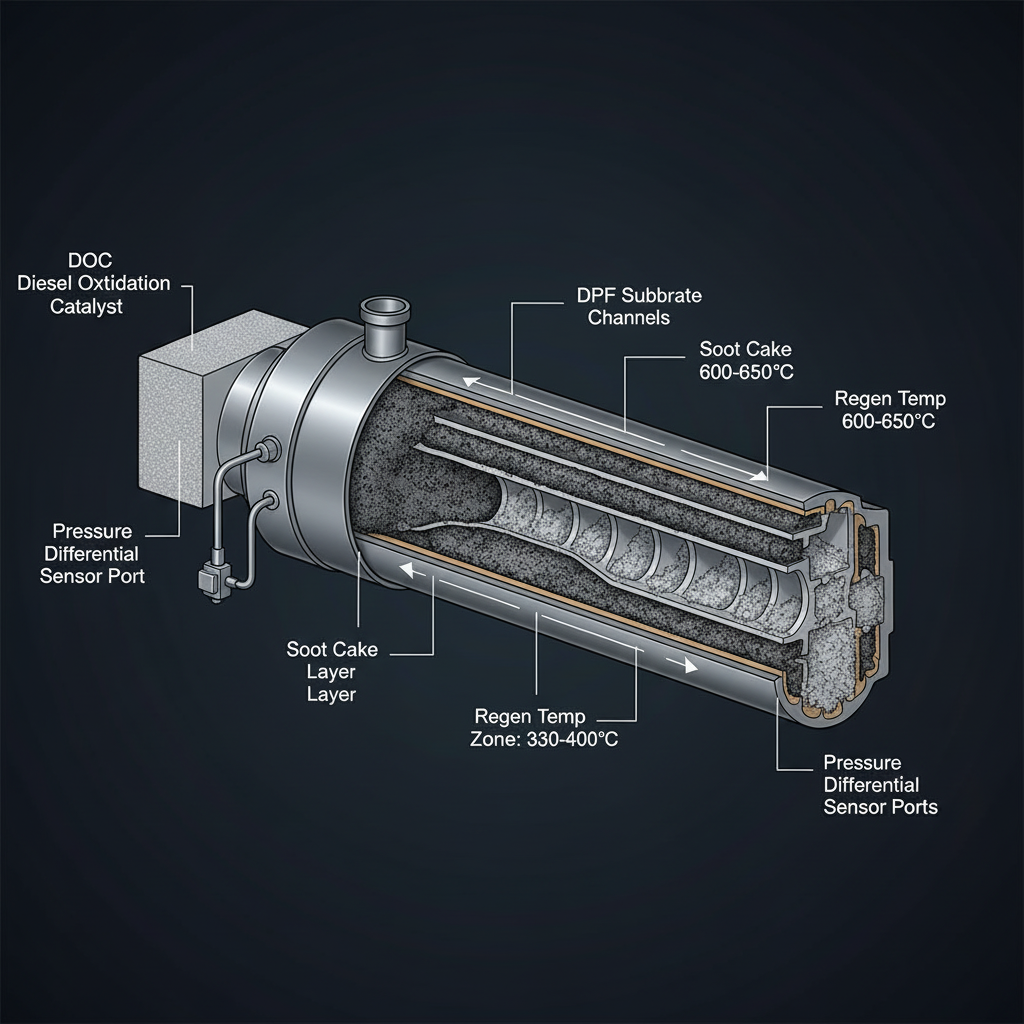
Fault Overview
Physical damage inside the DPF (melting, cracking, substrate breakage) that produces high differential pressure, low efficiency, or debris downstream. Thermal events that exceed substrate limits permanently damage the DPF — cleaning will not restore a melted or cracked unit.
Engine & Platform Coverage
Symptoms
- •DPF melted
- •DPF cracked
- •DPF internal damage
- •Substrate broken
- •High DP after cleaning
- •Debris in SCR
Possible Causes
- 1.Uncontrolled high temperatures during regen (runaway)
- 2.Prolonged high soot load followed by aggressive regen
- 3.Oil or coolant contamination creating hot spots
- 4.Manufacturing defects
- 5.Repeated incomplete regens followed by sudden successful high-temp events
Wiring & Circuit Notes
Temperature sensor circuits must be verified so that over-temperature events are accurately recorded and future events can be detected.
DVOM Specs & Sensor Tests
Extremely high DPF temperatures recorded in freeze-frame. DP that remains high after cleaning. Visual or borescope inspection showing melted channels, cracks, or missing substrate. Debris found in the SCR or outlet pipe.
Diagnostic Flow — FSM Sequence
AI Diesel Tech enforces this evidence-gate sequence. Each gate must pass before advancing.
4 steps locked behind Technician Mode- 1Step 1 — Review Freeze-Frame for Peak DPF Temperatures and Soot Load at Time of Failure: Review freeze-frame for peak DPF temperatures and soot load at the time of failure. Thermal events that exceed substrate limits permanently damage the DPF.
- 2Step 2 — Perform a Complete Regen or Cleaning Attempt and Recheck DP: Perform a complete regen or cleaning attempt and recheck DP. If DP remains abnormal after cleaning, physical damage is confirmed.
- 3Step 3 — Remove the DPF for Visual/Borescope Inspection: Remove the DPF for visual/borescope inspection. Look for melted, cracked, or missing substrate.
- 4Step 4 — Inspect Downstream Components for Debris: Inspect downstream components for debris. Substrate debris in the SCR can cause secondary damage.
- 5Step 5 — Replace the DPF and Correct the Cause of the Thermal Event: Replace the DPF and correct the cause of the thermal event (dosing control, temperature sensors, oil/coolant entry, etc.).
Unlock the full evidence-gated diagnostic sequence, DVOM test steps, and repair procedures in Technician Mode.
Full Diagnostic Access
Verification steps, preventative measures, severity guidance, and legacy comparison are available in Technician Mode.
Typical Repair Costs
DPF replacement $2,000–5,000+; thorough inspection and cleaning of downstream SCR if debris is present $500–1,500; correction of the over-temperature root cause variable.
Start Diagnosing This Fault Now
AI Diesel Tech walks you through every evidence gate in the correct order. Choose the plan that fits your shop.
Related Systems
Related Fault Codes
Related Sensor Locations
Common Symptoms
AI Diesel Tech — The Technician's Diagnostic Engine
AI Diesel Tech diagnostic logic is built by an ASE Certified Diesel Technician and engineered for professional shop use. Trusted by technicians nationwide — used in shops, fleets, and training programs.
Summary
Use the AI Diesel Tech diagnostic engine to run this code through a structured, evidence-gated sequence and get a confirmed root cause before any parts are replaced.