
DPF Differential Pressure Sensor Rationality — High After Successful Regen
When differential pressure stays high after a successful regen, clean and verify the sensor hoses and ports before condemning the DPF for ash or damage.
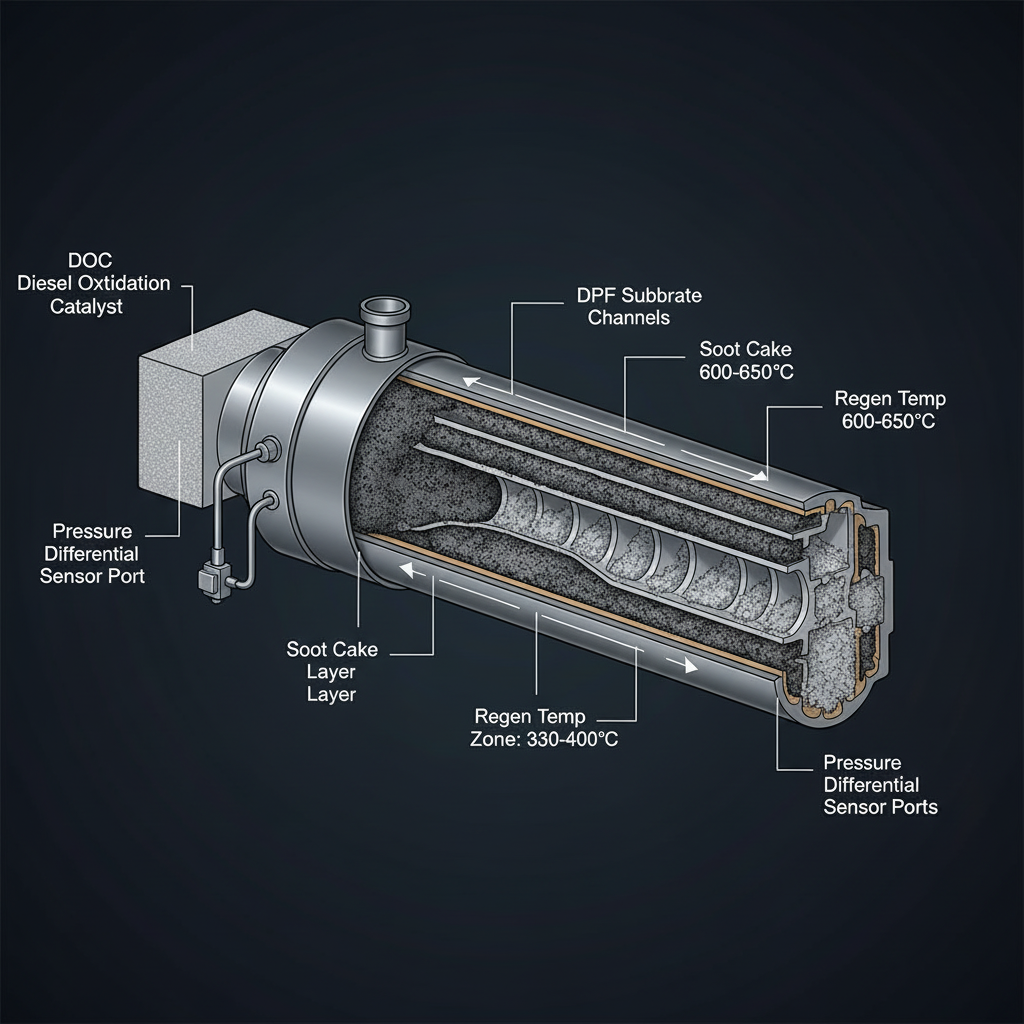
Fault Overview
Rationality fault or performance complaint where DPF differential pressure remains high after a verified successful regeneration. Clogged DP sensor tubes are extremely common and produce the same symptoms as a fully loaded DPF. Always verify hose and port condition before condemning the DPF or sensor.
Engine & Platform Coverage
Symptoms
- •DPF DP high after regen
- •Differential pressure not dropping
- •Ash restriction DP
- •DP sensor rationality after regen
Possible Causes
- 1.Ash accumulation
- 2.Restricted or melted DP sensor ports or hoses
- 3.Failed DP sensor reading high
- 4.Exhaust leak at the sensor ports
- 5.Incorrect sensor calibration
- 6.DPF internal damage or face plugging on the inlet
Wiring & Circuit Notes
Inspect DP sensor connector and the high/low pressure hoses or tubes for cracks, restrictions, melting, or disconnections.
DVOM Specs & Sensor Tests
Differential pressure at idle and load before and after a complete regen. Both pressure ports should be open and free of carbon. Sensor voltage or data should respond when one port is carefully pressurized or vacuumed per OEM. Compare to a mechanical gauge if available.
Diagnostic Flow — FSM Sequence
AI Diesel Tech enforces this evidence-gate sequence. Each gate must pass before advancing.
6 steps locked behind Technician Mode- 1Step 1 — Perform and Confirm a Complete Regen: Perform and confirm a complete regen (temperature targets met, soot load reduced). The regen must be verified complete before interpreting post-regen DP.
- 2Step 2 — Re-Measure DP at Idle and Under Load: Re-measure DP at idle and under load immediately after the confirmed regen.
- 3Step 3 — Inspect and Clean Both DP Sensor Hoses and Ports: If still high, inspect and clean both DP sensor hoses and ports. Clogged DP sensor tubes are extremely common and produce the same symptoms as a fully loaded DPF.
- 4Step 4 — Check Sensor Electrical Circuit and Response: Check sensor electrical circuit and response. Verify the sensor responds when one port is carefully pressurized or vacuumed per OEM.
- 5Step 5 — Compare Scan Data to a Mechanical Gauge if Possible: Compare scan data to a mechanical gauge if possible. This confirms whether the sensor reading is accurate.
- 6Step 6 — Proceed to Ash Cleaning or DPF Replacement Only if Hoses and Sensor Are Good: If hoses and sensor are good and DP remains high, the restriction is ash or internal DPF damage — proceed to cleaning or replacement.
- 7Step 7 — Correct Any Oil Consumption Contributing to Rapid Ash Loading: Correct any oil consumption contributing to rapid ash loading to prevent repeat service intervals.
Unlock the full evidence-gated diagnostic sequence, DVOM test steps, and repair procedures in Technician Mode.
Full Diagnostic Access
Verification steps, preventative measures, severity guidance, and legacy comparison are available in Technician Mode.
Typical Repair Costs
Clean or replace DP hoses and ports $80–200; replace failed sensor $150–400; professional DPF cleaning for ash $400–800; replace DPF if damaged $1,500–3,000+; address oil consumption variable.
Start Diagnosing This Fault Now
AI Diesel Tech walks you through every evidence gate in the correct order. Choose the plan that fits your shop.
Related Systems
Related Fault Codes
Related Sensor Locations
Common Symptoms
AI Diesel Tech — The Technician's Diagnostic Engine
AI Diesel Tech diagnostic logic is built by an ASE Certified Diesel Technician and engineered for professional shop use. Trusted by technicians nationwide — used in shops, fleets, and training programs.
Summary
Use the AI Diesel Tech diagnostic engine to run this code through a structured, evidence-gated sequence and get a confirmed root cause before any parts are replaced.