
DOC Light-Off Failure — Oxygen, Flow, and Temperature Contributors
DOC light-off failure is diagnosed by correlating HC dosing, oxygen availability (EGR/boost), and temperature rise before replacing the DOC.
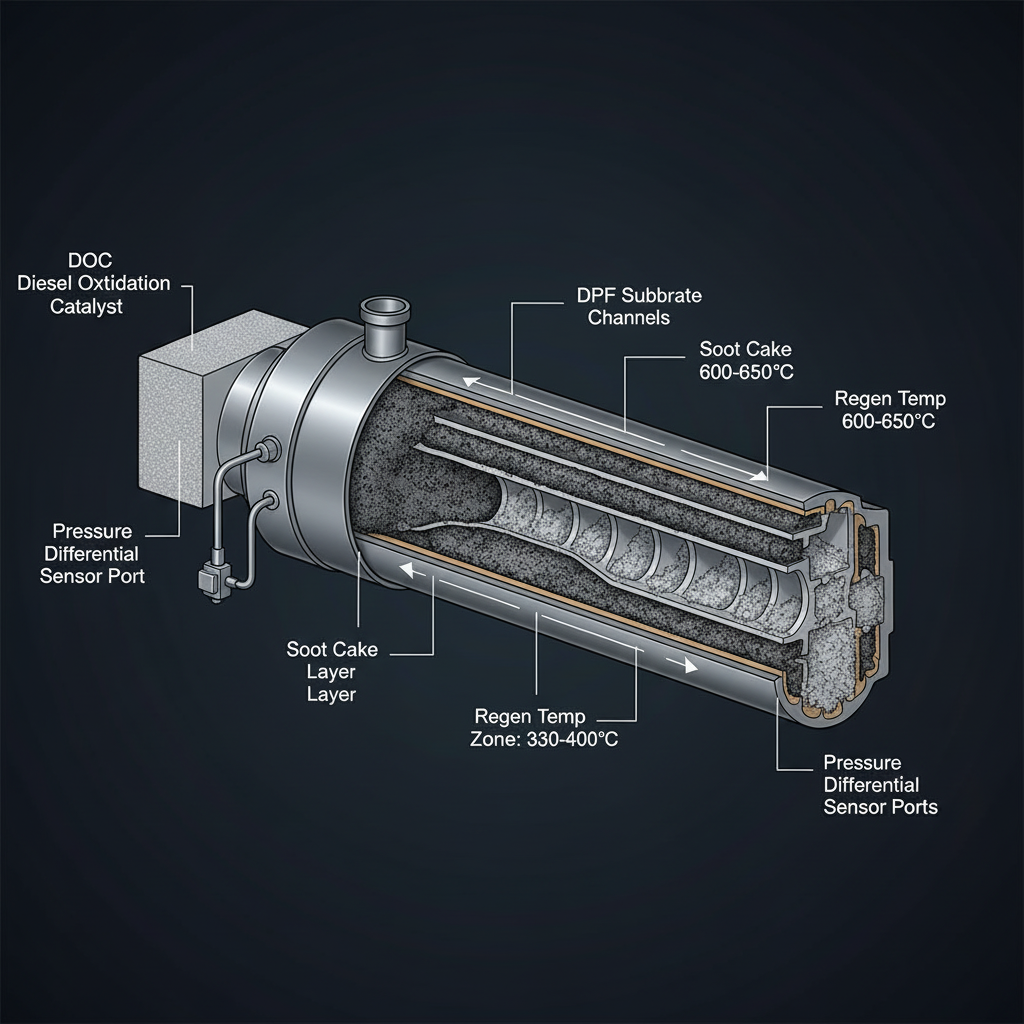
Fault Overview
DOC light-off failure when HC is being dosed but the DOC outlet temperature does not rise. Light-off requires both adequate HC and sufficient oxygen at the DOC face. High EGR or boost problems during regen are often overlooked as contributors.
Engine & Platform Coverage
Symptoms
- •DOC light-off failure
- •No DOC temp rise
- •HC dosing no heat
- •DOC not lighting off
- •Regen no temperature increase
Possible Causes
- 1.Insufficient oxygen from high EGR, low boost, or rich combustion
- 2.Low exhaust flow
- 3.DOC face-plugging or melted substrate
- 4.HC dosing quantity too low or too high
- 5.Exhaust leak diluting oxygen or temperature
- 6.Failed DOC temperature sensors
- 7.Fuel quality or cetane issues
Wiring & Circuit Notes
Confirm DOC inlet and outlet temperature sensor circuits and HC doser circuit integrity.
DVOM Specs & Sensor Tests
DOC inlet and outlet temperature traces during dosing. EGR position and flow. Boost pressure. Exhaust flow or turbo speed. HC command quantity. Oxygen or lambda sensor data if available.
Diagnostic Flow — FSM Sequence
AI Diesel Tech enforces this evidence-gate sequence. Each gate must pass before advancing.
5 steps locked behind Technician Mode- 1Step 1 — Graph DOC Inlet/Outlet Temps, HC Command, EGR Rate, and Boost During Forced Regen: Graph DOC inlet/outlet temps, HC command, EGR rate, and boost during a forced regen. Light-off requires both adequate HC and sufficient oxygen at the DOC face.
- 2Step 2 — Verify Temperature Sensors Are Rational: Verify temperature sensors are rational. Failed sensors can report no rise when light-off is actually occurring.
- 3Step 3 — Confirm HC Dosing is Occurring and Within Range: Confirm HC dosing is occurring and within range. No dosing command or zero quantity confirms a dosing system fault.
- 4Step 4 — Check for Excessive EGR or Low Boost That Reduces Oxygen: Check for excessive EGR or low boost that reduces oxygen. High EGR or boost problems during regen are often overlooked.
- 5Step 5 — Inspect for Exhaust Leaks and DOC Face Condition: Inspect for exhaust leaks and DOC face condition. Leaks before the DOC and face-plugging are common non-dosing causes of failed light-off.
- 6Step 6 — Correct the Limiting Factor and Retest Light-Off: Correct the limiting factor (oxygen, flow, dosing, or DOC) and retest light-off.
Unlock the full evidence-gated diagnostic sequence, DVOM test steps, and repair procedures in Technician Mode.
Full Diagnostic Access
Verification steps, preventative measures, severity guidance, and legacy comparison are available in Technician Mode.
Typical Repair Costs
Correct EGR or boost control variable; service HC doser $200–600; clean or replace DOC $300–2,500; repair leaks $100–400; replace failed temperature sensors $120–400.
Start Diagnosing This Fault Now
AI Diesel Tech walks you through every evidence gate in the correct order. Choose the plan that fits your shop.
Related Systems
Related Fault Codes
Related Sensor Locations
Common Symptoms
AI Diesel Tech — The Technician's Diagnostic Engine
AI Diesel Tech diagnostic logic is built by an ASE Certified Diesel Technician and engineered for professional shop use. Trusted by technicians nationwide — used in shops, fleets, and training programs.
Summary
Use the AI Diesel Tech diagnostic engine to run this code through a structured, evidence-gated sequence and get a confirmed root cause before any parts are replaced.