
DOC Face-Plugging Diagnosis and Cleaning Path
DOC face-plugging is confirmed by temperature mapping, differential pressure behavior, and visual inspection — always with root-cause correction before cleaning or replacement.
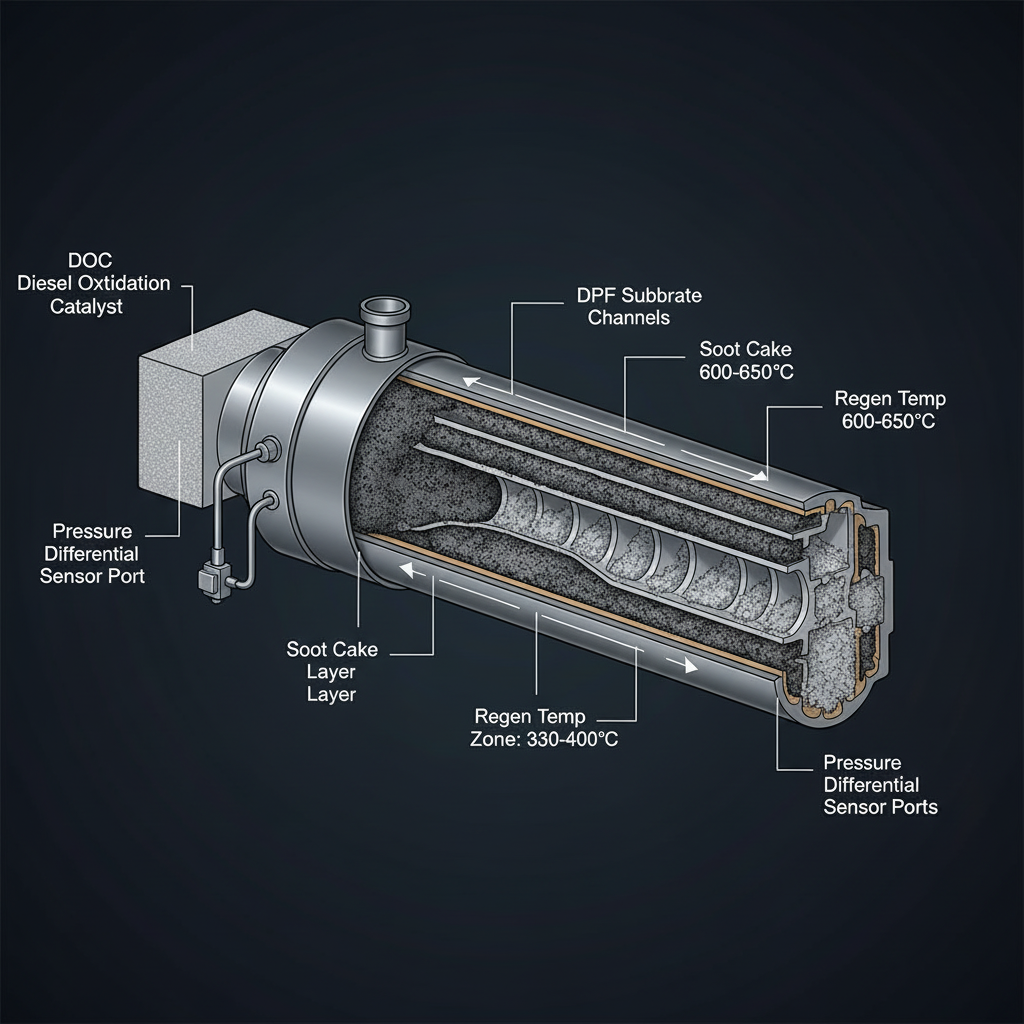
Fault Overview
Face-plugging is the accumulation of soot, ash, oil, or fuel-derived deposits on the inlet face of the DOC that restricts exhaust flow, raises backpressure, lowers downstream temperatures, and interferes with passive and active regeneration. The ECM detects the effects through temperature deltas and DPF differential pressure trends rather than a single dedicated code.
Engine & Platform Coverage
Symptoms
- •DOC face plugged
- •DOC restricted
- •DOC inlet plugged
- •High backpressure DOC
- •Low DOC outlet temp
- •Regen abort DOC
- •White or gray face deposits
Possible Causes
- 1.Excessive engine-out soot from injector or combustion issues
- 2.Oil consumption from turbo seals, valve guides, or PCV
- 3.Coolant contamination
- 4.Incomplete or failed regens allowing soot buildup
- 5.Low exhaust temperature duty cycles
- 6.Fuel dilution or raw fuel reaching the DOC
- 7.Extended idle or short-trip operation
Wiring & Circuit Notes
Verify DOC inlet and outlet temperature sensor circuits so temperature data used to diagnose plugging is accurate. Faulty temperature readings can mask or mimic plugging symptoms.
DVOM Specs & Sensor Tests
DOC inlet vs outlet temperature delta under load and during regen. Elevated DPF differential pressure that does not drop after a successful regen. Exhaust backpressure at the turbo outlet or DOC inlet if a test port is available. Visual inspection of the DOC inlet face after removal or with a borescope.
Diagnostic Flow — FSM Sequence
AI Diesel Tech enforces this evidence-gate sequence. Each gate must pass before advancing.
6 steps locked behind Technician Mode- 1Step 1 — Capture Full Temperature Map Under Load and During Forced Regen: Capture full temperature map (pre-turbo, DOC inlet/outlet, DPF inlet/outlet) under load and during a forced regen attempt. Face-plugging is frequently misdiagnosed as a failed DPF or turbo.
- 2Step 2 — Record DPF Differential Pressure Before and After Regen: Record DPF differential pressure before and after regen. A restricted DOC prevents adequate heat transfer to the DPF, so DP may remain elevated even after a partial regen attempt.
- 3Step 3 — Check for Progressive Power Loss, High Exhaust Temperature, or Regen Aborts: Check for progressive power loss, high exhaust temperature, or regen aborts. These are the classic symptom cluster for DOC restriction.
- 4Step 4 — Inspect Air Filter, Intake, and Turbocharger for Oil or Coolant: Inspect air filter, intake, and turbocharger for oil or coolant. Oil or coolant contamination often requires both cleaning and root-cause correction of the engine leak.
- 5Step 5 — Perform Controlled Regen and Note Whether DOC Light-Off Occurs: Perform a controlled regen and note whether DOC light-off occurs. Absence of a temperature rise at the DOC outlet despite HC dosing confirms restriction or damage.
- 6Step 6 — Remove or Borescope the DOC Inlet Face: If temperatures and backpressure indicate restriction, remove or borescope the DOC inlet face. Look for gray, white, or oily deposits packed into the inlet channels.
- 7Step 7 — Clean per OEM Procedure or Replace if Damaged: Clean per OEM procedure or replace if melting, cracking, or heavy irreversible deposits are present. Correct the root cause (injectors, oil consumption, duty cycle) before returning to service.
Unlock the full evidence-gated diagnostic sequence, DVOM test steps, and repair procedures in Technician Mode.
Full Diagnostic Access
Verification steps, preventative measures, severity guidance, and legacy comparison are available in Technician Mode.
Typical Repair Costs
DOC cleaning (compressed air, approved solvents, or thermal methods per OEM) $300–800; DOC replacement $800–2,500+; correct engine-out soot or oil/coolant source variable; verify regen system operation.
Start Diagnosing This Fault Now
AI Diesel Tech walks you through every evidence gate in the correct order. Choose the plan that fits your shop.
Related Systems
Related Fault Codes
Related Sensor Locations
Common Symptoms
AI Diesel Tech — The Technician's Diagnostic Engine
AI Diesel Tech diagnostic logic is built by an ASE Certified Diesel Technician and engineered for professional shop use. Trusted by technicians nationwide — used in shops, fleets, and training programs.
Summary
Use the AI Diesel Tech diagnostic engine to run this code through a structured, evidence-gated sequence and get a confirmed root cause before any parts are replaced.