
Air Temperature Sensor Family Sorting — Ambient, Inlet, CAC, Manifold
Multiple air-temp codes are a mapping and outlier-isolation problem first. Technicians replacing the wrong air temp sensor because they did not map the SPN to its physical location is the most documented misdiagnosis.
Fault Overview
This process page covers sorting multiple simultaneous air temperature sensor codes to identify which sensor is actually faulted before any thermal-path work. One open or shorted sensor, shared reference issues, unplugged connector after service, and true heat-soak path problems are the primary causes. Mapping each SPN to its physical sensor location is the required first step.
Engine & Platform Coverage
Possible Causes
- 1.One open or shorted sensor producing a single outlier in the air-temp family
- 2.Shared reference issue collapsing multiple air-temp sensor readings simultaneously
- 3.Unplugged connector after air filter, CAC, or intake service
- 4.True heat-soak path problem producing genuinely high readings at one or more sensors
- 5.Technician replacing the wrong sensor because SPN was not mapped to physical location
Wiring & Circuit Notes
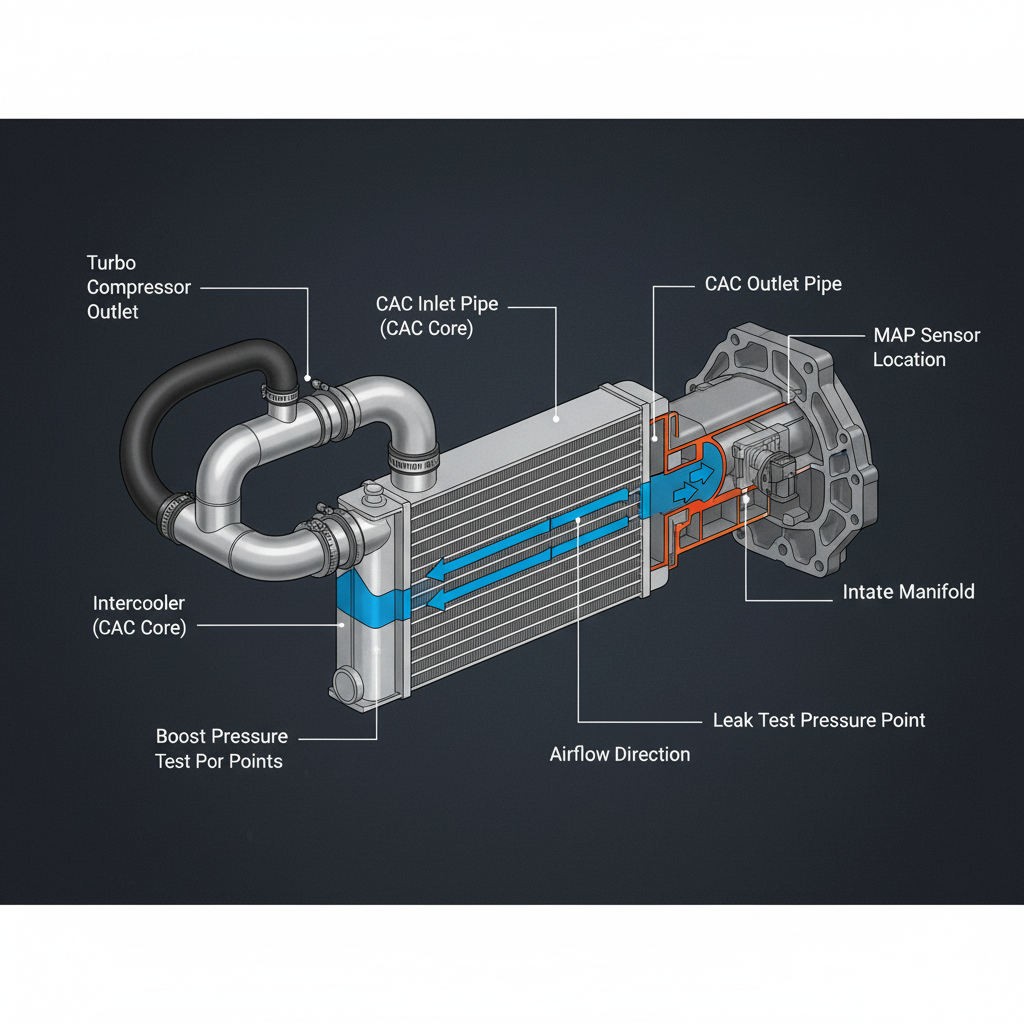
Map each SPN to its physical sensor location before any connector or harness work. Air temperature sensors on the same platform can include ambient (chassis-mounted), pre-turbo inlet (filter housing), post-CAC outlet (charge pipe), and manifold (intake manifold). Each has a different connector location and harness path — the wrong sensor replaced for the wrong SPN is the most documented misdiagnosis.
DVOM Specs & Sensor Tests
Cold-soak all air temperature PIDs — all should read near ambient temperature with the engine cold. Under load, post-CAC and manifold temperatures should rise differently than ambient. The outlier sensor reading extreme cold (open circuit) or extreme hot (shorted circuit) while neighbors read plausible values identifies the faulted sensor. Circuit-check only the identified sensor — do not replace multiple sensors without outlier identification.
Diagnostic Flow — FSM Sequence
AI Diesel Tech enforces this evidence-gate sequence. Each gate must pass before advancing.
6 steps locked behind Technician Mode- 1List all air-temperature PIDs available on the scan tool
- 2Cold-soak correlation — all should read near ambient with engine cold
- 3Identify the outlier sensor reading extreme cold or extreme hot while neighbors are plausible
- 4Map the outlier SPN to its physical sensor location on this specific platform
- 5Circuit-check only the identified sensor — open or short checks as appropriate
- 6Replace only the identified sensor after circuit is proven
- 7Evaluate real air-path heat issues only if values are valid and high after repair
Unlock the full evidence-gated diagnostic sequence, DVOM test steps, and repair procedures in Technician Mode.
Repair Steps
5 steps locked- 1List all air-temperature PIDs available on the scan tool
- 2Cold-soak correlation — all should read near ambient with engine cold
- 3Identify the outlier sensor reading extreme cold or extreme hot while neighbors are plausible
- 4Map the outlier SPN to its physical sensor location on this specific platform
- 5Circuit-check only the identified sensor — open or short checks as appropriate
- 6Replace only the identified sensor after circuit is proven
- 7Evaluate real air-path heat issues only if values are valid and high after repair
Unlock full diagnostic steps, DVOM tests, and repair procedures.
Full Diagnostic Access
Verification steps, preventative measures, severity guidance, and legacy comparison are available in Technician Mode.
Start Diagnosing This Fault Now
AI Diesel Tech walks you through every evidence gate in the correct order. Choose the plan that fits your shop.
Related Resources
Related Systems
Related Fault Codes
Related Sensor Locations
Common Symptoms
Related Articles
AI Diesel Tech — The Technician's Diagnostic Engine
AI Diesel Tech diagnostic logic is built by an ASE Certified Diesel Technician and engineered for professional shop use. Trusted by technicians nationwide — used in shops, fleets, and training programs.
Summary
Multiple air-temp codes are a mapping and outlier-isolation problem. Map each SPN to its physical location, identify the outlier on cold-soak, and circuit-check only the faulted sensor.