
2019–2023 Freightliner Cascadia DD13 Actuator and Boost Deviation Path
Cascadia DD13 boost deviation complaints require an ordered diagnosis. Turbo replaced for a split CAC boot or an open actuator pigtail is the most documented misdiagnosis on this platform — the turbocharger was functioning correctly; the boost deviation was caused by an electrical or charge-air leak fault that was never isolated.
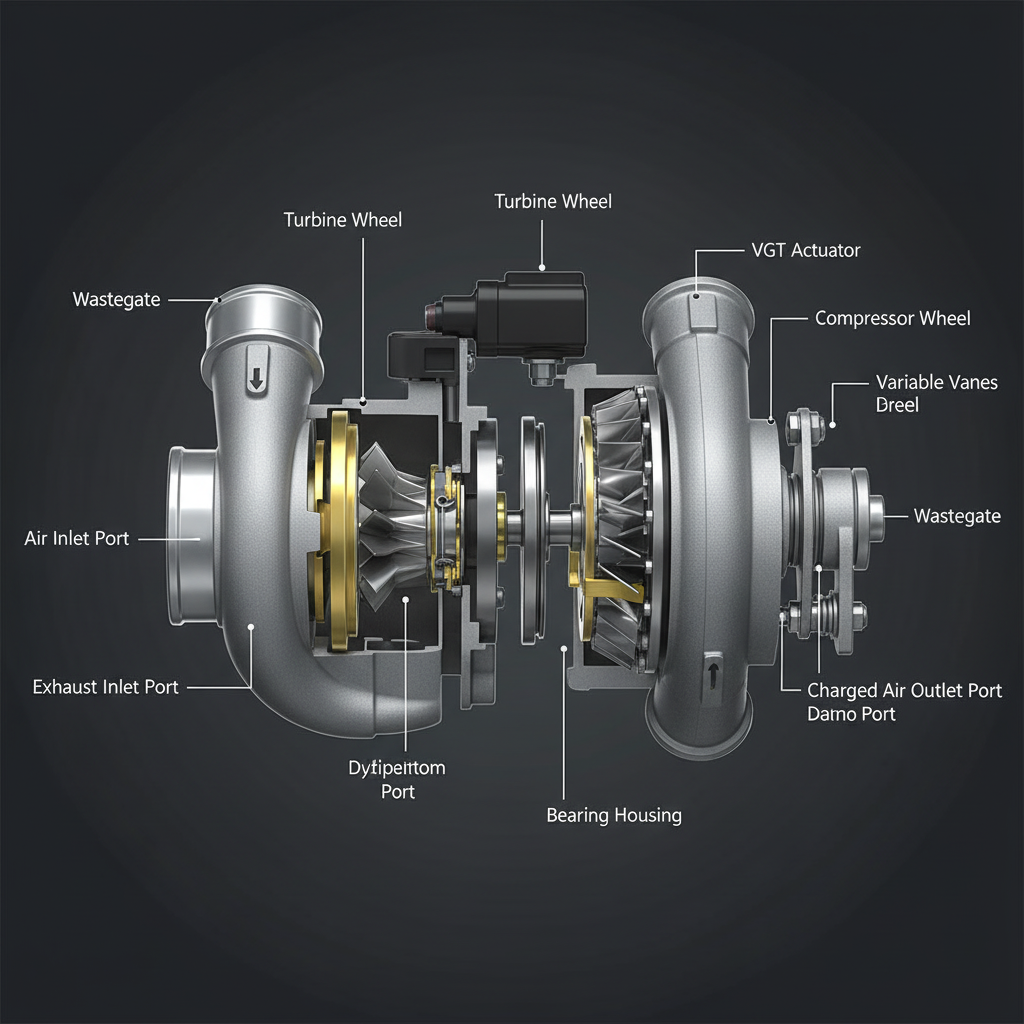
Fault Overview
The 2019–2023 Freightliner Cascadia with DD13 presents with underboost and overboost complaints tied to VGT actuator response and charge-air integrity. Actuator circuit faults, carbon binding on the VGT mechanism, CAC boot leaks, MAP sensor bias, and exhaust leaks pre-turbo are the primary causes. Turbo replaced for a split boot or open actuator pigtail is the most documented misdiagnosis — consult current Detroit Diesel and Freightliner service literature by engine serial number for platform-specific procedures.
Engine & Platform Coverage
Possible Causes
- 1.Actuator circuit fault — open or shorted pigtail near heat shield
- 2.Carbon binding on VGT mechanism preventing actuator response
- 3.CAC boot leak — split or loose boot creating charge-air loss
- 4.MAP sensor bias — sensor reading error creating false boost deviation
- 5.Exhaust leak pre-turbo affecting turbine inlet pressure
Wiring & Circuit Notes
Inspect actuator connector heat damage and MAP sensor circuit after graphing indicates a need. Actuator pigtail heat damage near the heat shield is the most common electrical cause of boost deviation on this platform. Check MAP sensor circuit after boost graphing confirms a deviation that does not correlate with actuator position.
DVOM Specs & Sensor Tests
Graph desired versus actual boost pressure during a loaded run. Graph actuator desired versus actual position simultaneously. A boost deviation with correct actuator position response points to a charge-air leak or MAP bias. A boost deviation with incorrect actuator position response points to an actuator circuit or mechanical binding fault. KOEO MAP baseline should be near atmospheric — a biased MAP sensor will produce false boost deviation codes without any true boost system fault. Consult current Detroit Diesel and Freightliner service literature for platform-specific thresholds and actuator test procedures.
Diagnostic Flow — FSM Sequence
AI Diesel Tech enforces this evidence-gate sequence. Each gate must pass before advancing.
5 steps locked behind Technician Mode- 1Graph desired vs actual boost pressure during a loaded run
- 2Graph actuator desired vs actual position simultaneously
- 3If actuator position is not responding: perform electrical proof — supply, control voltage, continuity
- 4If actuator position is responding but boost deviates: perform CAC leak test
- 5Check MAP sensor KOEO baseline for bias
- 6Mechanical turbo decision only after actuator circuit, leak test, and MAP are all proven
Unlock the full evidence-gated diagnostic sequence, DVOM test steps, and repair procedures in Technician Mode.
Repair Steps
4 steps locked- 1Graph desired vs actual boost pressure during a loaded run
- 2Graph actuator desired vs actual position simultaneously
- 3If actuator position is not responding: perform electrical proof — supply, control voltage, continuity
- 4If actuator position is responding but boost deviates: perform CAC leak test
- 5Check MAP sensor KOEO baseline for bias
- 6Mechanical turbo decision only after actuator circuit, leak test, and MAP are all proven
Unlock full diagnostic steps, DVOM tests, and repair procedures.
Full Diagnostic Access
Verification steps, preventative measures, severity guidance, and legacy comparison are available in Technician Mode.
Start Diagnosing This Fault Now
AI Diesel Tech walks you through every evidence gate in the correct order. Choose the plan that fits your shop.
Related Resources
Related Systems
Related Fault Codes
Related Sensor Locations
Common Symptoms
Related Articles
AI Diesel Tech — The Technician's Diagnostic Engine
AI Diesel Tech diagnostic logic is built by an ASE Certified Diesel Technician and engineered for professional shop use. Trusted by technicians nationwide — used in shops, fleets, and training programs.
Summary
Cascadia DD13 boost complaints require actuator circuit proof and charge-air leak testing before any turbo replacement. The turbocharger is the last step, not the first.