
SPN 641 FMI 3 — Turbocharger Actuator Control Circuit Voltage Above Normal
Turbo actuator high-voltage codes are control-circuit open diagnostics first. An actuator replaced while a heat-damaged pigtail remains open is the most documented misdiagnosis — the new actuator fails to respond for the same reason the old one did. Circuit proof must precede any actuator condemnation.
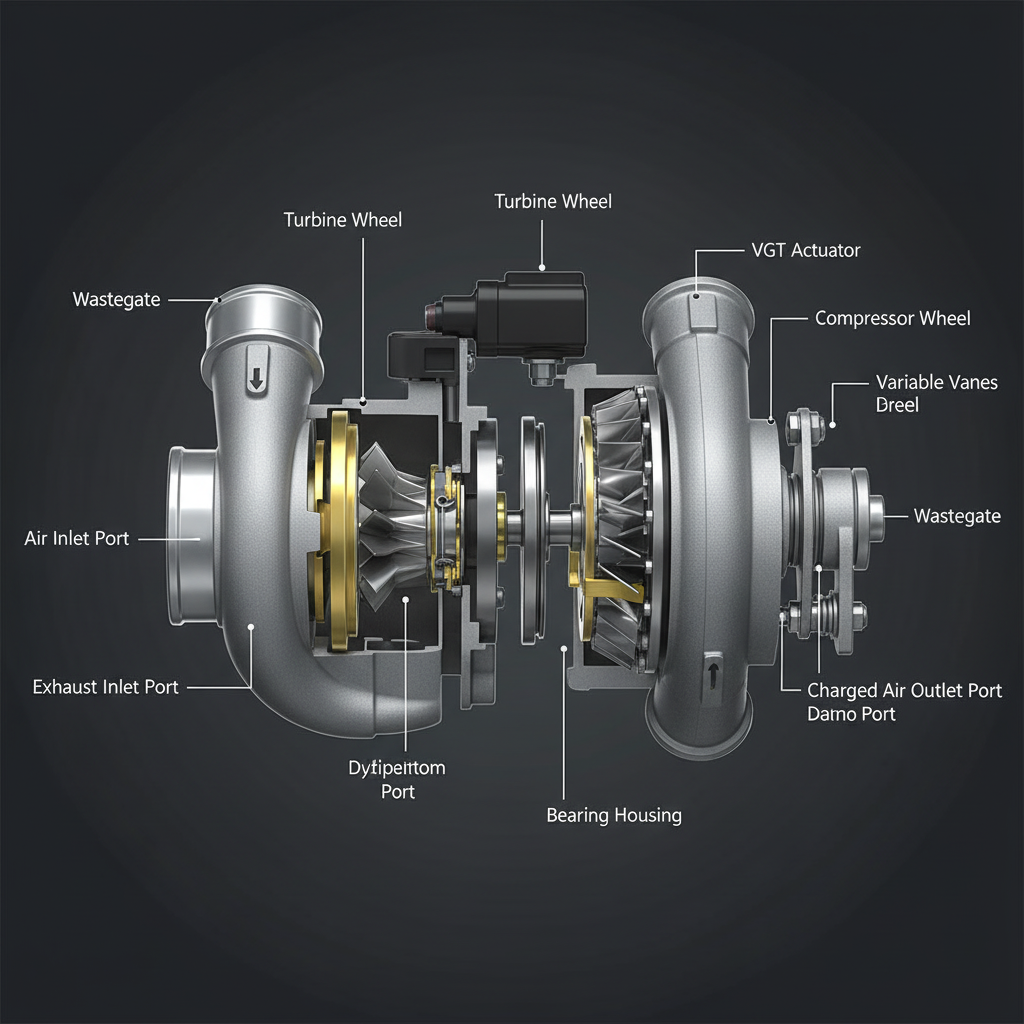
Fault Overview
SPN 641 FMI 3 indicates the turbocharger actuator control circuit voltage is above the normal maximum — an open circuit or high-signal class fault on the control side. Open control wire, unplugged actuator connector, failed actuator with internal circuit open, damaged pigtail at the heat shield, and poor supply feed are the primary causes. Actuator replaced while a heat-damaged pigtail remains open is the most documented misdiagnosis.
Engine & Platform Coverage
Possible Causes
- 1.Open control wire from heat damage near turbo heat shield
- 2.Unplugged actuator connector — connector not fully seated after turbo or heat-shield service
- 3.Failed actuator with internal circuit open
- 4.Damaged pigtail at heat-shield edge from vibration and heat cycling
- 5.Poor supply feed where a separate supply circuit is used
Wiring & Circuit Notes
Inspect actuator connector lock tabs, burnt pins, and brittle insulation near turbo heat. Check for chafe on bracket edges along the actuator pigtail. Confirm connector is fully seated — a partially locked connector can pass visual inspection but fail under vibration.
DVOM Specs & Sensor Tests
Confirm supply and control voltage at the actuator connector during a commanded position change. Measure actuator circuit resistance versus OEM specification. Continuity from the driver module or ECM to the actuator must be intact before any actuator is condemned. An open circuit will prevent any commanded response regardless of actuator condition.
Diagnostic Flow — FSM Sequence
AI Diesel Tech enforces this evidence-gate sequence. Each gate must pass before advancing.
5 steps locked behind Technician Mode- 1Visual inspection of connector, lock tabs, and pigtail at heat-shield edge
- 2Confirm supply and control voltage at actuator connector during command
- 3Measure actuator circuit resistance versus OEM specification
- 4Check continuity from ECM/driver module to actuator
- 5Command actuator position change only after circuit is proven intact
- 6Replace actuator if circuit is good and actuator fails to respond to command
Unlock the full evidence-gated diagnostic sequence, DVOM test steps, and repair procedures in Technician Mode.
Repair Steps
4 steps locked- 1Visual inspection of connector, lock tabs, and pigtail at heat-shield edge
- 2Confirm supply and control voltage at actuator connector during command
- 3Measure actuator circuit resistance versus OEM specification
- 4Check continuity from ECM/driver module to actuator
- 5Command actuator position change only after circuit is proven intact
- 6Replace actuator if circuit is good and actuator fails to respond to command
Unlock full diagnostic steps, DVOM tests, and repair procedures.
Full Diagnostic Access
Verification steps, preventative measures, severity guidance, and legacy comparison are available in Technician Mode.
Start Diagnosing This Fault Now
AI Diesel Tech walks you through every evidence gate in the correct order. Choose the plan that fits your shop.
Related Resources
Related Systems
Related Fault Codes
Related Sensor Locations
Common Symptoms
AI Diesel Tech — The Technician's Diagnostic Engine
AI Diesel Tech diagnostic logic is built by an ASE Certified Diesel Technician and engineered for professional shop use. Trusted by technicians nationwide — used in shops, fleets, and training programs.
Summary
SPN 641 FMI 3 is a control-circuit open diagnosis. Circuit proof — supply, control voltage, and continuity — must precede any actuator or turbo condemnation.