
Detroit DD13 / DD15 / DD16 DEF Dosing Quantity and Pressure Path
On Detroit DD engines, verify level, quality, pressure, and voltage, then clean crystals and perform quantity collection before replacing the dosing valve or pump.
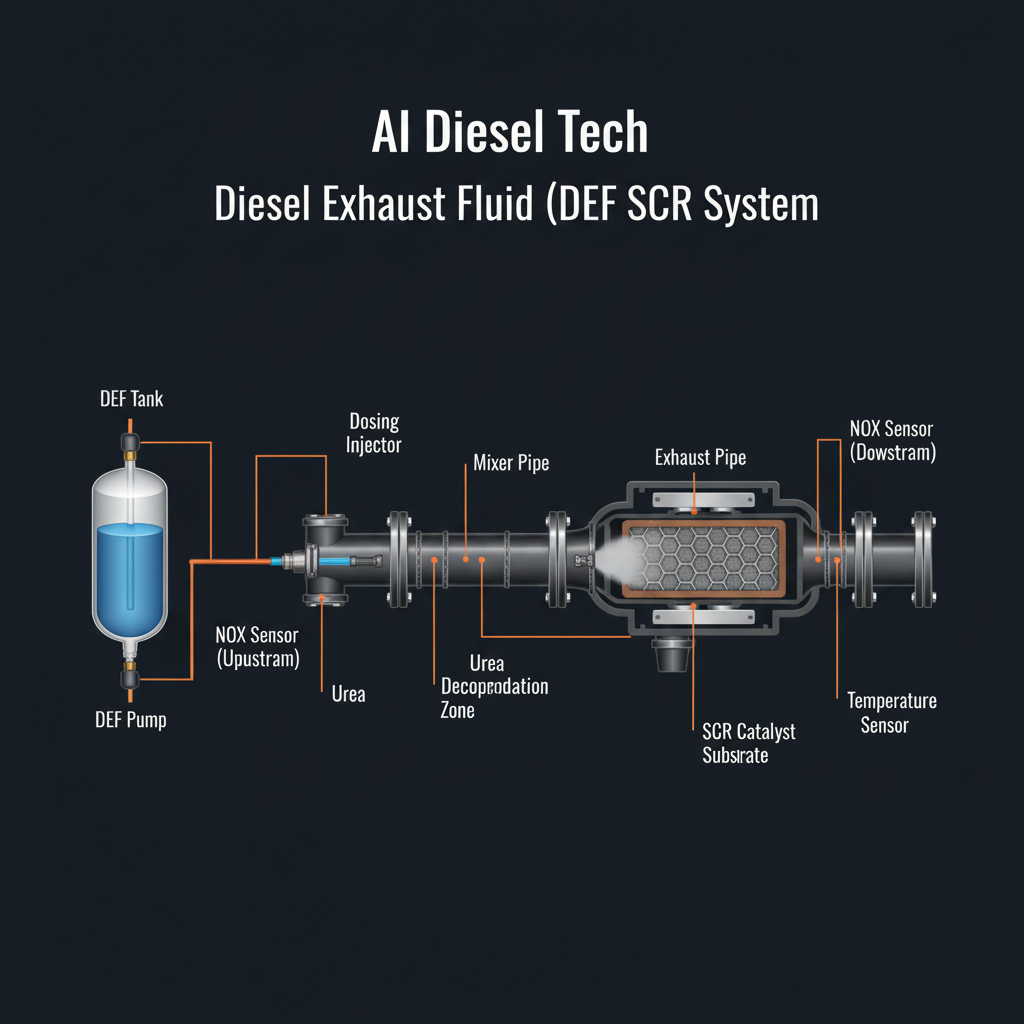
Fault Overview
YMM-specific diagnostic path for DEF dosing quantity, pressure, pump, and related inducement issues on Detroit DD platform engines (GHG14, GHG17, and later).
Engine & Platform Coverage
Symptoms
- •Detroit DEF dosing quantity
- •DD15 DEF pressure
- •DD13 SCR inducement
- •Detroit doser test
- •DD DEF pump
- •GHG17 DEF quantity
Possible Causes
- 1.Crystallization at doser or lines
- 2.DEF pump performance or voltage issues
- 3.Dosing valve circuit or flow problems
- 4.Level or quality sensor faults
- 5.NOx sensor bias affecting closed-loop quantity
- 6.Line heater failures in cold climates
Wiring & Circuit Notes
Focus on dosing valve connector (crystal prone), pump power/ground, pressure sensor, and header connectors. Check for Detroit-specific harness routing issues.
DVOM Specs & Sensor Tests
DEF pressure and pump speed via DiagnosticLink. Dosing quantity data. Collection test results per Detroit procedure. NOx sensor values. Voltage drop at the pump.
Diagnostic Flow — FSM Sequence
AI Diesel Tech enforces this evidence-gate sequence. Each gate must pass before advancing.
8 steps locked behind Technician Mode- 1Step 1 — Check for Active DEF Pressure, Quantity, Level, Quality, and NOx Codes: Check for active DEF pressure, quantity, level, quality, and NOx codes. Document all active and inactive faults.
- 2Step 2 — Verify DEF Level and Quality with Refractometer: Verify DEF level and quality with refractometer. Target 32.5% urea. Correct fluid before any hydraulic testing.
- 3Step 3 — Monitor Pressure and Pump Speed During Dosing: Monitor pressure and pump speed during dosing via DiagnosticLink or equivalent OEM software.
- 4Step 4 — Measure Pump Voltage Under Load: Measure pump voltage under load. Voltage drop is a recurring theme on DD platforms and a leading cause of low pressure and speed.
- 5Step 5 — Inspect and Clean All Crystallization Points: Inspect and clean all crystallization points — doser, lines, connectors. Always use the latest service information for the specific MCM software level.
- 6Step 6 — Perform Detroit Dosing Quantity Collection or Service Test: Perform Detroit dosing quantity collection or service test per DiagnosticLink procedure.
- 7Step 7 — Test Dosing Valve Resistance and Circuit: Test dosing valve resistance and circuit after cleaning.
- 8Step 8 — Address NOx Sensors if Quantity Control is Biased: Address NOx sensors if quantity control is biased after hydraulic DEF system is proven.
- 9Step 9 — Confirm Repair with Efficiency and Road Test: Confirm repair with efficiency data and road test before releasing the vehicle.
Unlock the full evidence-gated diagnostic sequence, DVOM test steps, and repair procedures in Technician Mode.
Full Diagnostic Access
Verification steps, preventative measures, severity guidance, and legacy comparison are available in Technician Mode.
Typical Repair Costs
Crystal cleanup $80–300; pump or valve replacement after proof $300–700; wiring/voltage correction $100–400; header service $150–500; NOx sensor if required $400–900. Total variable $150–1,200.
Start Diagnosing This Fault Now
AI Diesel Tech walks you through every evidence gate in the correct order. Choose the plan that fits your shop.
Related Systems
Related Fault Codes
Related Sensor Locations
Common Symptoms
Related Articles
AI Diesel Tech — The Technician's Diagnostic Engine
AI Diesel Tech diagnostic logic is built by an ASE Certified Diesel Technician and engineered for professional shop use. Trusted by technicians nationwide — used in shops, fleets, and training programs.
Summary
Use the AI Diesel Tech diagnostic engine to run this code through a structured, evidence-gated sequence and get a confirmed root cause before any parts are replaced.