
SPN 4363 FMI 0 — SCR Outlet NOx High / Contribution Class
High outlet NOx is a conversion-system diagnosis, not automatic catalyst failure. Catalyst replaced before DEF and dosing proof is the most documented misdiagnosis pattern. The FSM blocks catalyst-first economics failures.
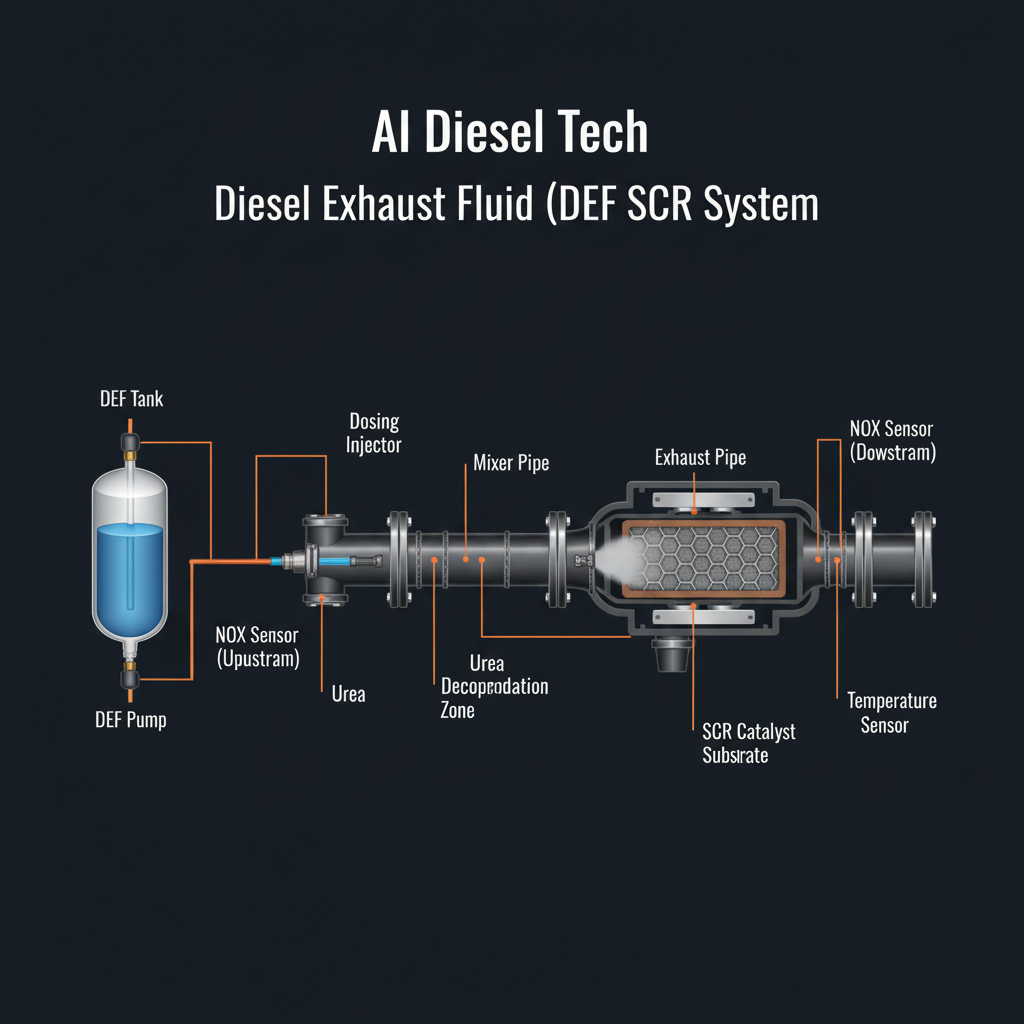
Fault Overview
SPN 4363 FMI 0 indicates outlet NOx related high condition or contribution class depending on OEM mapping. DEF chemistry issues, dosing quantity problems, NOx sensor bias, exhaust leaks, degraded SCR catalyst, and high engine-out NOx from combustion faults are the primary causes. Catalyst replaced before DEF and dosing proof is the most documented misdiagnosis pattern. The SCR catalyst is the last component to assess after all upstream causes are eliminated.
Engine & Platform Coverage
Symptoms
- •High outlet NOx
- •SCR not converting NOx
- •Efficiency failure from high NOx
- •Aftertreatment NOx high
- •Progressive derate from high outlet NOx
Possible Causes
- 1.DEF chemistry issues — DEF chemistry fault producing reduced NOx conversion
- 2.Dosing quantity problems — dosing quantity fault producing insufficient urea injection
- 3.NOx sensor bias — NOx sensor bias producing false high outlet NOx reading
- 4.Exhaust leaks — exhaust leak producing false high outlet NOx reading
- 5.Degraded SCR catalyst — degraded SCR catalyst producing reduced NOx conversion
- 6.High engine-out NOx — combustion fault producing high engine-out NOx that exceeds SCR conversion capacity
Diagnostic Flow — FSM Sequence
AI Diesel Tech enforces this evidence-gate sequence. Each gate must pass before advancing.
5 steps locked behind Technician Mode- 1Step 1 — DEF Chemistry Check: Check DEF chemistry with a refractometer. DEF chemistry issues producing reduced NOx conversion are a documented cause. Verify the DEF concentration is within specification. Drain and refill with fresh OEM-specification DEF if quality is suspect.
- 2Step 2 — Dosing Pressure and Quantity Check: Check dosing pressure and quantity. A dosing quantity fault producing insufficient urea injection reduces NOx conversion. Verify dosing system operation per OEM procedure. Confirm dosing pressure and quantity meet specification.
- 3Step 3 — NOx Sensor Plausibility Check: Check NOx sensor plausibility. A NOx sensor bias producing a false high outlet NOx reading confirms a sensing fault. Compare upstream and downstream NOx sensor readings. A downstream reading that is implausibly high relative to upstream confirms a sensor fault.
- 4Step 4 — Engine-Out NOx Contributors: Evaluate engine-out NOx contributors. High engine-out NOx from combustion faults that exceeds SCR conversion capacity produces high outlet NOx. Evaluate EGR system operation and combustion health. Address engine-out NOx contributors before SCR catalyst assessment.
- 5Step 5 — Catalyst Assessment Last: Assess the SCR catalyst only after all upstream causes are eliminated. A catalyst replaced before DEF and dosing proof is the most documented misdiagnosis pattern. Confirm DEF chemistry, dosing quantity, NOx sensor plausibility, and engine-out NOx are all within specification before any catalyst assessment.
- 6Step 6 — Verify After Repair: Verify outlet NOx readings are within specification after repair. Confirm SPN 4363 FMI 0 does not return. Monitor for return of high outlet NOx events over extended operation.
Unlock the full evidence-gated diagnostic sequence, DVOM test steps, and repair procedures in Technician Mode.
Repair Steps
3 steps locked- 1Drain and refill with fresh OEM-specification DEF if quality is suspect.
- 2Repair dosing system if dosing fault is confirmed.
- 3Repair NOx sensor circuit if sensor bias is confirmed.
- 4Address engine-out NOx contributors if combustion fault is confirmed.
- 5Replace SCR catalyst only after all upstream causes are eliminated.
Unlock full diagnostic steps, DVOM tests, and repair procedures.
Full Diagnostic Access
Verification steps, preventative measures, severity guidance, and legacy comparison are available in Technician Mode.
Start Diagnosing This Fault Now
AI Diesel Tech walks you through every evidence gate in the correct order. Choose the plan that fits your shop.
Related Resources
Related Fault Codes
Related Systems
Related Fault Codes
Related Sensor Locations
Common Symptoms
Related Articles
AI Diesel Tech — The Technician's Diagnostic Engine
AI Diesel Tech diagnostic logic is built by an ASE Certified Diesel Technician and engineered for professional shop use. Trusted by technicians nationwide — used in shops, fleets, and training programs.
Summary
High outlet NOx is a conversion-system diagnosis, not automatic catalyst failure. The AI Diesel Tech FSM blocks catalyst-first economics failures.