
SPN 4360 FMI 2 — SCR Intermediate Temperature Data Erratic
Erratic SCR intermediate temperature is isolated by live-data monitoring and wiggle testing before component replacement.
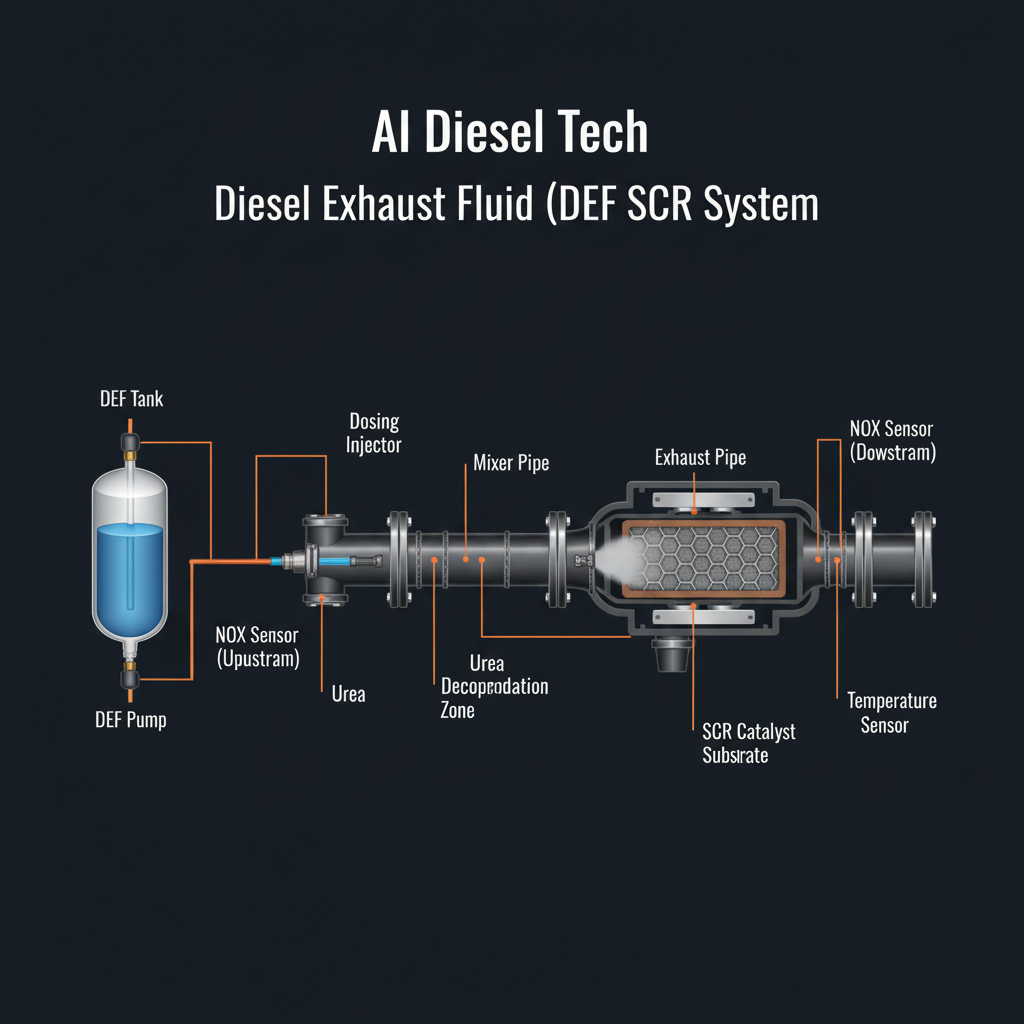
Fault Overview
FMI 2 indicates the intermediate temperature signal is erratic, intermittent, or changes faster than the thermal mass of the catalyst allows.
Engine & Platform Coverage
Symptoms
- •SCR temp erratic
- •Intermediate temperature intermittent
- •SPN 4360 FMI 2
- •SCR temperature fluctuating
Possible Causes
- 1.Intermittent connector contact
- 2.Failing sensor
- 3.Wiring chafe or loose pin
- 4.Thermal cycling cracks in the sensor
- 5.Exhaust leak causing turbulent flow at the boss
- 6.EMI
Wiring & Circuit Notes
Wiggle-test the connector and harness while monitoring live temperature data. Inspect for heat-damaged insulation and poor pin tension.
DVOM Specs & Sensor Tests
Live data should be smooth under steady load. Rapid spikes or dropouts indicate electrical intermittents. Resistance may be unstable when the sensor is heated or cooled.
Diagnostic Flow — FSM Sequence
AI Diesel Tech enforces this evidence-gate sequence. Each gate must pass before advancing.
5 steps locked behind Technician Mode- 1Step 1 — Monitor Intermediate Temperature Under Steady Cruise or Loaded Conditions: Monitor intermediate temperature under steady cruise or loaded conditions. Live data should be smooth under steady load. Rapid spikes or dropouts indicate electrical intermittents.
- 2Step 2 — Perform Wiggle Test on Connector and Harness: Perform wiggle test on connector and harness while monitoring live temperature data. Connector heat damage and internal sensor fractures from repeated thermal shock are common sources of erratic readings.
- 3Step 3 — Compare Stability to SCR Inlet and Outlet Sensors: Compare stability to SCR inlet and outlet sensors. If neighbors are stable, the fault is isolated to the intermediate sensor or its circuit.
- 4Step 4 — Measure Resistance While Applying Gentle Heat or Movement if Safe: Measure resistance while applying gentle heat or movement if safe. Resistance may be unstable when the sensor is heated or cooled.
- 5Step 5 — Inspect for Exhaust Leaks at the Boss: Inspect for exhaust leaks at the sensor boss. Leaks cause turbulent flow that can produce erratic temperature readings.
- 6Step 6 — Repair Wiring or Replace Sensor After Isolation: Repair wiring or replace sensor after isolation.
Unlock the full evidence-gated diagnostic sequence, DVOM test steps, and repair procedures in Technician Mode.
Full Diagnostic Access
Verification steps, preventative measures, severity guidance, and legacy comparison are available in Technician Mode.
Typical Repair Costs
Repair connector or harness $100–300; replace intermittent sensor $100–400; repair exhaust leak $100–400.
Start Diagnosing This Fault Now
AI Diesel Tech walks you through every evidence gate in the correct order. Choose the plan that fits your shop.
Related Systems
Related Fault Codes
Related Sensor Locations
Common Symptoms
Related Articles
AI Diesel Tech — The Technician's Diagnostic Engine
AI Diesel Tech diagnostic logic is built by an ASE Certified Diesel Technician and engineered for professional shop use. Trusted by technicians nationwide — used in shops, fleets, and training programs.
Summary
Use the AI Diesel Tech diagnostic engine to run this code through a structured, evidence-gated sequence and get a confirmed root cause before any parts are replaced.