
SPN 3216 FMI 2 — Aftertreatment Intake NOx Sensor Data Erratic
Erratic upstream NOx data is isolated by live monitoring, heater status, wiggle testing, and leak inspection before sensor replacement.
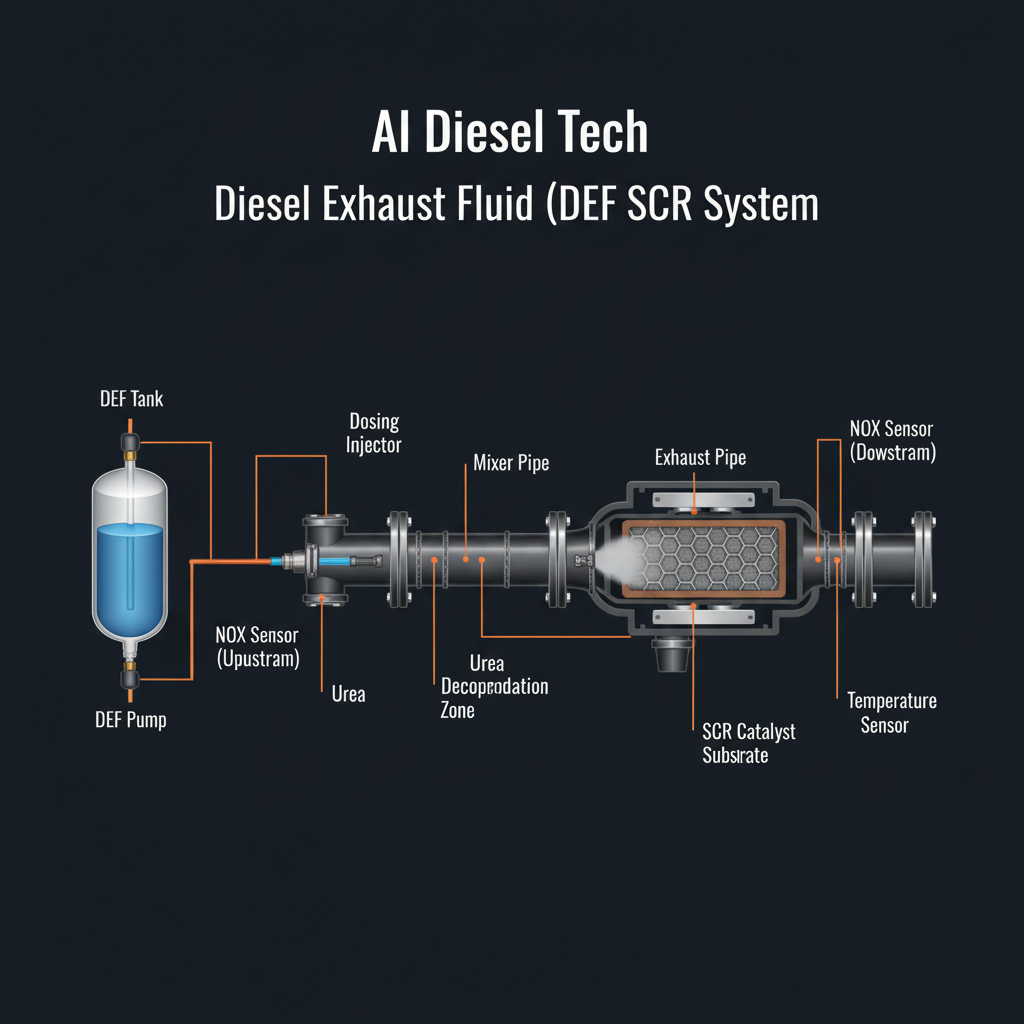
Fault Overview
SPN 3216 is the Aftertreatment Intake (upstream / engine-out) NOx sensor. FMI 2 indicates the signal is erratic, intermittent, or changes faster than combustion conditions allow.
Engine & Platform Coverage
Symptoms
- •Inlet NOx erratic
- •Upstream NOx sensor intermittent
- •SPN 3216 FMI 2
- •NOx sensor data fluctuating
- •SCR inlet NOx unstable
Possible Causes
- 1.Intermittent connector or wiring
- 2.Failing NOx sensor
- 3.Heater circuit intermittents
- 4.Exhaust leaks upstream of the sensor
- 5.Water or contamination intrusion
- 6.EMI from aftermarket devices
Wiring & Circuit Notes
Wiggle-test the NOx sensor connector and harness while monitoring live NOx data and heater status. Inspect for heat damage, corrosion, and proper locking.
DVOM Specs & Sensor Tests
Live NOx value should be relatively stable under steady load and speed. Heater current and status should be consistent. Signal dropouts or wild swings indicate electrical intermittents. Power, ground, and CAN (if smart sensor) integrity checks.
Diagnostic Flow — FSM Sequence
AI Diesel Tech enforces this evidence-gate sequence. Each gate must pass before advancing.
6 steps locked behind Technician Mode- 1Step 1 — Monitor Upstream NOx Under Steady Cruise or Loaded Conditions: Monitor upstream NOx under steady cruise or loaded conditions. Live NOx value should be relatively stable under steady load and speed.
- 2Step 2 — Simultaneously Monitor Heater Status and Current: Simultaneously monitor heater status and current. Heater circuit intermittents are a common cause of erratic NOx data.
- 3Step 3 — Perform Wiggle Test on Connector and Harness: Perform wiggle test on connector and harness while monitoring live NOx data. Connector issues and internal sensor failures after thermal cycling are common.
- 4Step 4 — Inspect for Exhaust Leaks Upstream of the Sensor: Inspect for exhaust leaks upstream of the sensor. Exhaust leaks before the sensor introduce oxygen and create unstable readings.
- 5Step 5 — Check Power, Ground, and Communication Circuits: Check power, ground, and communication circuits (CAN if smart sensor).
- 6Step 6 — Compare to Downstream NOx for Relative Stability: Compare to downstream NOx for relative stability. If downstream is stable and upstream is erratic, the fault is isolated to the upstream sensor or its circuit.
- 7Step 7 — Replace Sensor Only After Electrical and Leak Proof: Replace sensor only after electrical and leak proof.
Unlock the full evidence-gated diagnostic sequence, DVOM test steps, and repair procedures in Technician Mode.
Full Diagnostic Access
Verification steps, preventative measures, severity guidance, and legacy comparison are available in Technician Mode.
Typical Repair Costs
Repair connector or harness $100–300; repair exhaust leak $100–400; replace failed NOx sensor $300–900.
Start Diagnosing This Fault Now
AI Diesel Tech walks you through every evidence gate in the correct order. Choose the plan that fits your shop.
Related Systems
Related Fault Codes
Related Sensor Locations
Common Symptoms
Related Articles
AI Diesel Tech — The Technician's Diagnostic Engine
AI Diesel Tech diagnostic logic is built by an ASE Certified Diesel Technician and engineered for professional shop use. Trusted by technicians nationwide — used in shops, fleets, and training programs.
Summary
Use the AI Diesel Tech diagnostic engine to run this code through a structured, evidence-gated sequence and get a confirmed root cause before any parts are replaced.