
SCR Outlet Temperature Performance High / Low / Rationality
SCR outlet temperature faults are diagnosed with a complete temperature profile across the catalyst and leak inspection before sensor replacement.
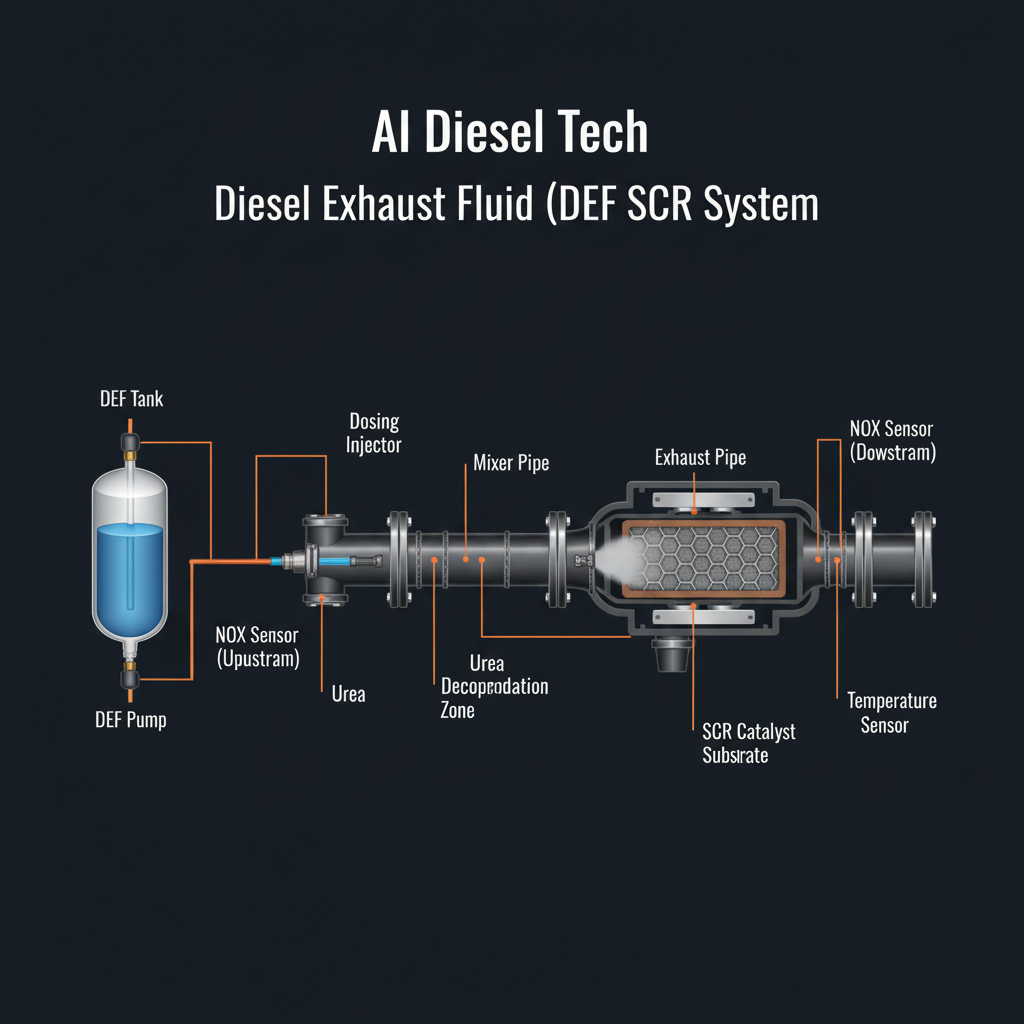
Fault Overview
Performance or rationality faults on the SCR outlet temperature sensor. The reading is implausibly high or low relative to intermediate temperature, expected catalyst behavior, or other exhaust temperatures.
Engine & Platform Coverage
Symptoms
- •SCR outlet temp high
- •SCR outlet temp low
- •SCR outlet temperature rationality
- •SCR outlet sensor performance
Possible Causes
- 1.Failed sensor
- 2.Wiring faults
- 3.Exhaust leak at or after the SCR
- 4.Catalyst internal damage or face plugging altering outlet temperature
- 5.Sensor contamination
- 6.Incorrect installation
Wiring & Circuit Notes
Inspect outlet sensor connector for heat damage and corrosion. Check harness routing beyond the SCR can.
DVOM Specs & Sensor Tests
Resistance/voltage chart correlation. Outlet temperature should generally be lower than intermediate under normal dosing and flow, with platform-specific deltas. Infrared verification when possible.
Diagnostic Flow — FSM Sequence
AI Diesel Tech enforces this evidence-gate sequence. Each gate must pass before advancing.
6 steps locked behind Technician Mode- 1Step 1 — Map SCR Inlet, Intermediate, and Outlet Temperatures Under Steady Load and Dosing: Map SCR inlet, intermediate, and outlet temperatures under steady load and dosing. Outlet temperature should generally be lower than intermediate under normal dosing and flow.
- 2Step 2 — Note Any Abnormal Drop or Rise Across the Catalyst: Note any abnormal drop or rise across the catalyst. Internal catalyst damage can produce abnormal outlet temperatures that look like sensor faults.
- 3Step 3 — Inspect for Exhaust Leaks at the SCR Outlet and Downstream: Inspect for exhaust leaks at the SCR outlet and downstream. Sensor failures and post-SCR exhaust leaks are common.
- 4Step 4 — Measure Sensor Resistance/Voltage: Measure sensor resistance/voltage against the OEM temperature chart.
- 5Step 5 — Check Wiring: Check wiring. Inspect outlet sensor connector for heat damage and corrosion. Check harness routing beyond the SCR can.
- 6Step 6 — Evaluate Catalyst Condition if Temperatures Indicate Internal Issues: Evaluate catalyst condition if temperatures indicate internal issues. Abnormal temperature profiles across the catalyst may indicate internal damage.
- 7Step 7 — Replace Sensor Only After Correlation and Leak Proof: Replace sensor only after correlation and leak proof.
Unlock the full evidence-gated diagnostic sequence, DVOM test steps, and repair procedures in Technician Mode.
Full Diagnostic Access
Verification steps, preventative measures, severity guidance, and legacy comparison are available in Technician Mode.
Typical Repair Costs
Repair leak $100–400; replace failed sensor $120–500; address catalyst if internally damaged $2,000–5,000+.
Start Diagnosing This Fault Now
AI Diesel Tech walks you through every evidence gate in the correct order. Choose the plan that fits your shop.
Related Systems
Related Fault Codes
Related Sensor Locations
Common Symptoms
Related Articles
AI Diesel Tech — The Technician's Diagnostic Engine
AI Diesel Tech diagnostic logic is built by an ASE Certified Diesel Technician and engineered for professional shop use. Trusted by technicians nationwide — used in shops, fleets, and training programs.
Summary
Use the AI Diesel Tech diagnostic engine to run this code through a structured, evidence-gated sequence and get a confirmed root cause before any parts are replaced.