
P20EE — SCR NOx Catalyst Efficiency Below Threshold
P20EE sets when the SCR catalyst is not converting NOx at the expected efficiency, based on upstream and downstream NOx sensor data. DEF quality/quantity and NOx correlation before catalyst replacement is a major cost saver — 70%+ of P20EE cases are DEF quality, quantity, or NOx sensor related, not the catalyst.
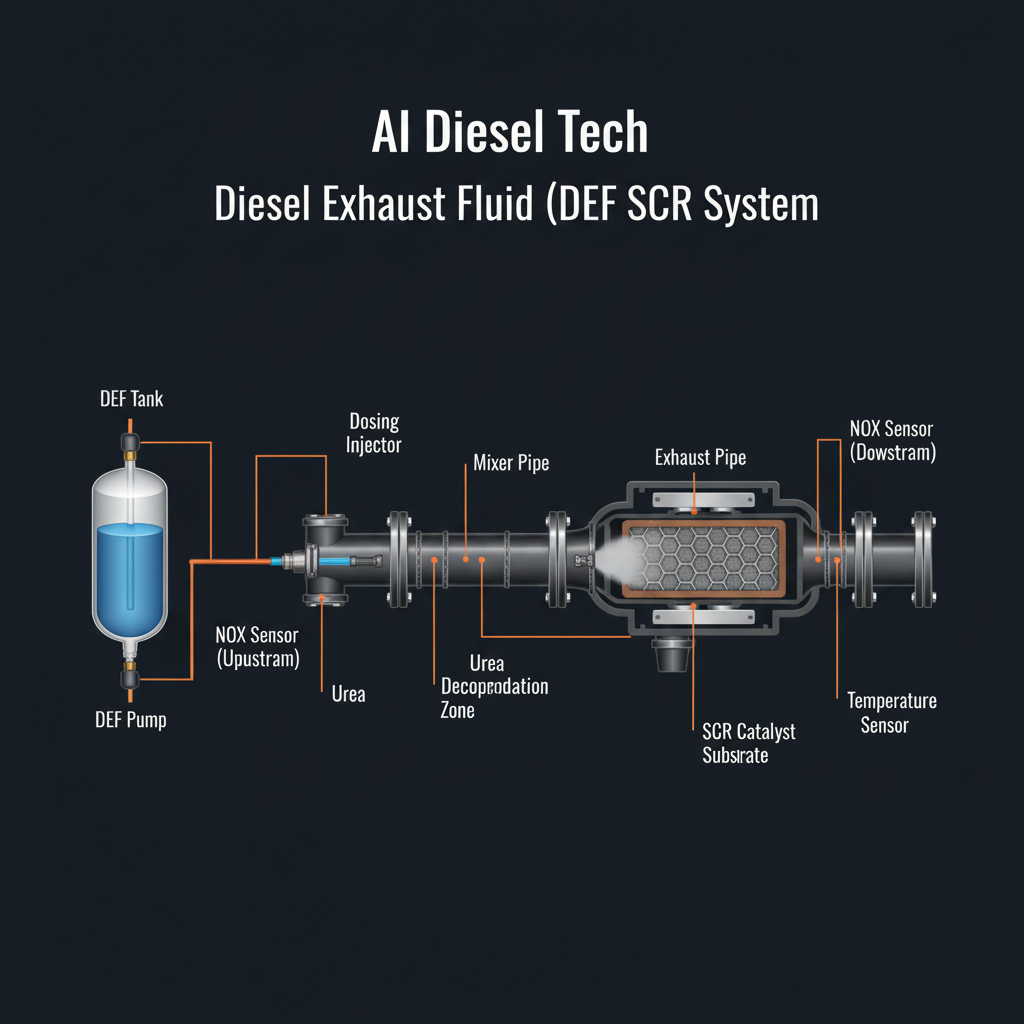
Fault Overview
Poor DEF quality or quantity, NOx sensor bias, SCR temperature out of window, crystallization, exhaust leaks, actual catalyst degradation, and dosing valve issues are the primary causes. Always test DEF with a refractometer. Perform quantity collection test before replacing the doser. Clean crystallization thoroughly.
Engine & Platform Coverage
Symptoms
- •P20EE
- •SCR efficiency low
- •NOx catalyst efficiency
- •P20EE DEF
- •SCR code
Possible Causes
- 1.Poor DEF quality or quantity
- 2.NOx sensor bias
- 3.SCR temperature out of enable window
- 4.Crystallization blocking dosing
- 5.Exhaust leaks
- 6.Actual catalyst degradation
- 7.Dosing valve issues
Wiring & Circuit Notes
NOx sensors, DEF dosing valve, temperature sensors, DEF quality sensor.
DVOM Specs & Sensor Tests
Upstream vs downstream NOx. DEF pressure and quantity collection results. SCR temperatures. DEF quality refractometer reading.
Diagnostic Flow — FSM Sequence
AI Diesel Tech enforces this evidence-gate sequence. Each gate must pass before advancing.
5 steps locked behind Technician Mode- 1Step 1 — Test DEF Quality with a Refractometer: Test DEF quality with a refractometer. Target is 32.5% urea concentration. Bad DEF is the most common cause of P20EE.
- 2Step 2 — Verify DEF Pressure and Perform Quantity Collection: Verify DEF pressure and perform a quantity collection test. Confirm the dosing system is delivering the correct amount.
- 3Step 3 — Check SCR Temperatures in the Enable Window: Check SCR inlet and outlet temperatures. The SCR must be within the enable temperature window for efficient conversion.
- 4Step 4 — Correlate Upstream/Downstream NOx: Correlate upstream and downstream NOx sensor readings. A biased sensor can falsely indicate poor efficiency.
- 5Step 5 — Inspect for Leaks and Crystals: Inspect for exhaust leaks and DEF crystallization in the dosing system and SCR inlet.
- 6Step 6 — Replace Catalyst Only After All Other Systems Are Proven: Replace the SCR catalyst only after DEF quality, dosing quantity, NOx sensors, and temperatures are all proven.
Unlock the full evidence-gated diagnostic sequence, DVOM test steps, and repair procedures in Technician Mode.
Full Diagnostic Access
Verification steps, preventative measures, severity guidance, and legacy comparison are available in Technician Mode.
Typical Repair Costs
DEF fluid service $20–80; NOx sensor replacement $200–600; dosing system repair $200–800; crystal cleaning $100–400; catalyst last $1,500–4,000+.
Start Diagnosing This Fault Now
AI Diesel Tech walks you through every evidence gate in the correct order. Choose the plan that fits your shop.
Related Systems
Related Fault Codes
Related Sensor Locations
Common Symptoms
Related Articles
AI Diesel Tech — The Technician's Diagnostic Engine
AI Diesel Tech diagnostic logic is built by an ASE Certified Diesel Technician and engineered for professional shop use. Trusted by technicians nationwide — used in shops, fleets, and training programs.
Summary
Use the AI Diesel Tech diagnostic engine to run this code through a structured, evidence-gated sequence and get a confirmed root cause before any parts are replaced.