
NOx Sensor Aging / Slow Response / Performance Degradation
NOx sensor aging is confirmed only after DEF system performance and exhaust integrity are verified and response time is measured.
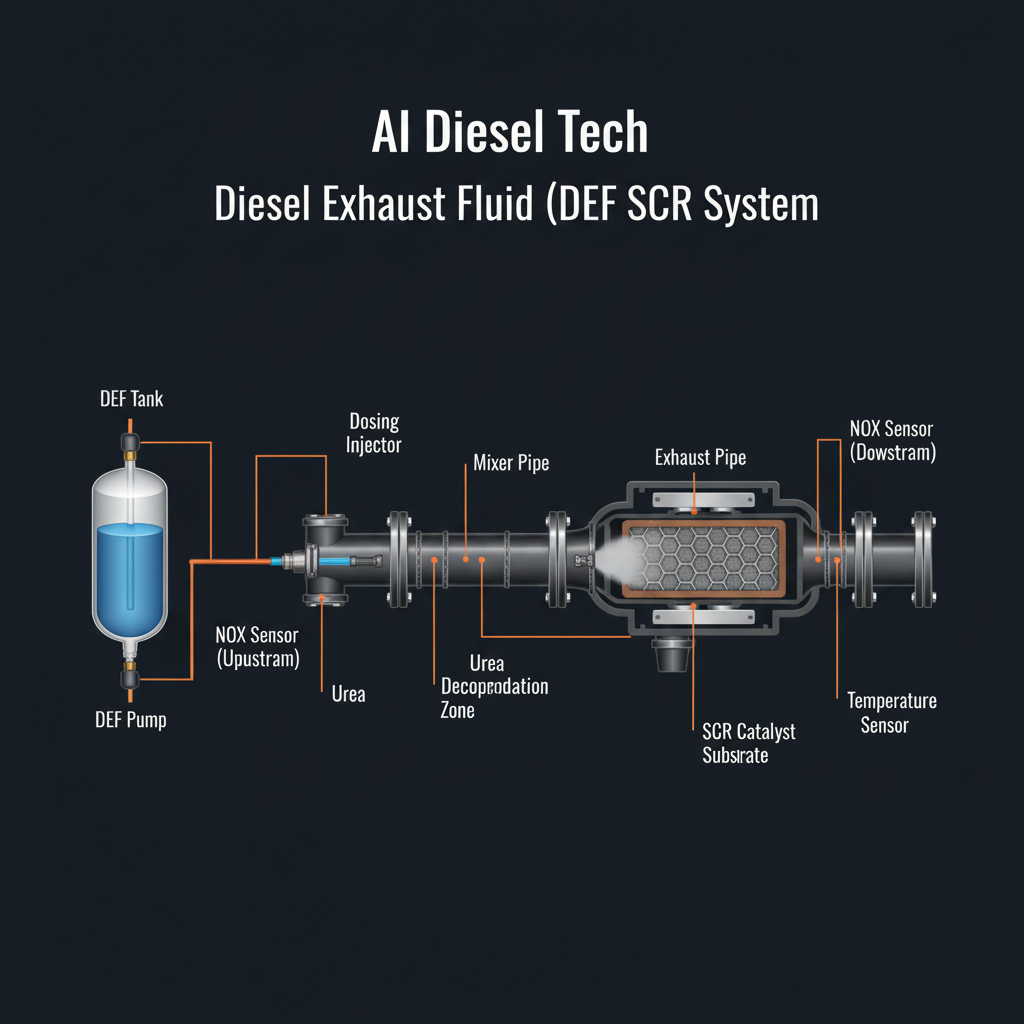
Fault Overview
Performance faults indicating the NOx sensor is responding too slowly, has excessive offset, or has reached an aging threshold that the ECM no longer trusts for closed-loop control.
Engine & Platform Coverage
Symptoms
- •NOx sensor aging
- •NOx slow response
- •NOx sensor performance
- •NOx sensor degraded
- •SCR efficiency with aged NOx
Possible Causes
- 1.Normal end-of-life sensor aging
- 2.Contamination from oil, coolant, or high sulfur
- 3.Prolonged exposure to extreme temperatures
- 4.Exhaust leaks causing chronic offset
- 5.Manufacturing variation
Wiring & Circuit Notes
Confirm heater and signal circuits are healthy so a wiring issue is not misread as sensor aging.
DVOM Specs & Sensor Tests
Response time to a known change in engine-out NOx (acceleration or load step). Offset relative to a known-good sensor or expected values. Heater performance still within limits. OEM aging or performance data if available.
Diagnostic Flow — FSM Sequence
AI Diesel Tech enforces this evidence-gate sequence. Each gate must pass before advancing.
6 steps locked behind Technician Mode- 1Step 1 — Verify No Active Heater or Circuit Codes: Verify no active heater or circuit codes. Confirm heater and signal circuits are healthy so a wiring issue is not misread as sensor aging.
- 2Step 2 — Confirm DEF Dosing Quantity and Pressure are Correct: Confirm DEF dosing quantity and pressure are correct. NOx sensors are wear items — many platforms set performance codes after a calibrated number of hours or when response falls below threshold.
- 3Step 3 — Perform a Controlled Load Step and Observe Response Time: Perform a controlled load step and observe upstream and downstream NOx response time. Contamination accelerates aging.
- 4Step 4 — Check for Exhaust Leaks: Check for exhaust leaks. Exhaust leaks causing chronic offset can mimic sensor aging.
- 5Step 5 — Review Any OEM Aging or Performance PIDs: Review any OEM aging or performance PIDs if available.
- 6Step 6 — Replace the Aged Sensor After Hydraulic and Leak Proof: Replace the aged sensor after hydraulic and leak proof.
- 7Step 7 — Clear Adaptive Data if Required by the Platform: Clear adaptive data if required by the platform after sensor replacement.
Unlock the full evidence-gated diagnostic sequence, DVOM test steps, and repair procedures in Technician Mode.
Full Diagnostic Access
Verification steps, preventative measures, severity guidance, and legacy comparison are available in Technician Mode.
Typical Repair Costs
Replace the aged NOx sensor $300–900; repair any contributing exhaust leaks or contamination sources.
Start Diagnosing This Fault Now
AI Diesel Tech walks you through every evidence gate in the correct order. Choose the plan that fits your shop.
Related Systems
Related Fault Codes
Related Sensor Locations
Common Symptoms
Related Articles
AI Diesel Tech — The Technician's Diagnostic Engine
AI Diesel Tech diagnostic logic is built by an ASE Certified Diesel Technician and engineered for professional shop use. Trusted by technicians nationwide — used in shops, fleets, and training programs.
Summary
Use the AI Diesel Tech diagnostic engine to run this code through a structured, evidence-gated sequence and get a confirmed root cause before any parts are replaced.