
DEF System Air Intrusion / Aeration Effects on Pressure and Quantity
Unstable or low DEF pressure after service is treated as air intrusion until fittings are inspected and the system is properly primed.
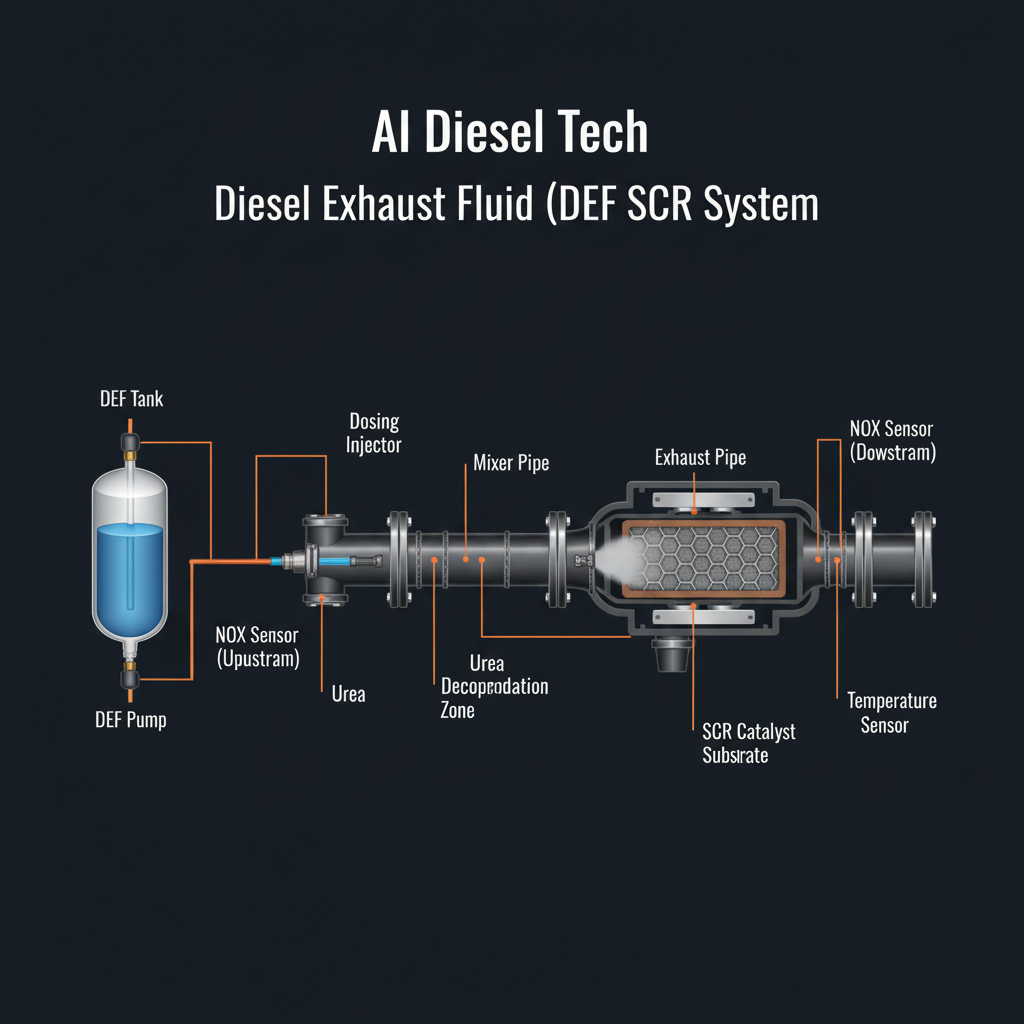
Fault Overview
Diagnosis of air entry into the DEF hydraulic circuit that causes unstable pressure, low pressure, or inconsistent dosing quantity. Air intrusion after filter or line service is a classic cause of post-service DEF pressure and quantity codes.
Engine & Platform Coverage
Symptoms
- •DEF aeration
- •Air in DEF lines
- •DEF pressure unstable air
- •Prime DEF system
- •Air lock DEF pump
Possible Causes
- 1.Loose fittings
- 2.Failed O-rings at filter, pump, or lines
- 3.Cracked lines
- 4.Improper service that introduced air
- 5.Empty tank allowing air ingestion
- 6.Leaking return circuit
Wiring & Circuit Notes
Not primary. Confirm pump electrical performance first.
DVOM Specs & Sensor Tests
Pressure unstable or slow to build despite good pump speed. Visible air bubbles if a clear section or test is available. Quantity collection results inconsistent.
Diagnostic Flow — FSM Sequence
AI Diesel Tech enforces this evidence-gate sequence. Each gate must pass before advancing.
5 steps locked behind Technician Mode- 1Step 1 — Confirm Pump Voltage and Command are Normal: Confirm pump voltage and command are normal. Electrical issues must be ruled out before aeration is assumed.
- 2Step 2 — Monitor Pressure Build and Stability: Monitor pressure build and stability. Slow build or unstable pressure despite good pump speed confirms air or a leak.
- 3Step 3 — Inspect All Fittings, Filters, and O-Rings for Leaks or Damage: Inspect all fittings, filters, and O-rings for leaks or damage. Proper priming procedures are critical after any DEF system service.
- 4Step 4 — Perform OEM Priming or Air Purge Procedure: Perform OEM priming or air purge procedure. Follow the specific procedure for the platform.
- 5Step 5 — Retest Pressure and Quantity Collection: Retest pressure and quantity collection after priming. Confirm both are within specification.
- 6Step 6 — Replace Damaged Seals or Lines as Found: Replace damaged seals or lines as found. Tighten or replace any loose fittings.
Unlock the full evidence-gated diagnostic sequence, DVOM test steps, and repair procedures in Technician Mode.
Full Diagnostic Access
Verification steps, preventative measures, severity guidance, and legacy comparison are available in Technician Mode.
Typical Repair Costs
Tighten or replace fittings $20–100; replace O-rings and seals $40–200; replace cracked lines $80–300; proper prime — labor only. Total $40–300.
Start Diagnosing This Fault Now
AI Diesel Tech walks you through every evidence gate in the correct order. Choose the plan that fits your shop.
Related Systems
Related Fault Codes
Related Sensor Locations
Common Symptoms
Related Articles
AI Diesel Tech — The Technician's Diagnostic Engine
AI Diesel Tech diagnostic logic is built by an ASE Certified Diesel Technician and engineered for professional shop use. Trusted by technicians nationwide — used in shops, fleets, and training programs.
Summary
Use the AI Diesel Tech diagnostic engine to run this code through a structured, evidence-gated sequence and get a confirmed root cause before any parts are replaced.