
DEF Pump Power, Ground, and Voltage-Drop Standard
Always measure voltage and voltage drop at the DEF pump under load before condemning the pump for low pressure or speed.
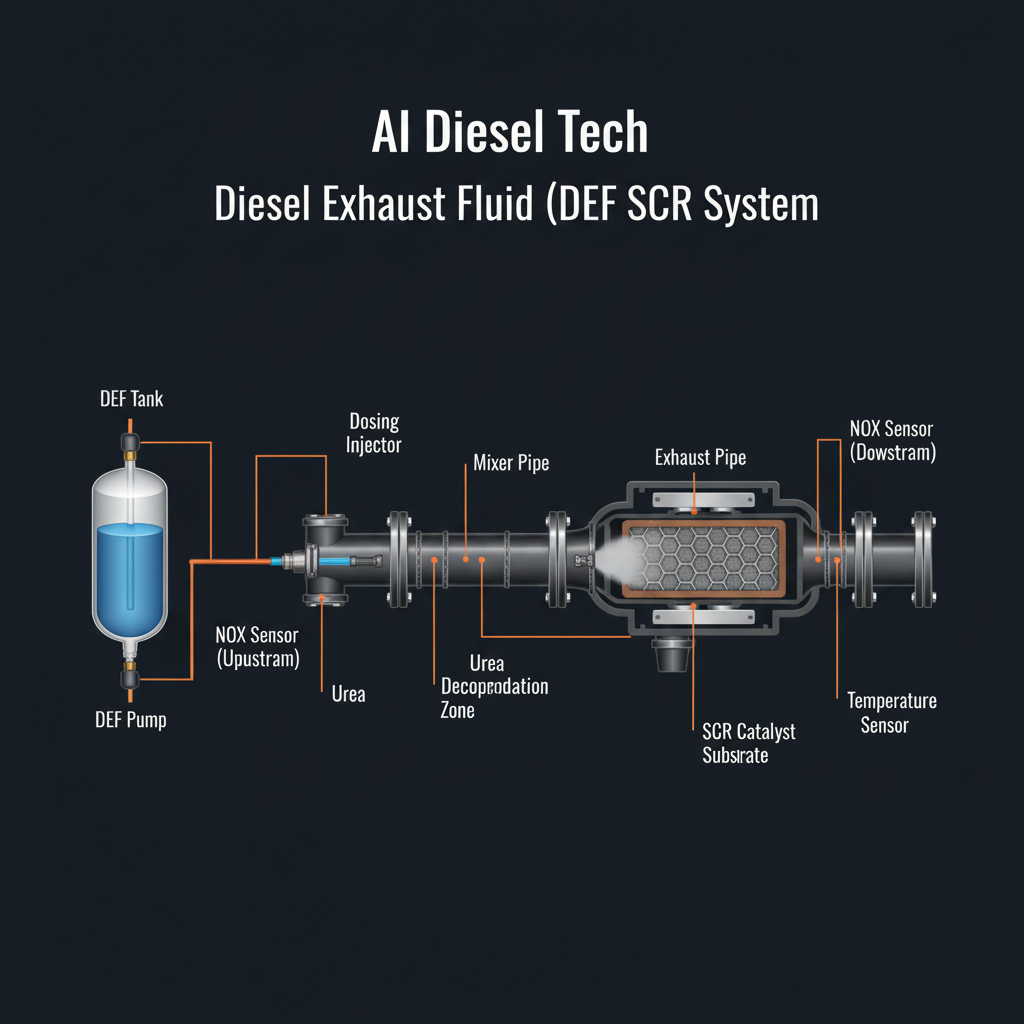
Fault Overview
System electrical standard for verifying power delivery and ground integrity to the DEF pump under load — a frequent root cause of low pressure and low speed codes. Voltage drop is a frequently missed cause of 'failed' DEF pumps — many pumps are replaced when the real fault is a 1–2 V drop under load.
Engine & Platform Coverage
Symptoms
- •DEF pump voltage drop
- •DEF pump power circuit
- •DEF pump ground
- •Low voltage DEF pump
- •Pump performance electrical
Possible Causes
- 1.High resistance at connectors
- 2.Undersized wiring
- 3.Poor grounds
- 4.Shared power issues
- 5.Corroded connections
Wiring & Circuit Notes
Full path from battery or power distribution to the pump and back to ground. Focus on connectors at the pump and any intermediate junctions.
DVOM Specs & Sensor Tests
Voltage at the pump positive and ground terminals while the pump is commanded under load. Total voltage drop should typically remain under 0.5–1.0 V depending on platform. Current draw within specification.
Diagnostic Flow — FSM Sequence
AI Diesel Tech enforces this evidence-gate sequence. Each gate must pass before advancing.
6 steps locked behind Technician Mode- 1Step 1 — Command the DEF Pump On: Command the DEF pump on via service test or dosing cycle. Measurements must be taken under load.
- 2Step 2 — Measure Voltage at the Pump Positive Terminal to Battery Positive: Measure voltage directly at the pump positive terminal to battery positive. This measures the total drop in the power circuit.
- 3Step 3 — Measure Voltage from Pump Ground Terminal to Battery Negative: Measure voltage from pump ground terminal to battery negative. This measures the total drop in the ground circuit.
- 4Step 4 — Calculate Total Drop: Calculate total drop (power drop + ground drop). Total voltage drop should typically remain under 0.5–1.0 V depending on platform.
- 5Step 5 — Measure Current Draw: Measure current draw. Compare to specification. High current with low speed confirms a mechanical restriction or seized pump.
- 6Step 6 — Inspect and Clean All Connections in the Path: Inspect and clean all connections in the path from battery to pump and back. Focus on connectors at the pump and any intermediate junctions.
- 7Step 7 — Repair High-Resistance Points and Retest Pressure/Speed: Repair high-resistance points and retest pressure/speed. Replace pump only if voltage is good and performance remains low.
Unlock the full evidence-gated diagnostic sequence, DVOM test steps, and repair procedures in Technician Mode.
Full Diagnostic Access
Verification steps, preventative measures, severity guidance, and legacy comparison are available in Technician Mode.
Typical Repair Costs
Clean and tighten connections $50–150; repair or upgrade wiring $100–300; correct ground points $50–200; replace pump only if voltage is good and performance remains low $300–700. Total $50–400 for electrical repair.
Start Diagnosing This Fault Now
AI Diesel Tech walks you through every evidence gate in the correct order. Choose the plan that fits your shop.
Related Systems
Related Fault Codes
Related Sensor Locations
AI Diesel Tech — The Technician's Diagnostic Engine
AI Diesel Tech diagnostic logic is built by an ASE Certified Diesel Technician and engineered for professional shop use. Trusted by technicians nationwide — used in shops, fleets, and training programs.
Summary
Use the AI Diesel Tech diagnostic engine to run this code through a structured, evidence-gated sequence and get a confirmed root cause before any parts are replaced.