
Diesel Black Smoke — Causes, Fault Codes & Diagnosis
Black smoke from a diesel engine indicates incomplete combustion — too much fuel or not enough air. This guide covers the most common SPN/FMI fault codes that cause black smoke, with diagnostic procedures to find and fix the root cause.
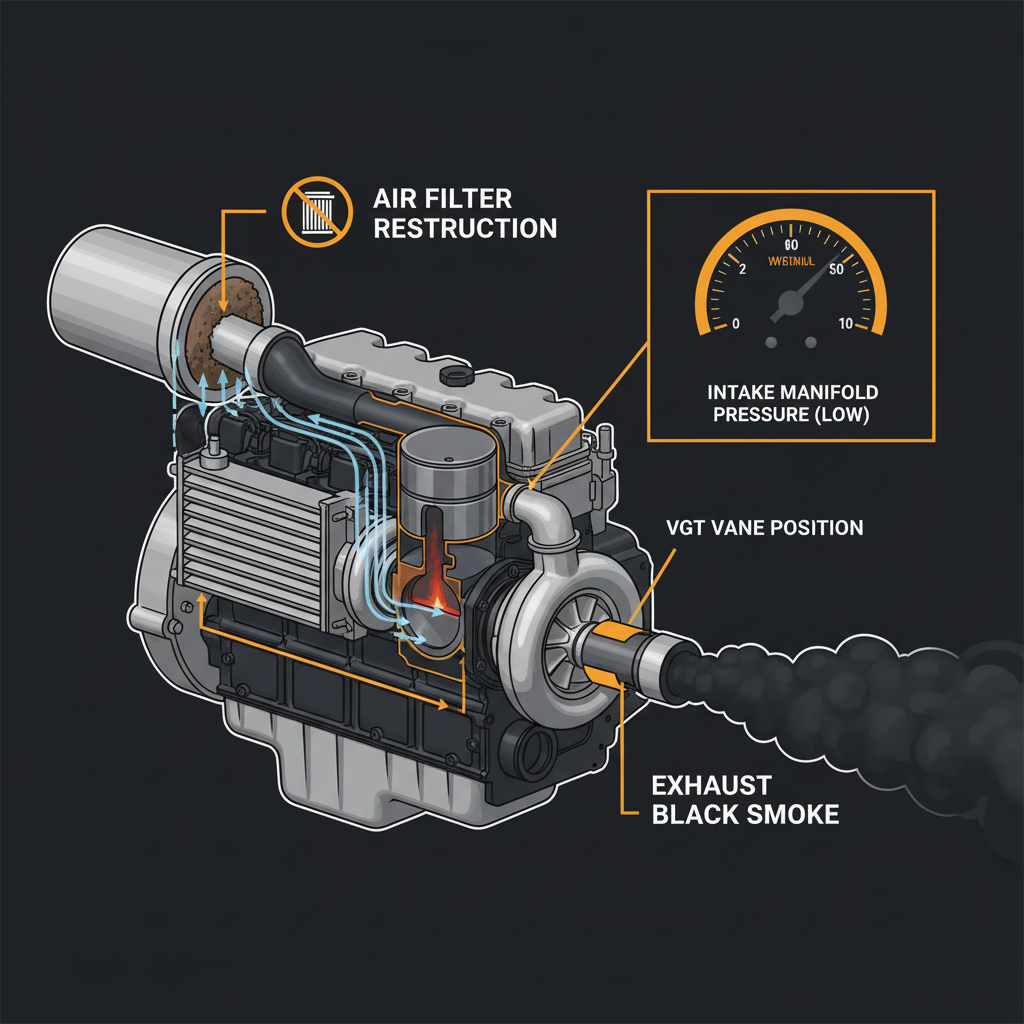
What Causes Black Smoke in a Diesel?
Black smoke is caused by incomplete combustion — the fuel is not fully burning. The most common causes are insufficient air (low boost, air restriction) or excess fuel (injector fault, high rail pressure). The turbocharger and VGT system are the most frequent culprits.
Low Boost / Air Restriction
VGT carbon buildup, CAC leak, air filter restriction, or turbo wear reduces air supply, causing rich combustion and black smoke.
Excess Fuel Delivery
High fuel rail pressure, stuck-open injectors, or EGR valve stuck open (recirculating exhaust instead of fresh air) causes over-fueling.
EGR System Fault
EGR valve stuck open reduces fresh air intake, causing incomplete combustion and black smoke under load.
Injector Fault
A stuck-open or leaking injector delivers excess fuel to one cylinder, causing black smoke and rough running.
Black Smoke Fault Codes by System
Turbo / Air System (Most Common)
Diagnose Your Black Smoke Issue with AI
Enter your fault code for a complete step-by-step diagnostic procedure.