
SPN 157 FMI 15 — Fuel Rail Pressure Above Normal (Least Severe / Moderately High)
Moderate rail pressure highs are early warnings that escalate to severe overpressure events if ignored. Trending desired versus actual over short trips and loaded conditions reveals whether the condition is progressive — a pattern that distinguishes early control valve sticking from sensor drift.
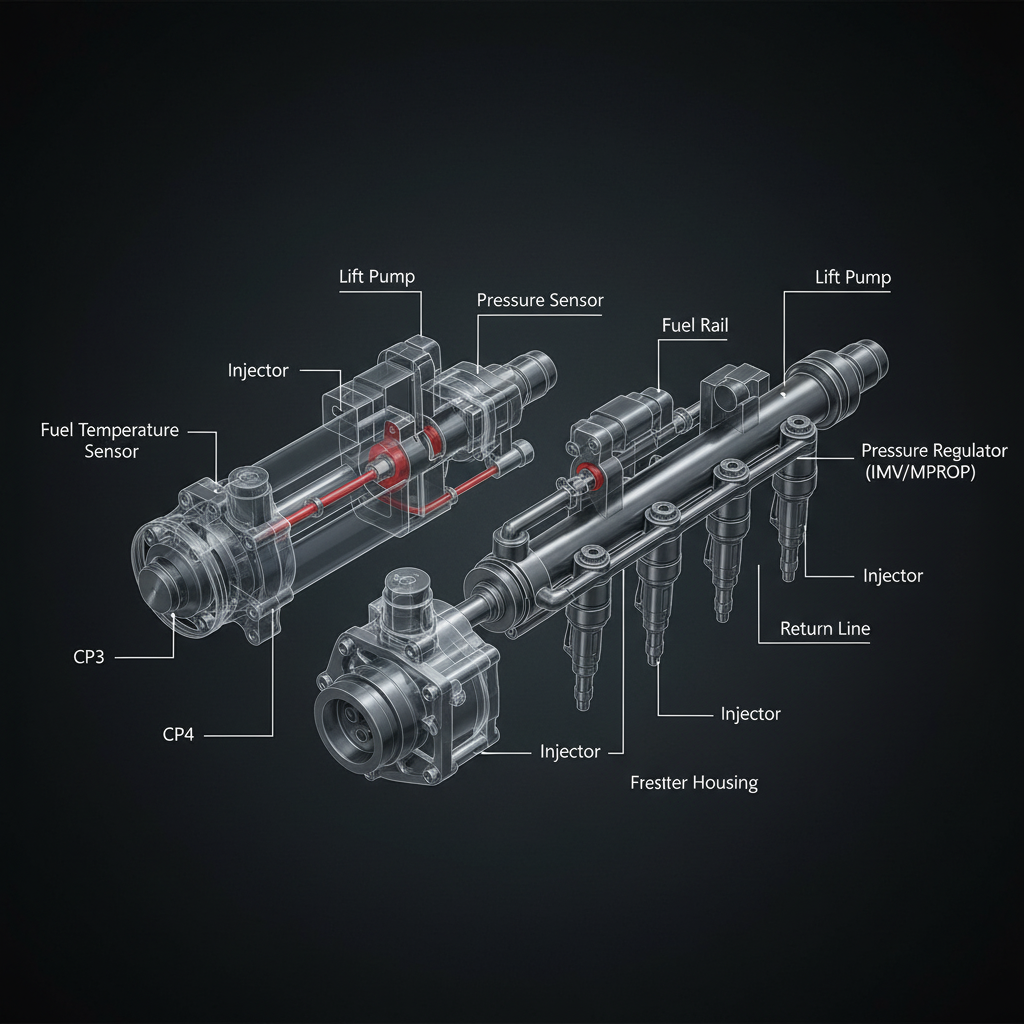
Fault Overview
SPN 157 FMI 15 indicates fuel rail pressure is moderately above the expected range — the least-severe overpressure threshold in the FMI structure. Early control valve sticking, partial return restriction, sensor drift high, and transient control issues are the primary causes. Ignored moderate highs that later become severe overpressure events is the most documented pattern.
Engine & Platform Coverage
Possible Causes
- 1.Early control valve sticking — intermittent inability to reduce pressure on command
- 2.Partial return restriction — developing restriction not yet severe enough for full overpressure
- 3.FRP sensor drift high — gradual bias developing in the sensor output
- 4.Transient control issues — intermittent driver or circuit anomalies
- 5.Shared 5V reference drift affecting FRP sensor accuracy
Wiring & Circuit Notes
Validate FRP sensor circuit integrity and shared 5V reference health. Sensor drift is a gradual process — compare current readings against historical baselines if available.
DVOM Specs & Sensor Tests
Graph desired versus actual rail pressure over short trips and under load. Look for progressive upward drift in actual pressure versus a sudden electrical peg — progressive drift supports early control valve or return restriction; sudden electrical peg supports sensor circuit fault. Trend the data across multiple operating cycles to identify a developing pattern.
Diagnostic Flow — FSM Sequence
AI Diesel Tech enforces this evidence-gate sequence. Each gate must pass before advancing.
5 steps locked behind Technician Mode- 1Validate FRP sensor circuit — reference, ground, and signal integrity
- 2Graph desired vs actual rail pressure over short trips and under load
- 3Trend the data across multiple operating cycles — look for progressive upward drift
- 4Inspect return path for developing restriction
- 5Evaluate control valve response — command pressure reduction and observe response
- 6Replace sensor or service control valve based on evidence before hard-part replacement
Unlock the full evidence-gated diagnostic sequence, DVOM test steps, and repair procedures in Technician Mode.
Repair Steps
4 steps locked- 1Validate FRP sensor circuit — reference, ground, and signal integrity
- 2Graph desired vs actual rail pressure over short trips and under load
- 3Trend the data across multiple operating cycles — look for progressive upward drift
- 4Inspect return path for developing restriction
- 5Evaluate control valve response — command pressure reduction and observe response
- 6Replace sensor or service control valve based on evidence before hard-part replacement
Unlock full diagnostic steps, DVOM tests, and repair procedures.
Full Diagnostic Access
Verification steps, preventative measures, severity guidance, and legacy comparison are available in Technician Mode.
Start Diagnosing This Fault Now
AI Diesel Tech walks you through every evidence gate in the correct order. Choose the plan that fits your shop.
Related Resources
Related Systems
Related Sensor Locations
Common Symptoms
Related Articles
AI Diesel Tech — The Technician's Diagnostic Engine
AI Diesel Tech diagnostic logic is built by an ASE Certified Diesel Technician and engineered for professional shop use. Trusted by technicians nationwide — used in shops, fleets, and training programs.
Summary
SPN 157 FMI 15 is an early control-path warning. Trend analysis at the moderate threshold identifies developing problems before they become severe overpressure events.