
SPN 102 FMI 16 — Intake Manifold Pressure (Boost) Above Normal
SPN 102 FMI 16 means boost pressure is above the expected maximum for the commanded conditions. True overboost can stress engine hardware and trigger protection derates. Before replacing the turbocharger, confirm whether the overboost is real or a MAP sensor bias issue.
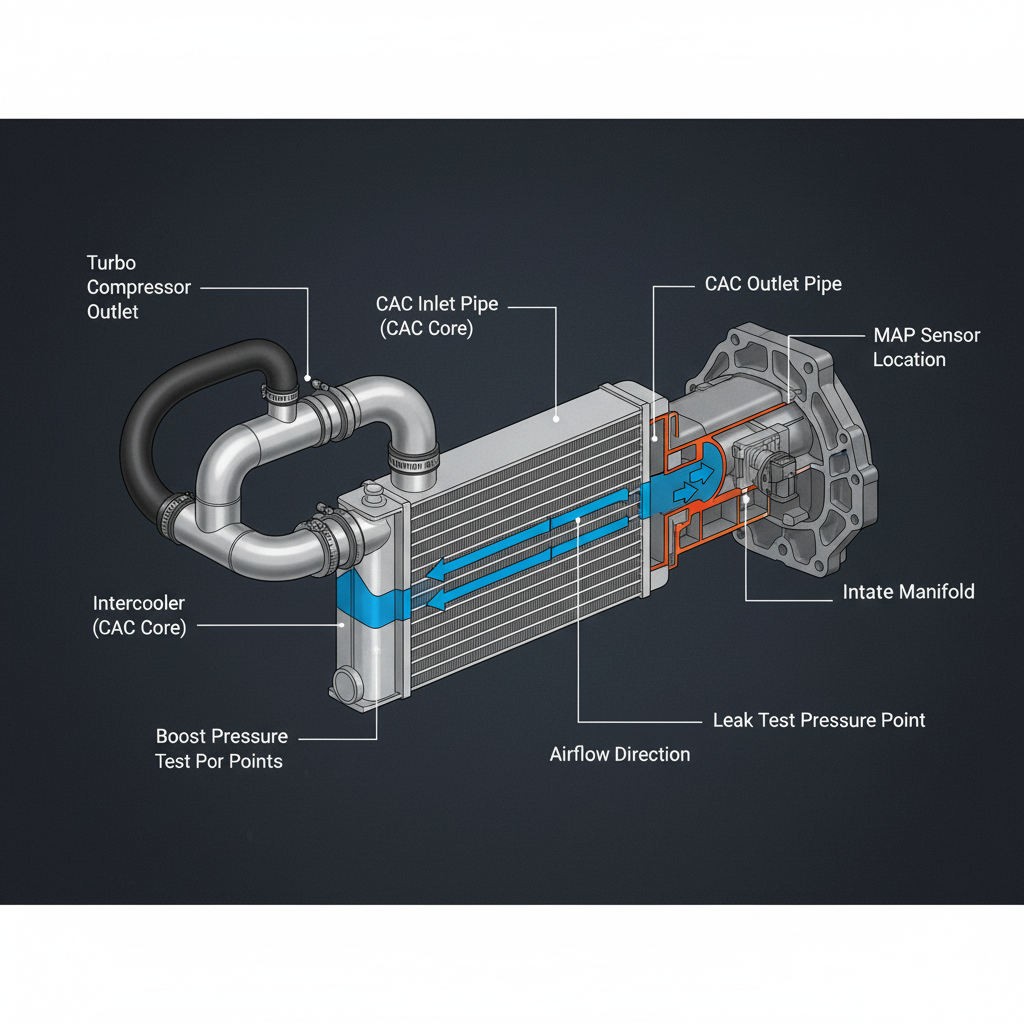
Fault Overview
FMI 16 (above normal) on the MAP sensor indicates actual boost exceeds the calibrated maximum. On VGT-equipped engines, this is most commonly caused by a stuck-closed VGT (vanes not opening to reduce boost) or actuator control failure. A MAP sensor reading high without true overboost is also possible. Engine protection may derate power to prevent hardware stress.
Engine & Platform Coverage
Symptoms
- •Overboost derate active
- •Engine protection limiting power
- •Excessive boost reading on scan tool
- •Turbo over-speed risk warning
- •Power cut under load
Possible Causes
- 1.Stuck-closed VGT vanes — soot or carbon preventing vane opening
- 2.Failed VGT actuator — cannot command vanes to open position
- 3.MAP sensor reading high — false overboost without real pressure
- 4.Intake restriction downstream of MAP sensor — pressure buildup
- 5.Software/control calibration issue — rare
Diagnostic Flow — FSM Sequence
AI Diesel Tech enforces this evidence-gate sequence. Each gate must pass before advancing.
6 steps locked behind Technician Mode- 1Single Action Gate — Commanded vs Actual Boost: Graph commanded boost target vs actual MAP. If actual significantly exceeds commanded, true overboost is occurring. If they track together at high values, suspect MAP sensor bias.
- 2Binary Decision Gate — VGT Actuator Movement: Command VGT actuator to open position with scan tool. Verify vanes move to reduce boost. Stuck vanes confirm VGT mechanical issue.
- 3Override Manager — MAP Sensor Validation: Compare MAP reading to an independent reference (barometric sensor or known-good gauge) at KOEO. A MAP reading significantly above atmospheric at idle indicates sensor bias.
- 4Safety Interceptor — Intake Restriction Check: Inspect air filter and intake ducting for restrictions downstream of the MAP sensor. Restrictions can cause localized pressure buildup.
- 5Resume Point — Actuator Control Circuit: Verify VGT actuator control circuit integrity. Check for shorts, opens, or connector issues that could prevent actuator from receiving open commands.
- 6Verification Loop — Post-Repair Boost Monitoring: After repair, monitor boost under load to confirm it stays within calibrated range.
- 7Repair Ledger Output — Turbo Service Decision: Service or replace turbocharger only with evidence of mechanical failure after actuator and sensor are proven.
Unlock the full evidence-gated diagnostic sequence, DVOM test steps, and repair procedures in Technician Mode.
Repair Steps
4 steps locked- 1Clean VGT vanes and actuator if carbon buildup is found.
- 2Replace VGT actuator if failed or unable to command vane movement.
- 3Replace MAP sensor if bias is confirmed.
- 4Remove any intake restrictions found.
- 5Repair actuator control circuit if electrical fault is found.
- 6Replace turbocharger assembly only with evidence of mechanical failure.
Unlock full diagnostic steps, DVOM tests, and repair procedures.
Full Diagnostic Access
Verification steps, preventative measures, severity guidance, and legacy comparison are available in Technician Mode.
Start Diagnosing This Fault Now
AI Diesel Tech walks you through every evidence gate in the correct order. Choose the plan that fits your shop.
Related Resources
Related Fault Codes
AI Diesel Tech — The Technician's Diagnostic Engine
AI Diesel Tech diagnostic logic is built by an ASE Certified Diesel Technician and engineered for professional shop use. Trusted by technicians nationwide — used in shops, fleets, and training programs.
Summary
Confirm real overboost versus MAP sensor bias before any turbo work. The AI Diesel Tech FSM differentiates true overboost from sensor artifacts and enforces actuator testing before hardware replacement decisions.