
Lift Pump Performance — Low Supply Pressure Under Load
Low lift-pump performance is confirmed with a mechanical gauge and voltage-drop test under load before the pump is replaced.
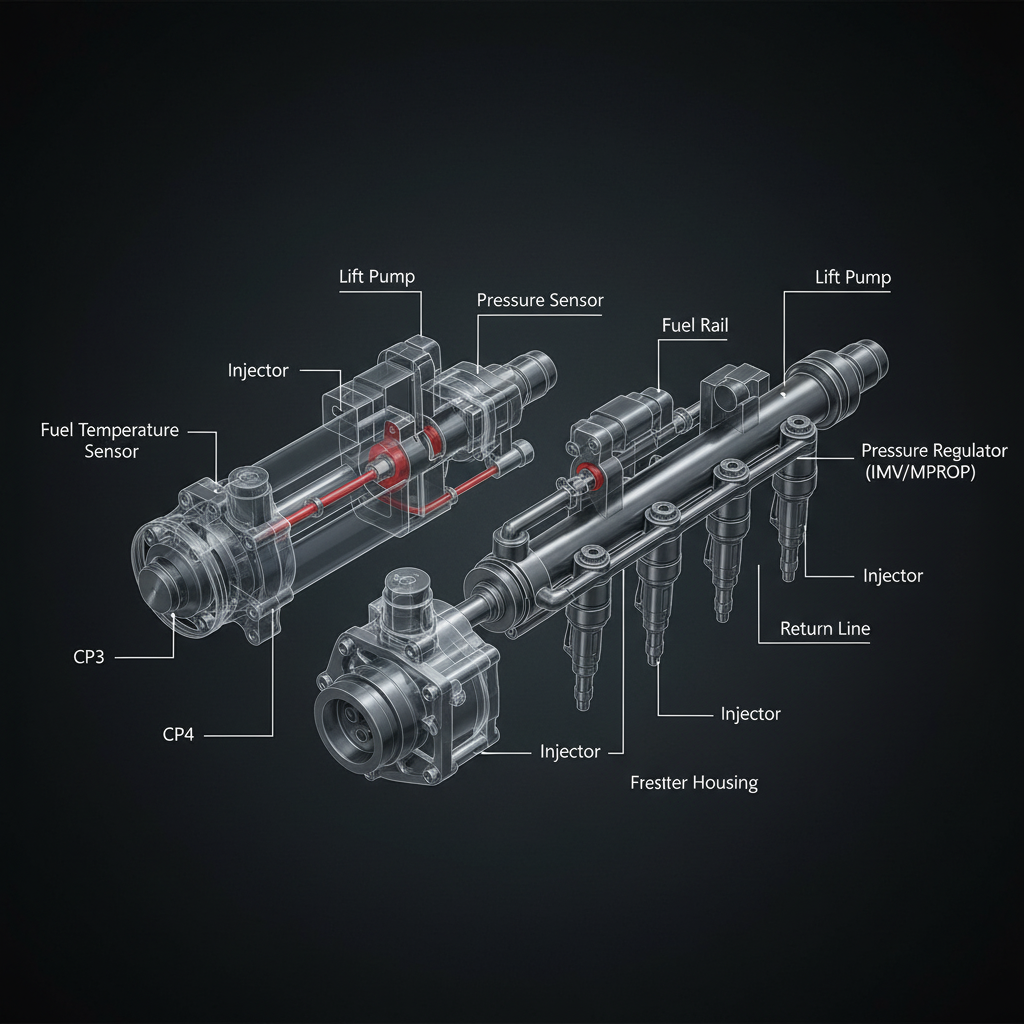
Fault Overview
Performance condition where the lift pump runs but cannot maintain required supply pressure to the high-pressure pump under load or during cranking. May set low fuel delivery pressure codes or cause rail-pressure instability.
Engine & Platform Coverage
Symptoms
- •Low lift pump pressure
- •Supply pressure low under load
- •Fuel pressure low during cranking
- •Lift pump weak
- •High pressure pump starvation symptoms
- •Rail pressure instability
Possible Causes
- 1.Worn lift pump
- 2.Restricted inlet strainer or tank pickup
- 3.Collapsed flexible supply line
- 4.Clogged fuel filter
- 5.Aeration on suction side
- 6.Incorrect pump installed
- 7.Voltage drop to the pump under load
Wiring & Circuit Notes
If electric, verify voltage and voltage drop at the pump under load. Low voltage produces low pump performance. Voltage drop to the pump and restricted tank pickups are frequently overlooked causes of weak lift pump complaints.
DVOM Specs & Sensor Tests
Install mechanical gauge at the filter outlet or high-pressure pump inlet. Record pressure at idle, under load, and during cranking. Compare to OEM minimum specifications. Measure pump voltage and current simultaneously on electric systems.
Diagnostic Flow — FSM Sequence
AI Diesel Tech enforces this evidence-gate sequence. Each gate must pass before advancing.
7 steps locked behind Technician Mode- 1Step 1 — Confirm Pump is Running: Confirm pump is commanded and running. Verify lift pump enable circuit is active.
- 2Step 2 — Measure Voltage and Voltage Drop Under Load: Measure voltage and voltage drop at the pump under load on electric systems. Low voltage produces low pump performance — this is frequently the actual cause.
- 3Step 3 — Install Mechanical Supply Pressure Gauge: Install mechanical gauge at the filter outlet or high-pressure pump inlet. This is the definitive performance test.
- 4Step 4 — Record Pressure at All Operating Conditions: Record pressure at idle, load, and crank. Compare to OEM minimum specifications.
- 5Step 5 — Inspect Filters and Replace if Restricted: Inspect filters and replace if restricted. Confirm pressure improves after filter service.
- 6Step 6 — Check Tank Pickup and Supply Lines: Check tank pickup and supply lines for restriction or collapse. An external supply test can isolate the tank pickup.
- 7Step 7 — Test for Aeration: Test for aeration with a clear sight glass on the suction side. Aeration causes fluctuating pressure readings.
- 8Step 8 — Replace Pump Only After Supply Side Proven: Replace pump only after supply side and electrical power are proven good. Voltage drop and inlet restriction are frequently the actual cause.
Unlock the full evidence-gated diagnostic sequence, DVOM test steps, and repair procedures in Technician Mode.
Full Diagnostic Access
Verification steps, preventative measures, severity guidance, and legacy comparison are available in Technician Mode.
Typical Repair Costs
Correct voltage drop $50–150; replace restricted filters $80–200; repair collapsed lines $100–300; replace worn pump $150–400. Total typical $100–500.
Start Diagnosing This Fault Now
AI Diesel Tech walks you through every evidence gate in the correct order. Choose the plan that fits your shop.
Related Systems
Related Sensor Locations
Common Symptoms
Related Articles
AI Diesel Tech — The Technician's Diagnostic Engine
AI Diesel Tech diagnostic logic is built by an ASE Certified Diesel Technician and engineered for professional shop use. Trusted by technicians nationwide — used in shops, fleets, and training programs.
Summary
Use the AI Diesel Tech diagnostic engine to run this code through a structured, evidence-gated sequence and get a confirmed root cause before any parts are replaced.