
Injector Return-Flow Test Standard
Return-flow testing is performed only after electrical circuits are proven good and is used to replace only the injectors that exceed quantitative limits.
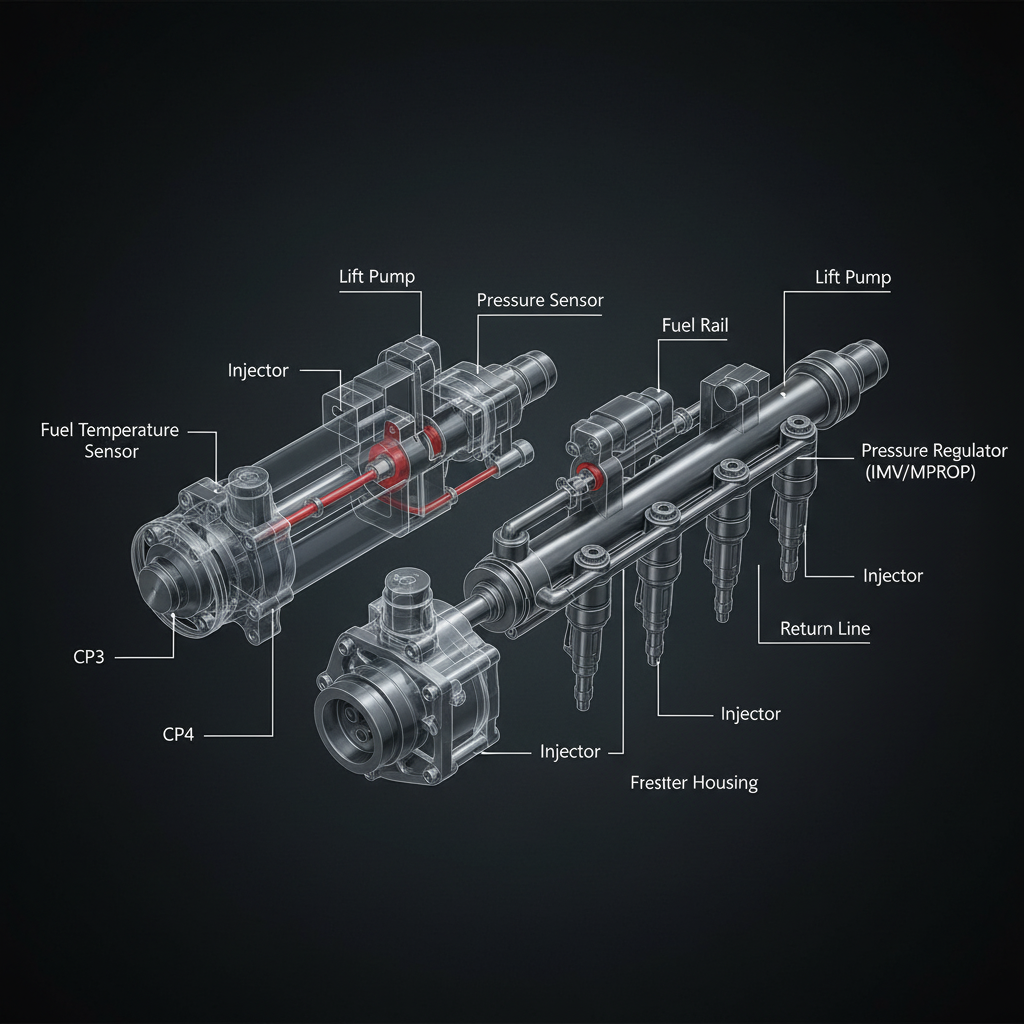
Fault Overview
System process standard for measuring injector return (leak-off) flow to identify worn or leaking injectors. Used when contribution is low, rail pressure is unstable, or hard-start/power-loss complaints exist with no circuit codes.
Engine & Platform Coverage
Symptoms
- •Injector return flow test
- •Leak-off test
- •Injector spill test
- •High return flow
- •Injector wear test
- •Rail pressure loss from injectors
Possible Causes
- 1.N/A — process. High return flow indicates worn injector control valves or nozzle leakage; low or zero flow on one cylinder can indicate blocked return or stuck injector.
Wiring & Circuit Notes
Confirm no electrical circuit faults before performing return-flow testing. Electrical issues can mimic mechanical symptoms.
DVOM Specs & Sensor Tests
Use OEM or aftermarket calibrated return-flow bottles or graduated cylinders. Measure volume over a specified time at specified RPM and temperature. Compare cylinders to each other and to OEM maximum allowable return. Monitor rail pressure simultaneously.
Diagnostic Flow — FSM Sequence
AI Diesel Tech enforces this evidence-gate sequence. Each gate must pass before advancing.
6 steps locked behind Technician Mode- 1Step 1 — Verify No Active Injector Circuit Codes: Verify no active injector circuit codes. Electrical issues can mimic mechanical symptoms. Confirm no electrical circuit faults before performing return-flow testing.
- 2Step 2 — Bring Fuel Temperature and Engine to Specified Conditions: Bring fuel temperature and engine to specified conditions. Temperature affects viscosity and return-flow volumes.
- 3Step 3 — Install Return-Flow Measurement Equipment: Install return-flow measurement equipment (calibrated bottles or graduated cylinders) on all injectors simultaneously.
- 4Step 4 — Run Engine at Specified RPM/Load for Timed Interval: Run engine at specified RPM/load for the timed interval per OEM procedure.
- 5Step 5 — Record Volume from Each Injector: Record volume from each injector. Identify any injector exceeding OEM limit or significantly higher than siblings.
- 6Step 6 — Confirm Rail Pressure Behavior During Test: Confirm rail pressure behavior during the test. Excessive return flow causes rail pressure instability.
- 7Step 7 — Replace Only Injectors Failing Quantitative Limit: Replace only the injectors that fail the quantitative limit. Investigate fuel contamination or high-pressure pump if multiple injectors fail.
Unlock the full evidence-gated diagnostic sequence, DVOM test steps, and repair procedures in Technician Mode.
Full Diagnostic Access
Verification steps, preventative measures, severity guidance, and legacy comparison are available in Technician Mode.
Typical Repair Costs
Replace high-return injectors $300–700 each; investigate fuel contamination or pump if multiple fail — variable. Avoid full-set replacement without quantitative proof.
Start Diagnosing This Fault Now
AI Diesel Tech walks you through every evidence gate in the correct order. Choose the plan that fits your shop.
Related Systems
Related Sensor Locations
Common Symptoms
Related Articles
AI Diesel Tech — The Technician's Diagnostic Engine
AI Diesel Tech diagnostic logic is built by an ASE Certified Diesel Technician and engineered for professional shop use. Trusted by technicians nationwide — used in shops, fleets, and training programs.
Summary
Use the AI Diesel Tech diagnostic engine to run this code through a structured, evidence-gated sequence and get a confirmed root cause before any parts are replaced.