
Hard Start / Extended Crank with No Circuit Codes — Injector Leak Path
Hard start with no injector circuit codes is diagnosed by rail pressure build/decay rates followed by return-flow isolation.
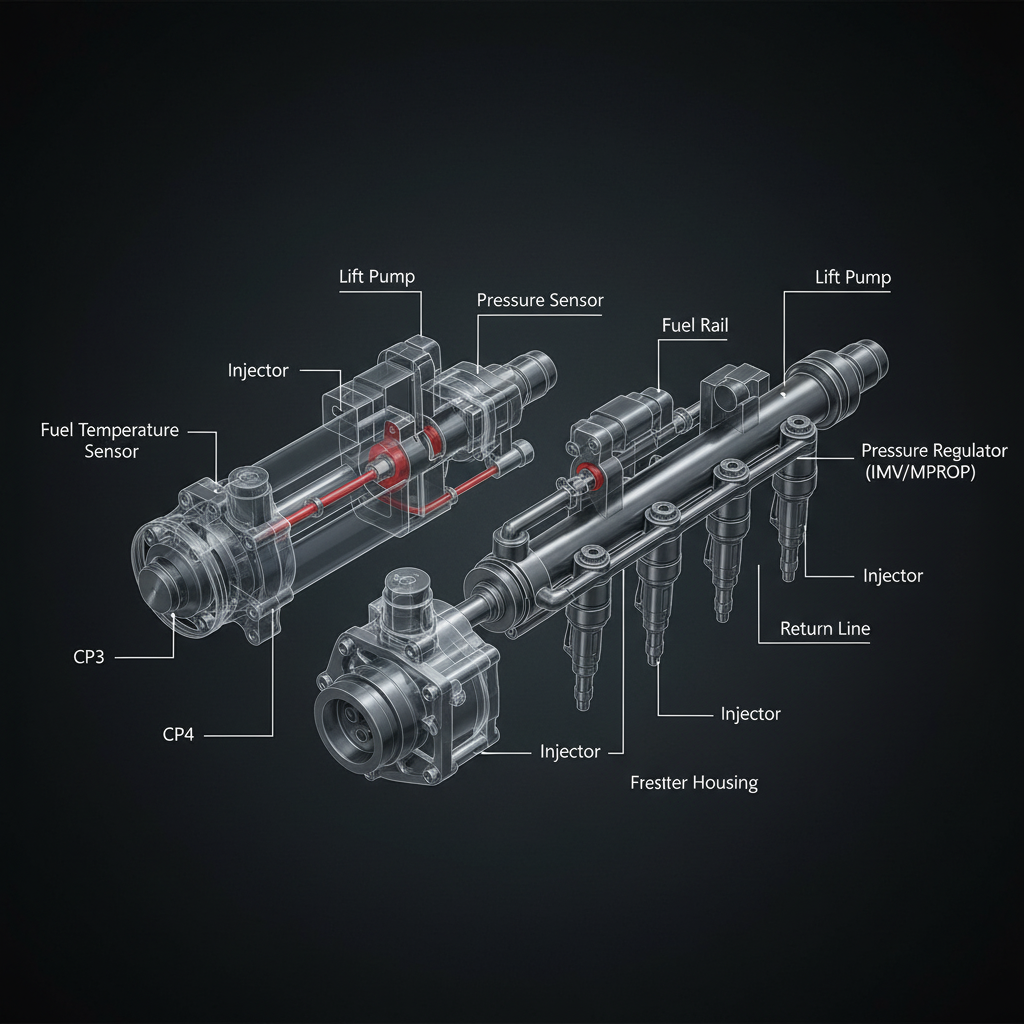
Fault Overview
Symptom-focused page for hard start or extended cranking when no injector circuit codes are present, pointing toward mechanical leakage (high return flow or rail decay) rather than electrical open/short.
Engine & Platform Coverage
Symptoms
- •Hard start no codes
- •Extended crank injectors
- •Rail pressure bleeds down
- •Long crank cold or hot
- •Injector leak hard start
Possible Causes
- 1.Excessive injector return flow
- 2.Leaking rail pressure relief valve
- 3.High-pressure pump check-valve leakage
- 4.Fuel aeration
- 5.Low supply pressure causing slow rail build
Wiring & Circuit Notes
Confirm rail pressure sensor circuit is accurate. No primary injector circuit focus if codes are absent.
DVOM Specs & Sensor Tests
Rail pressure build rate during cranking. Decay rate after key-off. Return-flow volumes. Supply pressure (lift pump) during crank. Compare all values to OEM specifications.
Diagnostic Flow — FSM Sequence
AI Diesel Tech enforces this evidence-gate sequence. Each gate must pass before advancing.
6 steps locked behind Technician Mode- 1Step 1 — Verify Rail Pressure Sensor Data Accuracy: Verify rail pressure sensor data accuracy. Compare to mechanical gauge if available. No primary injector circuit focus if codes are absent.
- 2Step 2 — Monitor Rail Pressure During Cranking: Monitor rail pressure during cranking — note build time. Slow build indicates leakage or supply issues.
- 3Step 3 — Perform Key-Off Decay Test: Perform key-off decay test. Record time for pressure to fall across the specified window.
- 4Step 4 — Run Return-Flow Test if Decay Excessive: If decay is excessive, run return-flow test to isolate injectors. High return flow on specific cylinders confirms injector leakage.
- 5Step 5 — Check Supply Pressure and Aeration: Check supply pressure and aeration. Low supply pressure causes slow rail build during cranking.
- 6Step 6 — Inspect Pressure Relief Valve if Return Flow Normal: Inspect pressure relief valve function if return flow is normal but decay is still excessive.
- 7Step 7 — Replace Only Components That Fail Quantitative Tests: Replace only the components that fail quantitative tests. Avoid full system replacement.
Unlock the full evidence-gated diagnostic sequence, DVOM test steps, and repair procedures in Technician Mode.
Full Diagnostic Access
Verification steps, preventative measures, severity guidance, and legacy comparison are available in Technician Mode.
Typical Repair Costs
Replace high-return injectors $300–700 each; address relief valve $100–300; correct supply issues $100–450. Avoid full system replacement.
Start Diagnosing This Fault Now
AI Diesel Tech walks you through every evidence gate in the correct order. Choose the plan that fits your shop.
Related Systems
Related Fault Codes
Related Sensor Locations
AI Diesel Tech — The Technician's Diagnostic Engine
AI Diesel Tech diagnostic logic is built by an ASE Certified Diesel Technician and engineered for professional shop use. Trusted by technicians nationwide — used in shops, fleets, and training programs.
Summary
Use the AI Diesel Tech diagnostic engine to run this code through a structured, evidence-gated sequence and get a confirmed root cause before any parts are replaced.