
2019–2024 Ford F-650/F-750 Power Stroke AT and Fuel System Interaction
On MD Power Stroke, frequent AT problems often start as boost or fueling deviations. Treating DPF codes while ignoring underboost or low rail root causes is the most documented pattern. The FSM enforces upstream powertrain-to-AT interaction control.
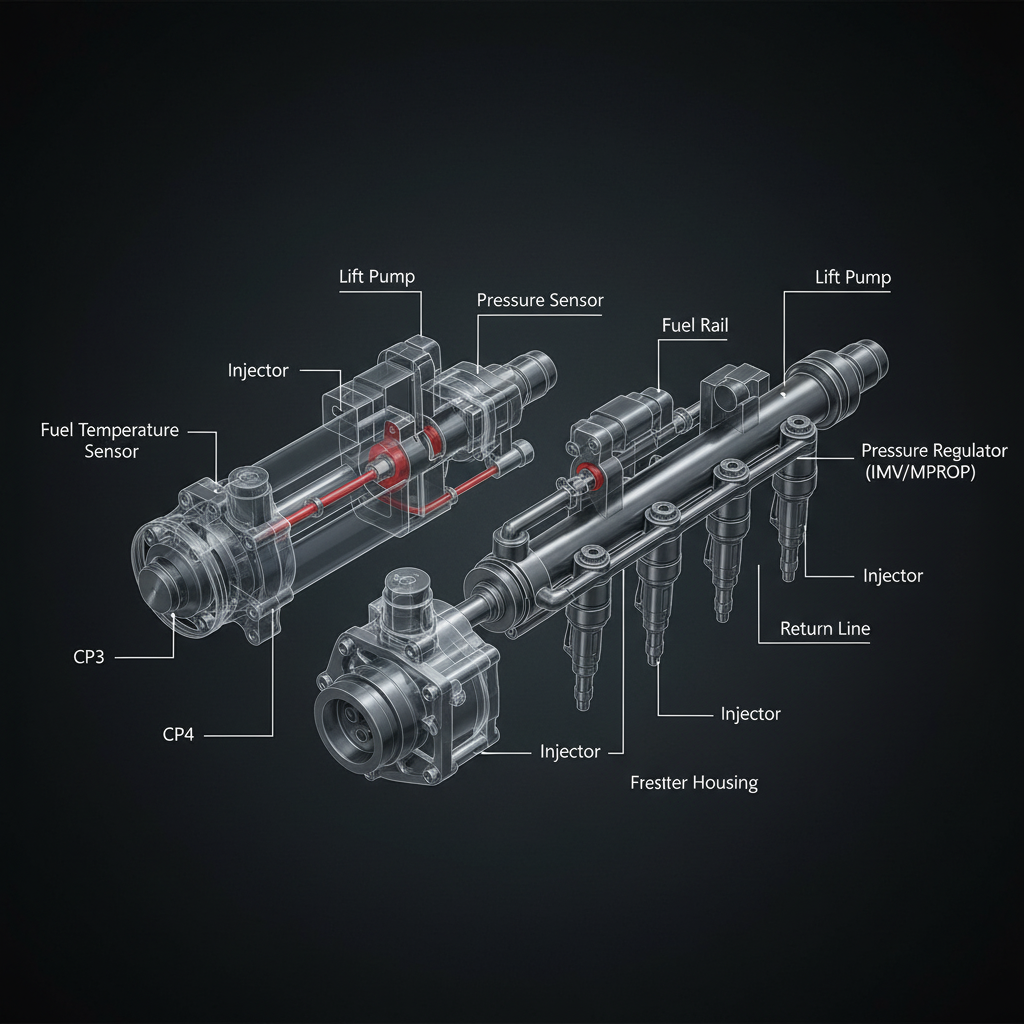
Fault Overview
Ford F-650/F-750 Power Stroke AT and fuel system interaction is a YMM page for medium-duty Power Stroke applications where fueling deviations increase soot and create AT follow-on codes. Charge-air leaks, rail and supply pressure deviations, incomplete regens, DEF and SCR issues on SCR-equipped builds, and sensor bias are the primary causes. Treating DPF codes while ignoring underboost or low rail root causes is a documented pattern. Consult current Ford service information by VIN for platform-specific procedures.
Engine & Platform Coverage
Symptoms
- •F-650 Power Stroke derate
- •F-750 DPF regen frequent
- •6.7 MD underboost soot
- •Power Stroke fuel pressure and DPF
- •AT codes from boost or fueling deviation
Possible Causes
- 1.Charge-air leaks — charge-air leaks producing underboost and excessive soot
- 2.Rail and supply pressure deviations — rail and supply pressure deviations producing fueling changes and excessive soot
- 3.Incomplete regens — incomplete regens allowing soot accumulation
- 4.DEF and SCR issues — DEF and SCR issues on SCR-equipped builds producing AT codes
- 5.Sensor bias — FRP, MAP, EGT, or NOx sensor bias producing incorrect AT strategy
Diagnostic Flow — FSM Sequence
AI Diesel Tech enforces this evidence-gate sequence. Each gate must pass before advancing.
3 steps locked behind Technician Mode- 1Step 1 — Split Fuel/Boost vs AT Codes by Timeline: Split fuel and boost codes from AT codes by timeline. Treating DPF codes while ignoring underboost or low rail root causes is a documented pattern. Identify which codes appeared first — fuel/boost codes that precede AT codes confirm an upstream root cause. Consult current Ford service information by VIN for platform-specific code definitions.
- 2Step 2 — Fix Upstream Fuel/Boost Roots First When They Lead Soot: Fix upstream fuel and boost roots first when they lead soot. Charge-air leaks producing underboost and excessive soot require charge-air system repair. Rail and supply pressure deviations producing fueling changes require fuel system diagnosis. Address upstream fuel and boost contributors before any AT service.
- 3Step 3 — AT Service/Regen Strategy: Perform AT service and regen strategy after upstream repairs. Confirm upstream fuel and boost contributors are repaired before any AT service. Perform a proper regen after upstream repairs. Monitor EGT trajectory during the regen.
- 4Step 4 — SCR Chemistry Path If Present: Address SCR chemistry path if SCR codes are present. DEF and SCR issues on SCR-equipped builds require DEF chemistry verification. Check DEF concentration with a refractometer. Address DEF quality and dosing path before any SCR catalyst assessment.
Unlock the full evidence-gated diagnostic sequence, DVOM test steps, and repair procedures in Technician Mode.
Repair Steps
2 steps locked- 1Repair charge-air leaks if confirmed.
- 2Repair fuel rail or supply pressure if deviation is confirmed.
- 3Address DEF quality and dosing path if SCR codes are present.
- 4Perform AT service and regen strategy after upstream repairs.
Unlock full diagnostic steps, DVOM tests, and repair procedures.
Full Diagnostic Access
Verification steps, preventative measures, severity guidance, and legacy comparison are available in Technician Mode.
Start Diagnosing This Fault Now
AI Diesel Tech walks you through every evidence gate in the correct order. Choose the plan that fits your shop.
Related Resources
Related Fault Codes
Related Systems
Related Sensor Locations
Common Symptoms
Related Articles
AI Diesel Tech — The Technician's Diagnostic Engine
AI Diesel Tech diagnostic logic is built by an ASE Certified Diesel Technician and engineered for professional shop use. Trusted by technicians nationwide — used in shops, fleets, and training programs.
Summary
On MD Power Stroke, frequent AT problems often start as boost or fueling deviations. The AI Diesel Tech FSM enforces upstream powertrain-to-AT interaction control.