
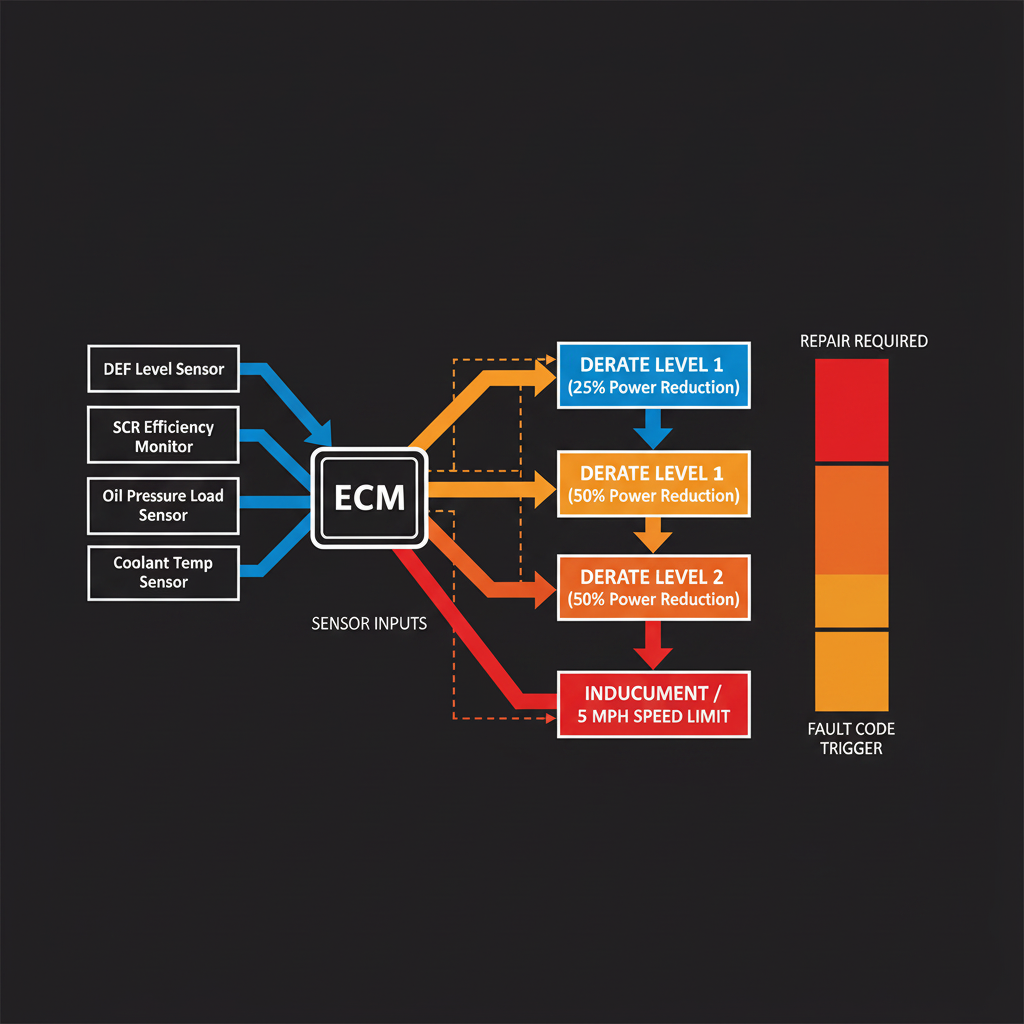
What is Engine Derate?
Engine derate is a protective strategy where the ECM reduces available power or limits vehicle speed when it detects a fault that could damage the engine or emissions system. Modern diesel trucks use derate as a graduated response — mild derate first, then severe derate, then inducement (5 mph limit) if the fault is not addressed.
Derate vs. Inducement: Derate vs. Inducement: Derate typically reduces power by 25–75%. Inducement (triggered by DEF/SCR faults) limits speed to 5 mph or idle-only. Both require the root cause fault to be repaired before the restriction clears.
Common Derate Causes by System
Aftertreatment / DEF
The most common cause of derate in modern trucks. DEF quality, level, or SCR efficiency issues trigger inducement-based derate.
DPF / Regen
High DPF soot load or failed regen can trigger derate to protect the aftertreatment system.
Fuel System
Low fuel rail pressure or fuel delivery issues cause derate to protect injectors and the high-pressure pump.
Turbo / Air
VGT actuator faults, low boost, or overboost conditions trigger derate to protect the engine.
Engine Protection
Critical engine parameters like oil pressure, coolant temperature, or crankcase pressure trigger protective derate.
First Steps When Your Truck Derates
- 1Read all active fault codesUse OEM software (INSITE, DDDL) or a J1939 scanner. Note every active and inactive fault code.
- 2Check DEF level and qualityRefill DEF if low. Test DEF concentration with a refractometer — should be 31.8–33.2% urea.
- 3Check DPF soot loadIf soot load >80%, attempt a stationary forced regen. If regen is inhibited, address inhibit faults first.
- 4Check engine oil and coolant levelsLow oil pressure or high coolant temperature can trigger protective derate.
- 5Address the root cause faultUse the fault code links above to access full diagnostic procedures for each specific fault.
- 6Clear codes and verify repairAfter repair, clear fault codes and perform a drive cycle to confirm derate does not return.
Get AI Help Diagnosing Your Derate
Enter your specific SPN/FMI fault code and get a step-by-step diagnostic procedure to clear your derate — including electrical tests, likely causes, and repair steps.