
Fuel Pressure Regulator Diagnosis
Fuel Pressure Regulator Failure
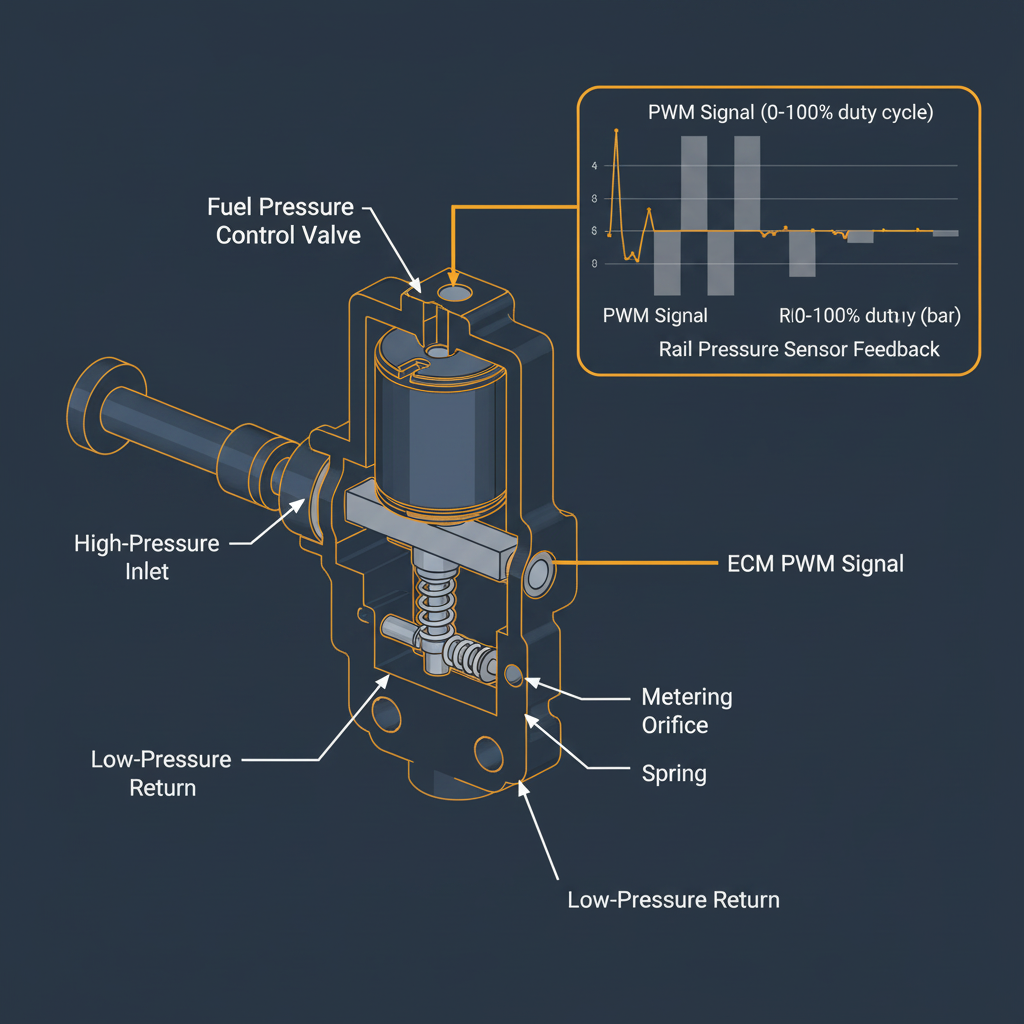
Fuel pressure regulators (IMV, MPROP, DRV) control how much fuel enters the high-pressure system. When they fail or stick, rail pressure becomes unstable, causing hard starts, low power, and misfires. This guide helps you diagnose regulator failure without guessing.
Why This Matters
- ▸ Regulator failure causes low or unstable rail pressure — test before replacing the pump.
- ▸ Misdiagnosis leads to unnecessary pump or injector replacement.
- ▸ Uncontrolled pressure can damage components and increase emissions.
- ▸ Fleets lose reliability when pressure control issues are ignored.
8-Step Diagnostic Flow
Check rail pressure (actual vs desired) at idle and under load
SPN 157 (fuel rail pressure). Compare actual rail pressure to desired at idle and under load. Low pressure at idle with normal supply = regulator not holding pressure. Low pressure under load = regulator not allowing enough fuel into the high-pressure system.
Monitor regulator command in live data
Check regulator duty cycle or current command in live data. A regulator that is being commanded correctly but not responding indicates a mechanical or electrical failure. A regulator that is not being commanded indicates an ECM or wiring issue.
Inspect regulator and connector for corrosion or damage
Inspect the regulator body and connector for corrosion, damage, and contamination. Fuel contamination (water, debris) can cause regulator failure. Corrosion at the connector causes intermittent electrical issues that mimic regulator failure.
Measure regulator coil resistance and compare to OEM spec
Disconnect the regulator and measure coil resistance. Compare to OEM specification (typically a few ohms). An open circuit = no electrical control. High resistance = restricted coil movement. Short to ground = ECM driver damage risk.
Check for metal debris or contamination at regulator inlet
Metal debris from pump wear or contaminated fuel can block the regulator inlet or damage the regulator internals. Inspect the regulator inlet screen (if equipped) for debris. Metal debris is a serious warning sign that requires full system inspection.
Perform return flow tests to separate injector vs regulator issues
Return flow testing measures how much fuel is returning from injectors and the regulator. High injector return flow indicates injector wear. High regulator return flow indicates regulator failure. Use return flow data to isolate the fault before replacing components.
Verify lift pump and supply pressure are within spec
SPN 94 (fuel delivery pressure). A regulator cannot compensate for inadequate supply pressure. Verify lift pump output and supply pressure before condemning the regulator. Low supply pressure causes low rail pressure regardless of regulator condition.
Confirm corrected regulator function stabilizes rail pressure
After repair, verify that rail pressure is stable at idle and under load. Confirm that pressure matches desired values across the operating range. A stable rail pressure after regulator replacement confirms the regulator was the root cause.
Engine-Specific Notes
Cummins ISX / X15
IMV/MPROP failures are common in high-mileage or contaminated Cummins systems. Watch for rail pressure oscillation at idle — this is a classic sign of a regulator that is hunting for the correct pressure. Cummins uses the MPROP on the high-pressure pump inlet.
Detroit DD13 / DD15
Regulator control on Detroit is tightly integrated with ECM logic. Harness and connector integrity are critical — Detroit's regulator connector is prone to moisture intrusion in certain mounting locations. Always inspect the connector before replacing the regulator.
Paccar MX-13
Contamination from poor fuel quality quickly affects regulator performance on Paccar platforms. Always inspect filters and tank condition before replacing the regulator. MX-13 regulators in contaminated systems often fail again quickly if the contamination source is not addressed.
Volvo / Mack MP8
Pressure control issues on Volvo often coexist with injector complaints. Use return flow and balance rates to separate causes. Volvo's DRV (pressure relief valve) can also cause rail pressure issues — verify both the regulator and DRV before diagnosis.
CAT C13 / C15
CP3/CP4 systems on CAT are sensitive to regulator performance. Metal debris is a serious warning sign — inspect the entire fuel system for contamination before replacing the regulator. CAT recommends full system flush when metal debris is found.
International A26
Regulator and rail pressure sensor issues can overlap on International engines. Test both to avoid misdiagnosis. A26 regulator failures in contaminated systems require full system inspection and filter replacement before returning to service.
DVOM Test Points
| Test | Spec | Note |
|---|---|---|
| Regulator coil resistance | Within OEM spec (typically 2–10 Ω) | Open circuit = no control; short to ground = ECM driver damage risk |
| Connector voltage and ground integrity | 12–14 V supply, clean ground | Verify electrical integrity before condemning the regulator |
| Command signal (duty cycle or current) | Per OEM spec at idle and under load | No command with low rail pressure = ECM or wiring issue, not regulator |
Live Data Parameters to Monitor
Rail Pressure (actual vs desired)
Should match across operating range — oscillation = regulator hunting
Regulator Command (duty cycle or current)
Verify command is present before testing regulator response
Injection Quantity
Low quantity with normal command = pressure control limiting delivery
Engine Torque vs Fuel Rate
Low torque with high fuel rate = pressure instability affecting combustion
Related Fault Codes
Frequently Asked Questions
Can a bad regulator cause both low and high pressure?
Yes. A sticking or incorrectly controlled regulator can cause pressure to be too low, too high, or unstable. A regulator that sticks open causes low pressure; one that sticks closed causes high pressure. Unstable pressure indicates a regulator that is hunting or intermittently failing.
Does rail pressure instability always mean the pump is bad?
No. Regulators and sensors can cause instability even when the pump is mechanically sound. Always test the regulator and verify sensor accuracy before condemning the pump. A new pump installed with a failed regulator will show the same symptoms.
Should I replace the regulator as a first step?
Testing should guide replacement. In contaminated systems, regulator replacement is often part of a larger repair that includes filter replacement, system flush, and inspection for debris. Replacing only the regulator in a contaminated system often results in repeat failure.
Master Fuel Pressure Control Diagnosis
The AI Diesel Tech Academy covers fuel pressure regulator testing, rail pressure control logic, return flow diagnostics, and contamination analysis with real-world case studies.
Explore the Academy