
SPN 27 FMI 2 — EGR Valve Position Data Erratic
Erratic EGR position is feedback integrity plus possible carbon binding. Carbon sticktion misread as pure sensor failure — and both coexisting — is the most documented pattern. The FSM enforces electrical versus mechanical binding split.
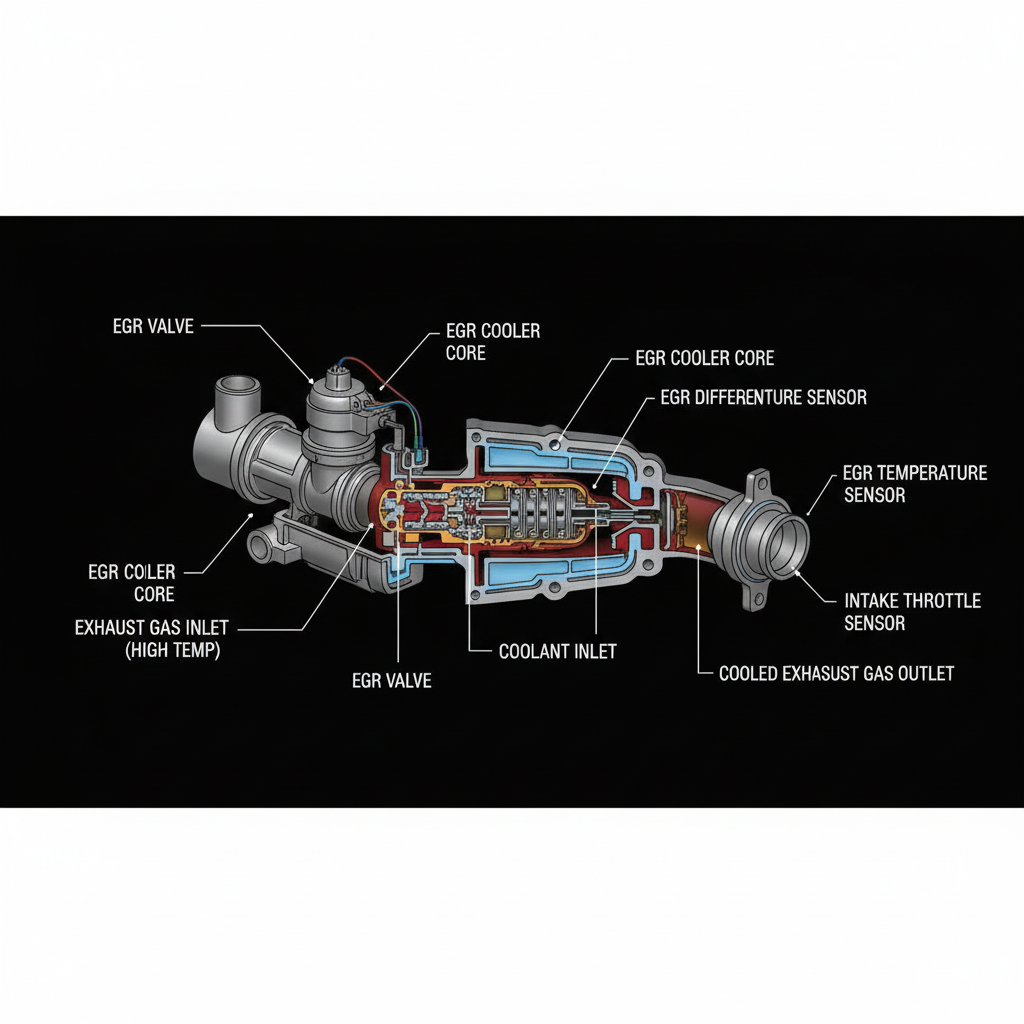
Fault Overview
SPN 27 FMI 2 indicates EGR position feedback unstable or implausible. Failing position sensor, carbon-induced unstable movement, harness intermittents, and poor reference or ground are the primary causes. Carbon sticktion misread as pure sensor failure and both coexisting are documented patterns. Replacing the EGR assembly before proving feedback and movement is the most documented misdiagnosis pattern.
Engine & Platform Coverage
Symptoms
- •EGR position intermittent
- •EGR sensor erratic
- •Valve feedback jumping
- •Unstable EGR control
- •DPF soot rate changes from unstable EGR
Possible Causes
- 1.Failing position sensor — failing EGR position sensor producing unstable feedback
- 2.Carbon-induced unstable movement — carbon binding producing unstable valve movement and feedback
- 3.Harness intermittents — harness intermittents producing unstable position signal
- 4.Poor reference or ground — poor reference voltage or ground producing unstable sensor readings
Diagnostic Flow — FSM Sequence
AI Diesel Tech enforces this evidence-gate sequence. Each gate must pass before advancing.
4 steps locked behind Technician Mode- 1Step 1 — Graph Desired vs Actual: Graph desired and actual EGR position. Desired and actual should track smoothly. Abrupt dropouts are electrical; slow sticking is mechanical carbon. Carbon sticktion misread as pure sensor failure is a documented pattern — both can coexist.
- 2Step 2 — Command Sweep: Command a sweep of the EGR valve through its full range. A valve that does not respond to command confirms a mechanical or actuator fault. A valve that responds to command but produces erratic feedback confirms a sensor or circuit fault.
- 3Step 3 — Electrical Reference and Ground Checks: Check the electrical reference voltage and ground at the actuator connector. Actuator connector heat damage and pin fretting are documented causes. Verify reference voltage stability and ground integrity.
- 4Step 4 — Inspect Carbon Binding: Inspect for carbon binding. Carbon sticktion producing unstable valve movement is a documented cause. Inspect the EGR valve for carbon buildup. Clean the valve if carbon binding is confirmed and cleaning is approved per OEM procedure.
- 5Step 5 — Repair Based on Evidence: Repair based on confirmed evidence. Clean or service the valve if carbon binding is confirmed. Repair the connector or harness if electrical fault is confirmed. Replace the valve or actuator assembly if wear or failure is confirmed ($400–$1,800).
Unlock the full evidence-gated diagnostic sequence, DVOM test steps, and repair procedures in Technician Mode.
Repair Steps
1 steps locked- 1Clean or service EGR valve if carbon binding is confirmed.
- 2Repair connector or harness if electrical fault is confirmed.
- 3Replace valve or actuator assembly if wear or failure is confirmed ($400–$1,800).
Unlock full diagnostic steps, DVOM tests, and repair procedures.
Full Diagnostic Access
Verification steps, preventative measures, severity guidance, and legacy comparison are available in Technician Mode.
Start Diagnosing This Fault Now
AI Diesel Tech walks you through every evidence gate in the correct order. Choose the plan that fits your shop.
Related Resources
Related Fault Codes
AI Diesel Tech — The Technician's Diagnostic Engine
AI Diesel Tech diagnostic logic is built by an ASE Certified Diesel Technician and engineered for professional shop use. Trusted by technicians nationwide — used in shops, fleets, and training programs.
Summary
Erratic EGR position is feedback integrity plus possible carbon binding. The AI Diesel Tech FSM enforces electrical versus mechanical binding split.