
SPN 102 FMI 2 — Intake Manifold Pressure Data Erratic
Erratic MAP is sensing integrity first, true boost control second. Turbo replaced for intermittent MAP dropouts — when the MAP sensor or shared 5V supply was the cause — is the most documented misdiagnosis.
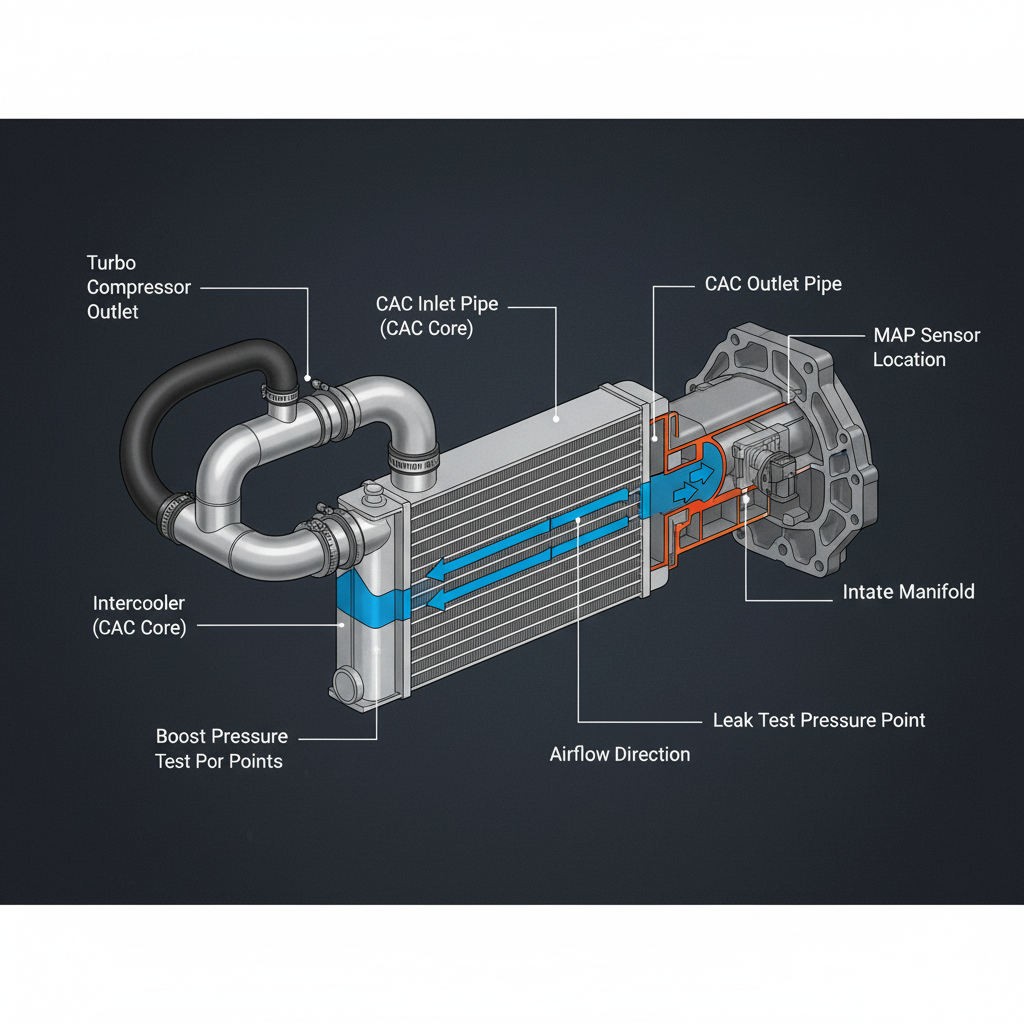
Fault Overview
SPN 102 FMI 2 indicates intake manifold pressure or boost data is unstable or implausible. Failing MAP sensor, intermittent harness, poor 5V or ground, connector fretting, and actual boost instability from leaks or actuator issues are the primary causes. Smooth deviations that follow actuator or leak behavior can be real boost issues — abrupt dropouts are electrical.
Engine & Platform Coverage
Possible Causes
- 1.Failing MAP sensor with intermittent dropout under vibration
- 2.Intermittent harness at MAP connector or shared reference bus
- 3.Poor 5V supply stability at MAP sensor connector
- 4.Connector fretting at MAP sensor under vibration
- 5.Actual boost instability from leaks or actuator issues — only after sensing is proven stable
Wiring & Circuit Notes
KOEO MAP should be near atmosphere and stable. Abrupt dropouts under load are electrical — smooth deviations that follow actuator or leak behavior can be real boost issues. Check 5V bus health before condemning the MAP sensor.
DVOM Specs & Sensor Tests
Check KOEO MAP baseline stability — should be near atmosphere. Check 5V bus health at MAP connector. Wiggle test at MAP connector and shared reference bus while monitoring PID. Graph desired versus actual boost under load. Leak and actuator path only if MAP sensing is stable and deviation is real and smooth.
Diagnostic Flow — FSM Sequence
AI Diesel Tech enforces this evidence-gate sequence. Each gate must pass before advancing.
6 steps locked behind Technician Mode- 1Check KOEO MAP baseline stability — should be near atmosphere
- 2Check 5V bus health at MAP connector
- 3Wiggle test at MAP connector and shared reference bus while monitoring PID
- 4Graph desired versus actual boost under load
- 5Abrupt dropouts — electrical path (sensor/harness/bus)
- 6Smooth deviations following actuator or leak behavior — boost control path
- 7Leak and actuator path only after MAP sensing is proven stable
Unlock the full evidence-gated diagnostic sequence, DVOM test steps, and repair procedures in Technician Mode.
Repair Steps
5 steps locked- 1Check KOEO MAP baseline stability — should be near atmosphere
- 2Check 5V bus health at MAP connector
- 3Wiggle test at MAP connector and shared reference bus while monitoring PID
- 4Graph desired versus actual boost under load
- 5Abrupt dropouts — electrical path (sensor/harness/bus)
- 6Smooth deviations following actuator or leak behavior — boost control path
- 7Leak and actuator path only after MAP sensing is proven stable
Unlock full diagnostic steps, DVOM tests, and repair procedures.
Full Diagnostic Access
Verification steps, preventative measures, severity guidance, and legacy comparison are available in Technician Mode.
Start Diagnosing This Fault Now
AI Diesel Tech walks you through every evidence gate in the correct order. Choose the plan that fits your shop.
Related Resources
AI Diesel Tech — The Technician's Diagnostic Engine
AI Diesel Tech diagnostic logic is built by an ASE Certified Diesel Technician and engineered for professional shop use. Trusted by technicians nationwide — used in shops, fleets, and training programs.
Summary
SPN 102 FMI 2 is sensing integrity first, true boost control second. MAP must be proven stable before any turbo or boost control conclusions.