
Hot-Idle vs Loaded Pressure Comparison Method
Idle-versus-load pressure comparison tells you whether the weakness is sensing, low-rpm mechanical, or high-demand supply. Misclassification of load-only fuel starvation as injector failure and misclassification of hot-idle oil wear as a sender are the most documented misdiagnoses.
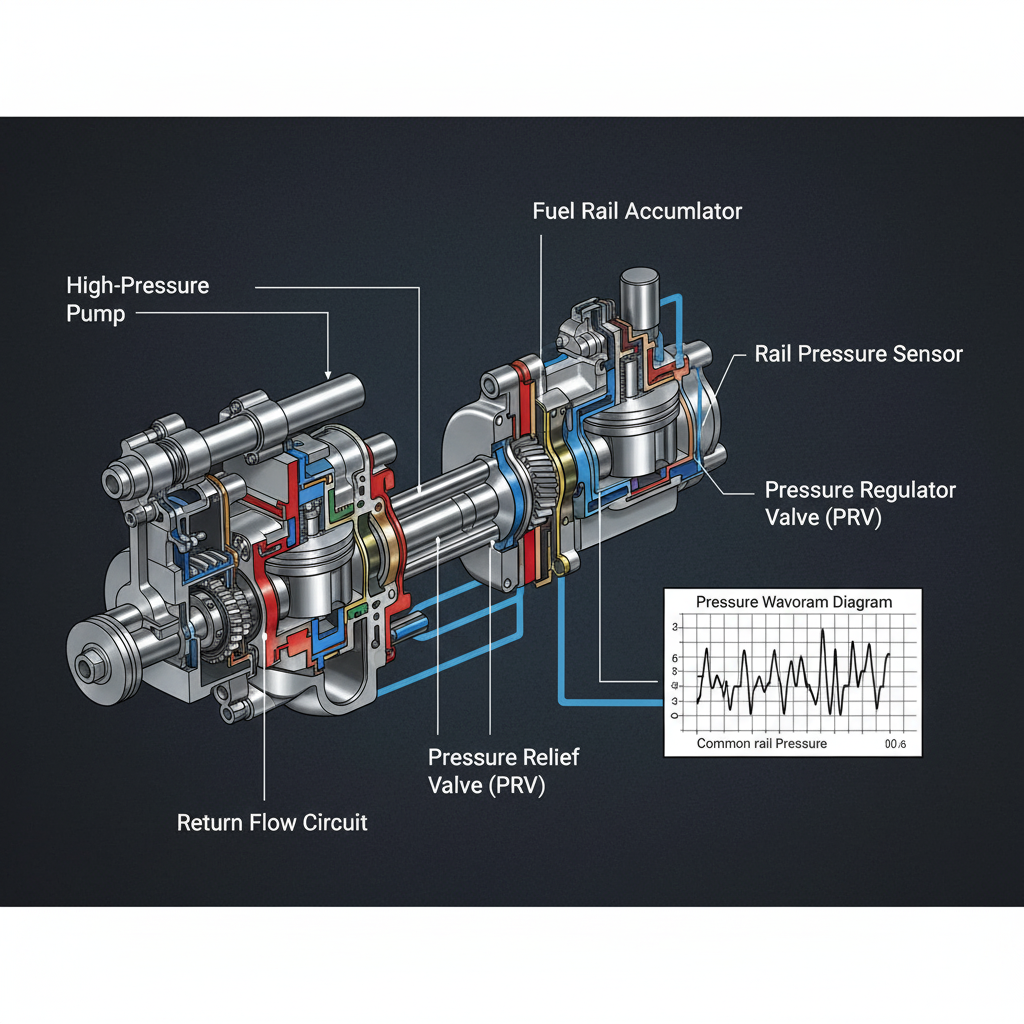
Fault Overview
This process page covers comparing oil, fuel, and boost-related pressures at hot idle versus loaded rpm to classify weak systems before branching to the correct diagnosis. Idle-only lows often indicate sender, viscosity, or wear at low rpm. Load-only lows often indicate supply restriction, pump weakness, leaks, or boost leaks depending on the system.
Engine & Platform Coverage
Possible Causes
- 1.Idle-only low oil pressure — sender, viscosity, or early wear at low rpm
- 2.Load-only low oil pressure — pump weakness, bearing wear, or restriction under demand
- 3.Idle-only low fuel pressure — sensor bias or marginal lift pump at low demand
- 4.Load-only low fuel pressure — filter restriction, aeration, or pump weakness under demand
- 5.Abrupt zeroing under load — electrical dropout rather than hydraulic/mechanical limit
Wiring & Circuit Notes
If values drop out abruptly only during vibration or load, include harness intermittents in the diagnosis. Smooth decay under load suggests hydraulic or mechanical limits — abrupt zeroing suggests electrical dropout.
DVOM Specs & Sensor Tests
Stabilize to full operating temperature before recording. Record stabilized hot idle pressures. Record loaded or higher-rpm pressures. Classify the condition: idle-only, load-only, or both. Smooth decay under load is hydraulic or mechanical — abrupt zeroing is electrical dropout. Branch to the matching system tree based on the classification.
Diagnostic Flow — FSM Sequence
AI Diesel Tech enforces this evidence-gate sequence. Each gate must pass before advancing.
6 steps locked behind Technician Mode- 1Stabilize to full operating temperature
- 2Record stabilized hot idle pressures at all relevant systems
- 3Record loaded or higher-rpm pressures at the same systems
- 4Classify: idle-only, load-only, or both-condition weakness
- 5Smooth decay under load → hydraulic/mechanical path
- 6Abrupt zeroing under load → electrical dropout path
- 7Branch to the matching system tree based on classification
Unlock the full evidence-gated diagnostic sequence, DVOM test steps, and repair procedures in Technician Mode.
Repair Steps
5 steps locked- 1Stabilize to full operating temperature
- 2Record stabilized hot idle pressures at all relevant systems
- 3Record loaded or higher-rpm pressures at the same systems
- 4Classify: idle-only, load-only, or both-condition weakness
- 5Smooth decay under load → hydraulic/mechanical path
- 6Abrupt zeroing under load → electrical dropout path
- 7Branch to the matching system tree based on classification
Unlock full diagnostic steps, DVOM tests, and repair procedures.
Full Diagnostic Access
Verification steps, preventative measures, severity guidance, and legacy comparison are available in Technician Mode.
Start Diagnosing This Fault Now
AI Diesel Tech walks you through every evidence gate in the correct order. Choose the plan that fits your shop.
Related Resources
AI Diesel Tech — The Technician's Diagnostic Engine
AI Diesel Tech diagnostic logic is built by an ASE Certified Diesel Technician and engineered for professional shop use. Trusted by technicians nationwide — used in shops, fleets, and training programs.
Summary
Hot-idle versus loaded pressure comparison classifies the weakness as sensing, low-rpm mechanical, or high-demand supply — then branches to the correct system diagnosis.